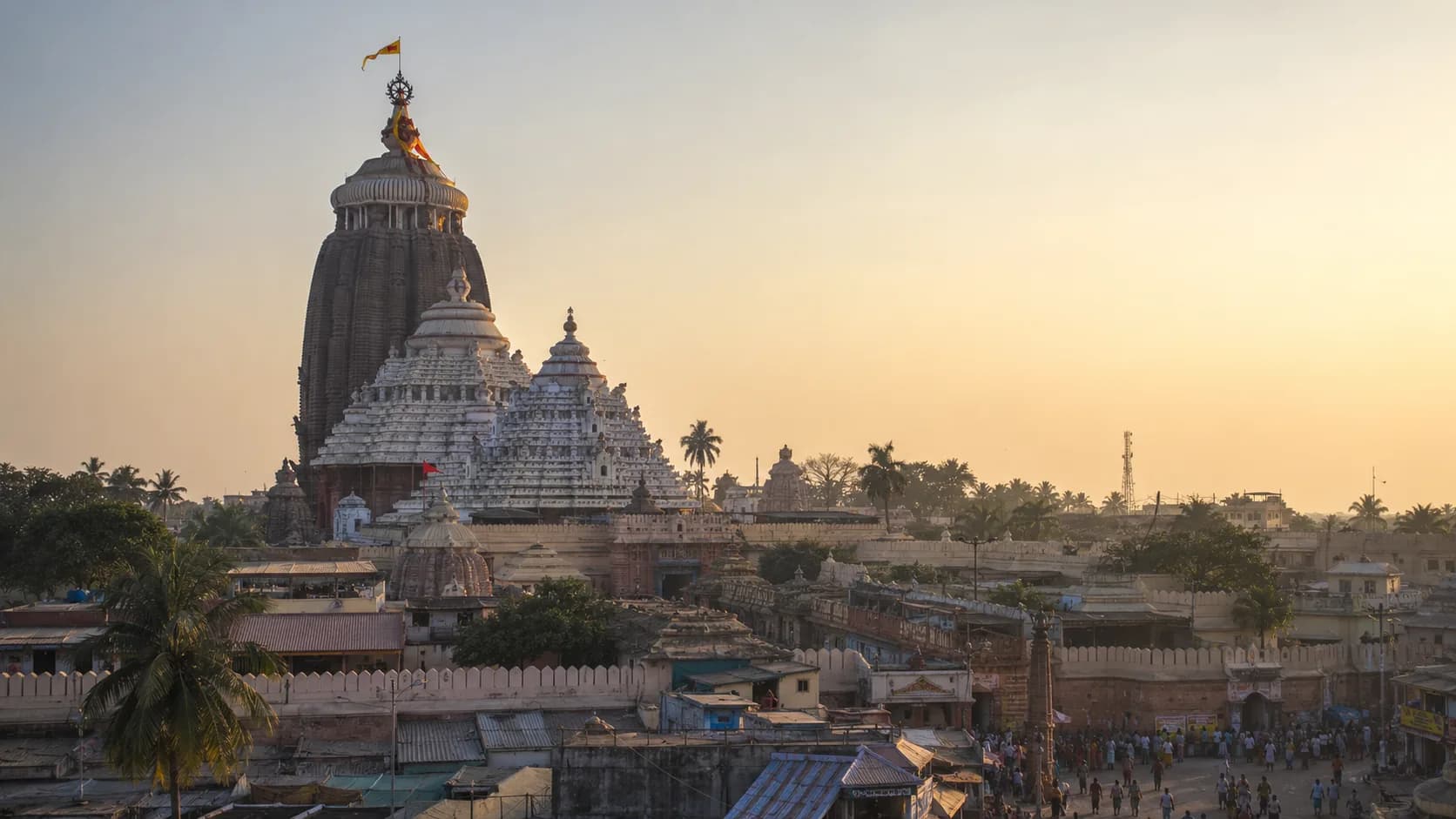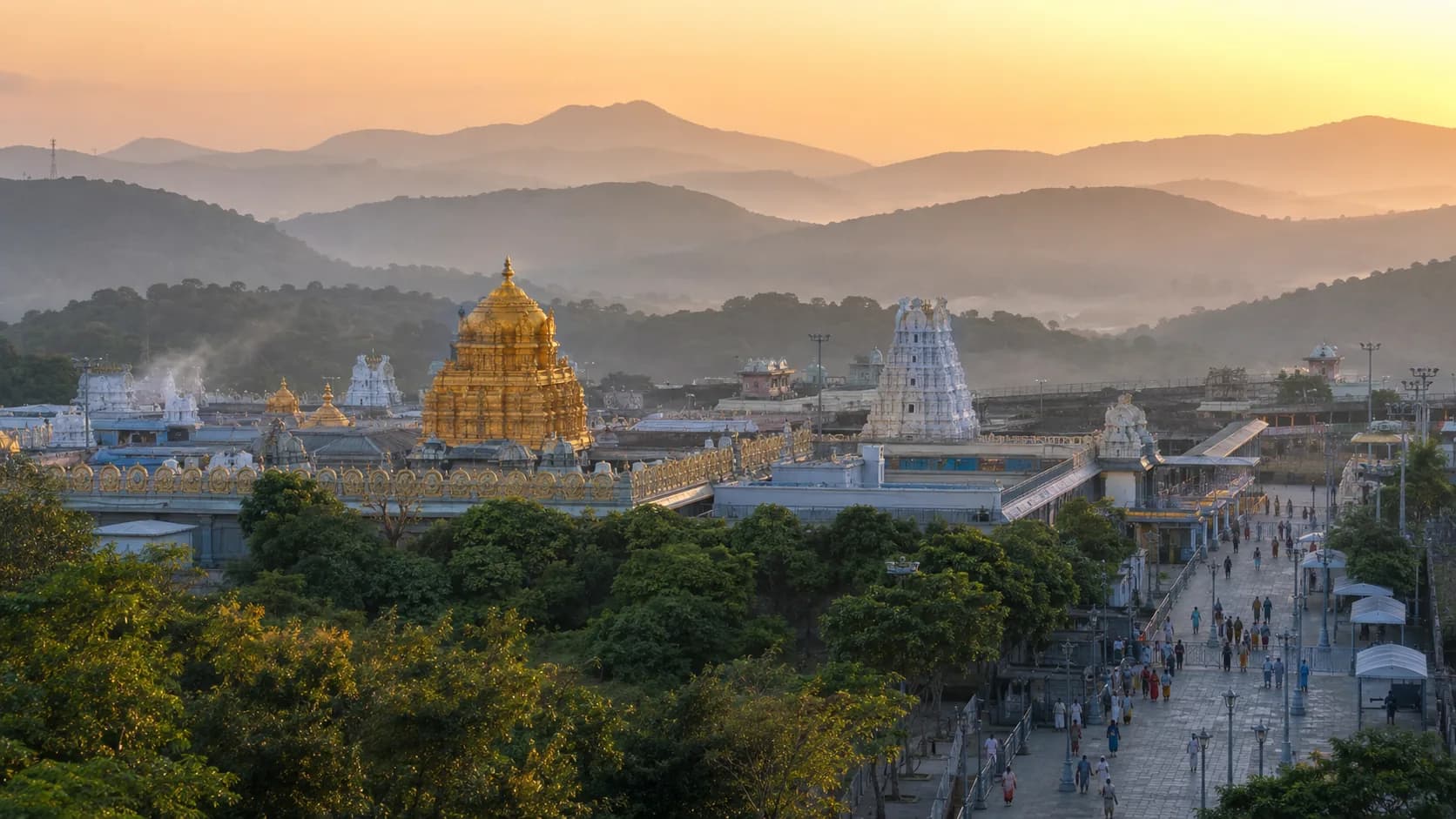
The most-visited temple in the world — Tirupati Venkateswara on Tirumala Hill receives around 100,000 pilgrims daily. Vishnu is worshipped here as Venkateswara, 'Lord of the Venkata Hills,' in a form traditionally said to be self-manifested on the seven sacred hills.
The Seven Sacred Hills
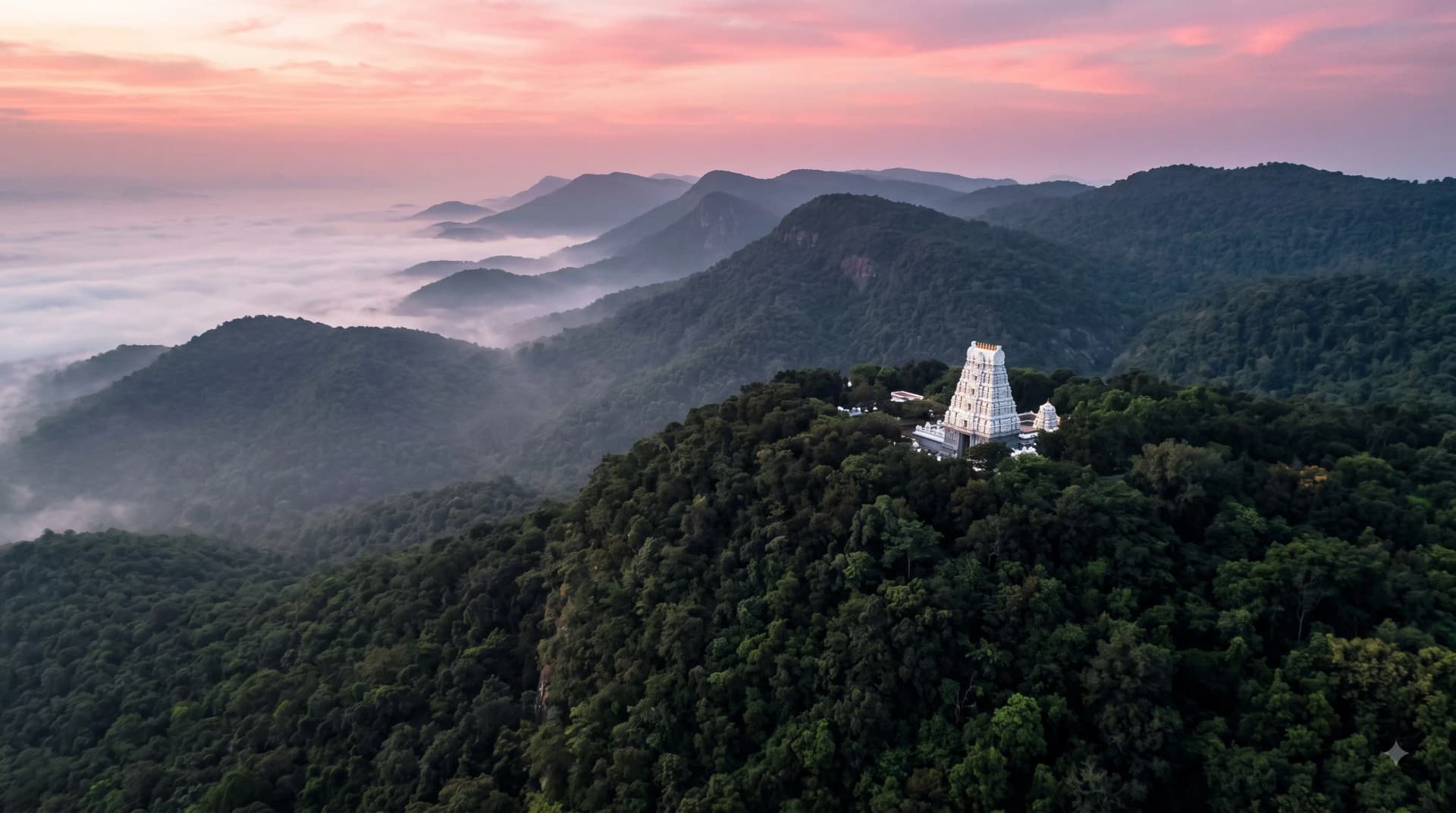
Tirumala is the name of the hill complex — a plateau at approximately 850 metres above sea level in the Eastern Ghats — on which the Venkateswara Temple stands. The surrounding hills are traditionally counted as seven: Seshadri, Neeladri, Garudadri, Anjanadri, Vrishabhadri, Narayanadri, and Venkadri. Together they are called the Saptadri (seven mountains), believed to be the manifestation of the serpent Adisesha (on whom Vishnu rests in the cosmic ocean), coiled into hills.
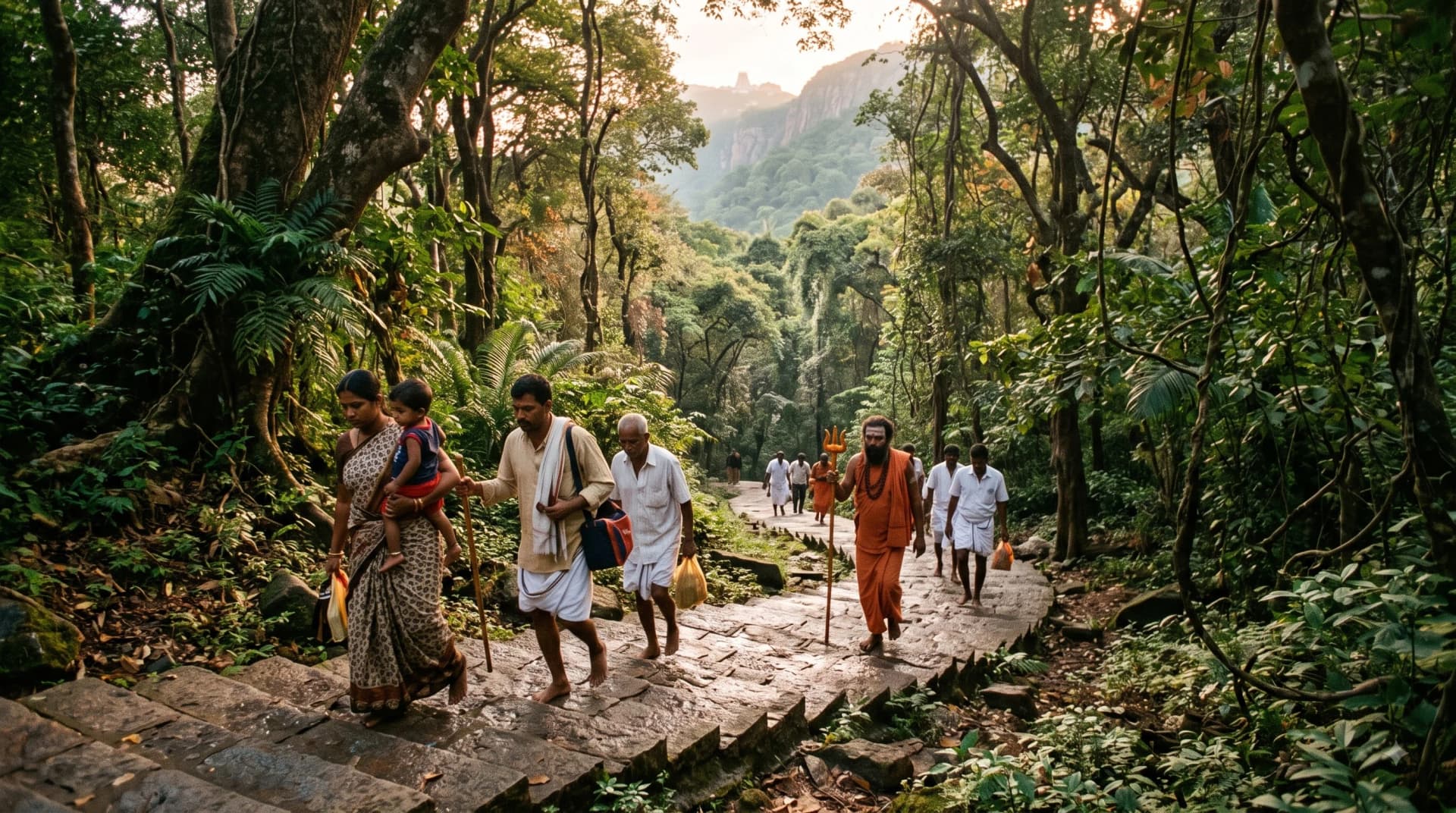
The temple stands on Venkadri — the hill of Venkata — also known as Srinivasa Mangapuram or simply Tirumala. Access from Tirupati town (below the hill) is via a steep ghat road (approximately 18 km), the pedestrian walking path (approximately 11–13 km with steps), or a bus service run by TTD.
The Swami Pushkarini lake on the hill is the sacred tank associated with the temple. Pilgrims take a ritual bath here before entering the temple complex.
The Swayambhu Form
The deity of Venkateswara is described in tradition as swayambhu — self-manifested, not crafted by human hands. The main idol shows Vishnu in a standing posture (Sthanaka mudra), facing east, approximately 8 feet tall, elaborately adorned.
The Divya Prabandham — the Tamil Vaishnava hymns composed by the Alvars between the 7th and 9th centuries CE — identifies Tirumala as one of the 108 divya desams (sacred Vishnu shrines). The Alvar saint Tirumangai Alvar and others composed celebrated verses addressed to the deity of Tirumala, establishing the site's pre-medieval significance in the Vaishnava tradition.
Traditional accounts describe the deity as real — present, not symbolic — and narrate that he came to Tirumala to reside in the Kali Yuga to be accessible to devotees who could not reach his heavenly abode. Stories describe him as having borrowed money from Kubera (the god of wealth) to fund his marriage, a debt that devotees help repay through their offerings — an unusually intimate frame of divine-human relationship.
History
Stone inscriptions from the Pallava period (7th century CE) found at the site confirm the existence of worship here in the early medieval period. The temple grew in prominence during the Chola (10th–13th century CE) and Vijayanagara (14th–17th century CE) periods. The Vijayanagara kings — particularly Krishnadeva Raya (16th century) — were among the most significant patrons of Tirupati, adding major structures and endowing the temple with lands and wealth.
The current administrative structure is the Tirumala Tirupati Devasthanams (TTD), a statutory body established by the Andhra Pradesh government. The TTD is responsible for temple management, charitable activities (hospitals, educational institutions, housing), and the welfare of temple employees. Its annual income from offerings is among the largest of any religious institution in the world.
The Hair Offering and Darshan
The most visible practice at Tirupati is the tonsure — the shaving of one's head as an offering to Venkateswara. Pilgrims offer their hair as a gesture of surrender of ego and in fulfilment of a vow. The hair is auctioned and used by the TTD. Tonsure halls (Kalyana Katta) operate continuously; the scale of the operation — hundreds of barbers working simultaneously — is striking.
Darshan (the act of seeing the deity) at Tirupati is managed through multiple tiers: free darshan (Sarva Darshan, which can involve very long waits), special entry darshan (available through advance booking), and other categories. The TTD issues around 50,000–60,000 darshan tokens per day.
The prasadam — the Tirupati laddu, made with wheat flour, sugar, cashew, raisins, and cardamom — is one of the most recognised temple offerings in India. It holds a Geographical Indication (GI) tag; only laddus prepared at Tirumala by TTD can be called Tirupati laddus.
The ten-day Brahmotsavam festival (usually September–October) is the largest annual event, drawing enormous pilgrimages.
दर्शन और यात्रा की जानकारी
Mobile phones are not permitted inside the inner temple. Lockers and cloakrooms are available. The TTD runs accommodation at multiple price points on the hill — advance booking strongly recommended.
मंदिर कैसे पहुँचें
आस-पास के पवित्र स्थल
Padmavathi — Venkateswara's consort — is worshipped here; darshan here often precedes or follows Tirumala
The main temple in the town below the hill; Vishnu in a reclining posture
Ancient Shiva temple; one of the Pancha Bhuta Stalas (representing air/vayu)
16th-century Vijayanagara fort; the palace where Vijayanagara kings conducted state functions
स्रोत
- Divya Prabandham — Tamil Vaishnava hymns (7th–9th century CE)(scripture)
- Tirumala Tirupati Devasthanams (ttdsevaonline.com)(official)
- Epigraphia Indica — Pallava and Vijayanagara inscriptions, Archaeological Survey of India(historical)
- Wikipedia — Venkateswara Temple, Tirumala (cross-check)(reference)
त्वरित लिंक और संबंधित तीर्थ
अन्य प्रमुख पवित्र धाम, ज्योतिर्लिंग एवं तीर्थ यात्राओं का अन्वेषण करें।