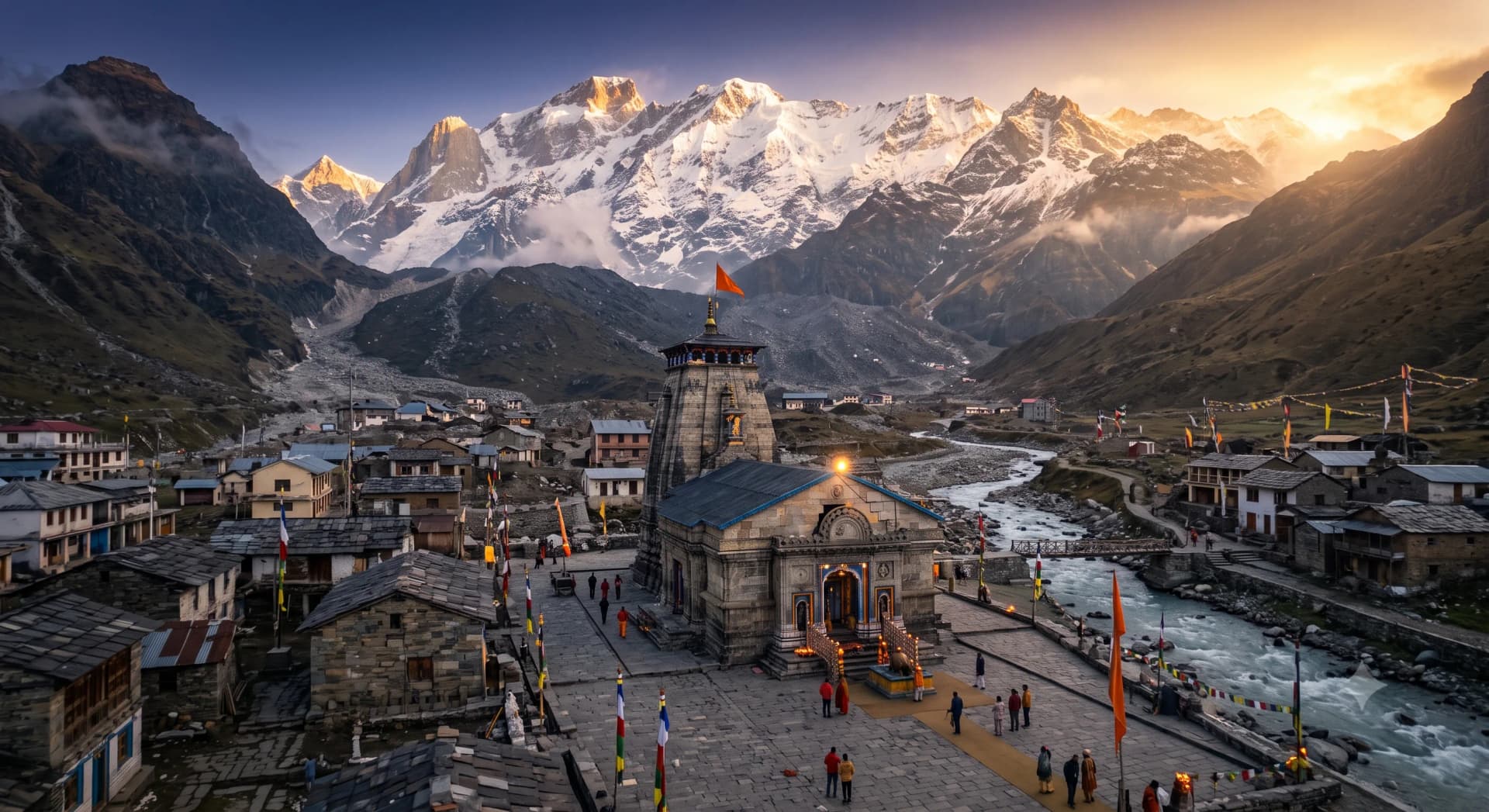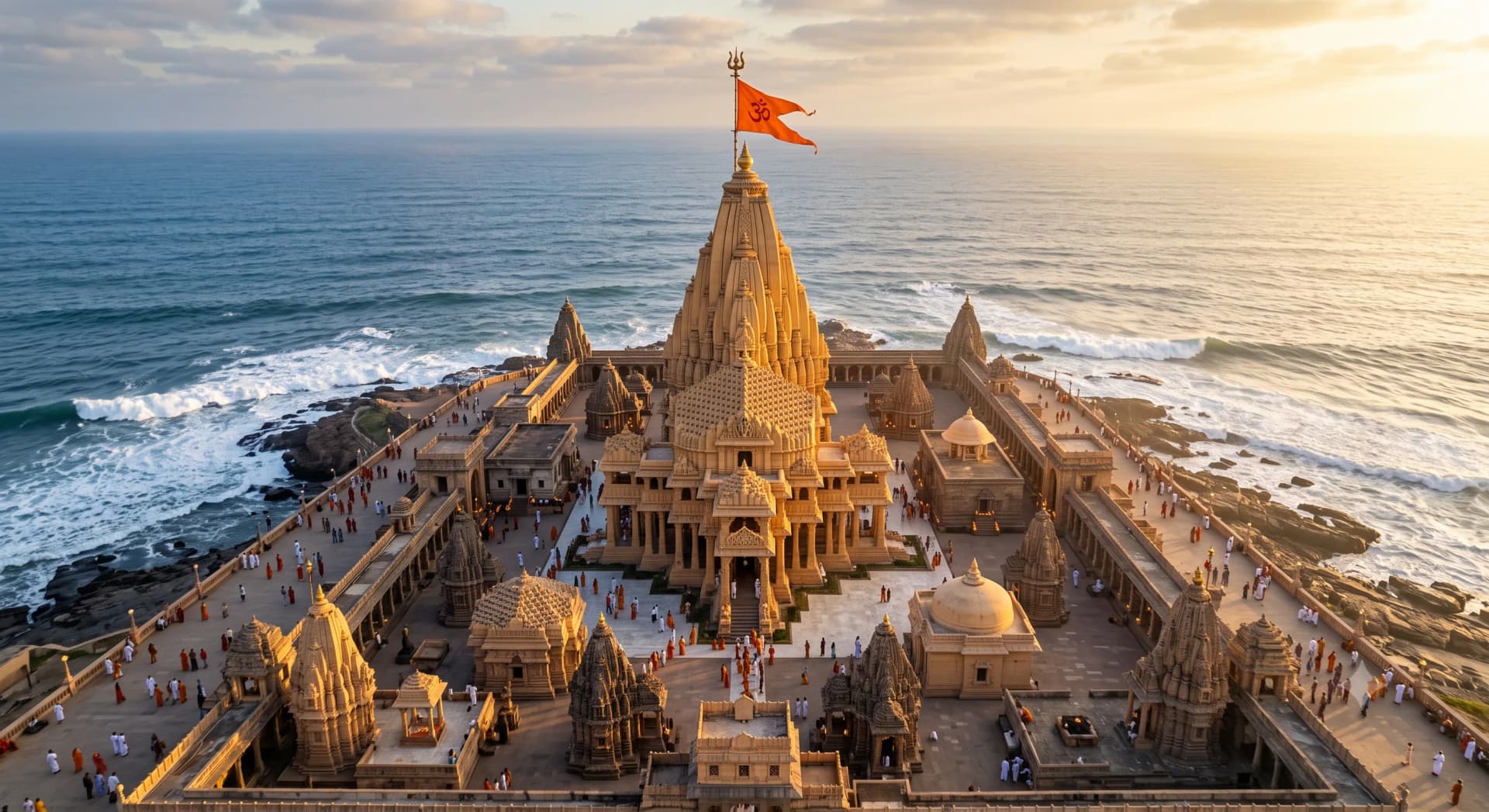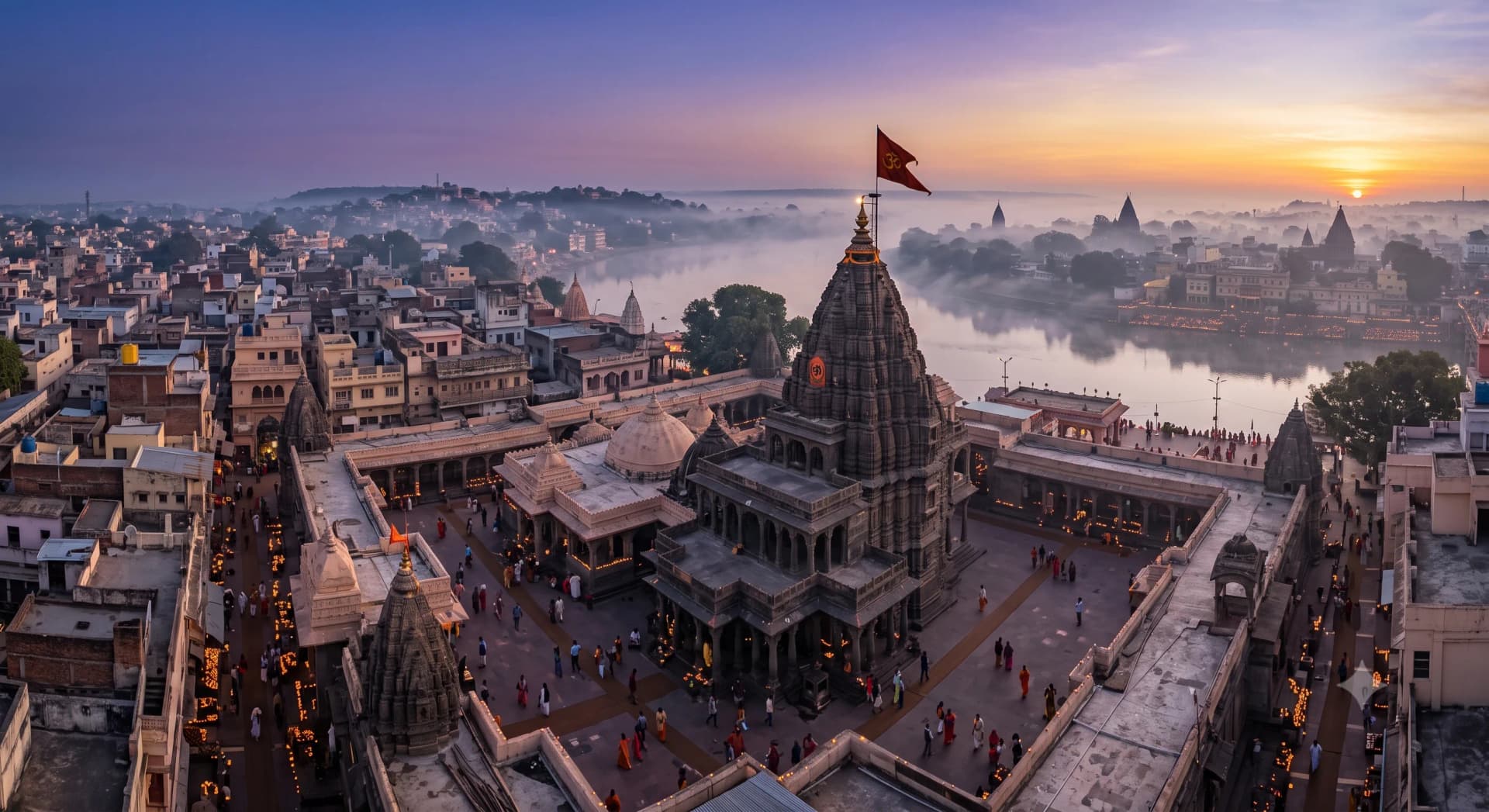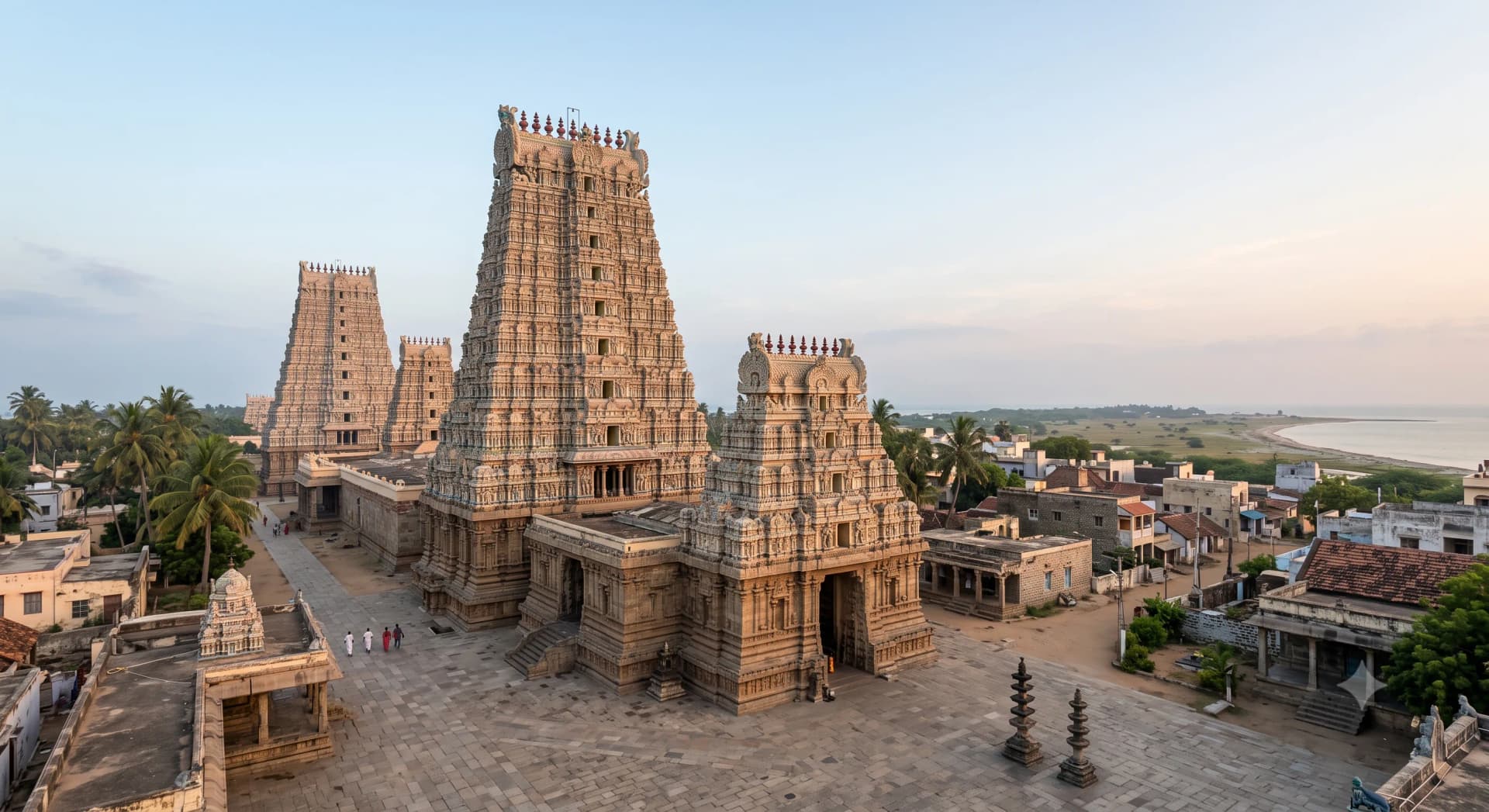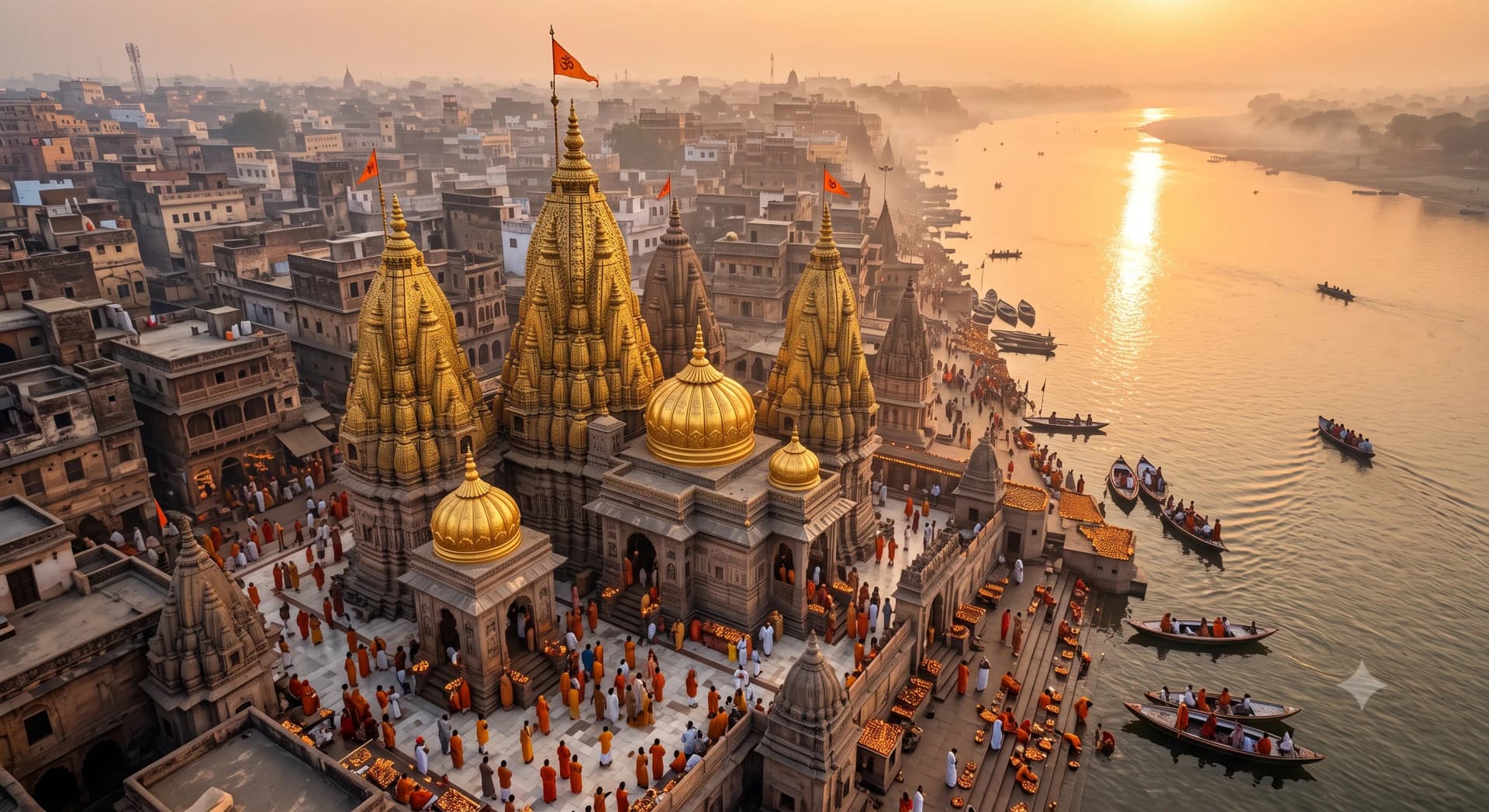
द्वादश ज्योतिर्लिंगों में प्रमुख और सनातन धर्म के सबसे पावन तीर्थों में से एक — काशी विश्वनाथ मंदिर मोक्षदायिनी काशी में गंगा तट पर स्थित है। मान्यता है कि काशी भगवान शिव की वह अविमुक्त नगरी है जिसे वे कभी नहीं छोड़ते, और यहां प्राण त्यागने से जीव को सीधे मोक्ष की प्राप्ति होती है।
अविमुक्त काशी — महादेव की शाश्वत नगरी
The Eternal City
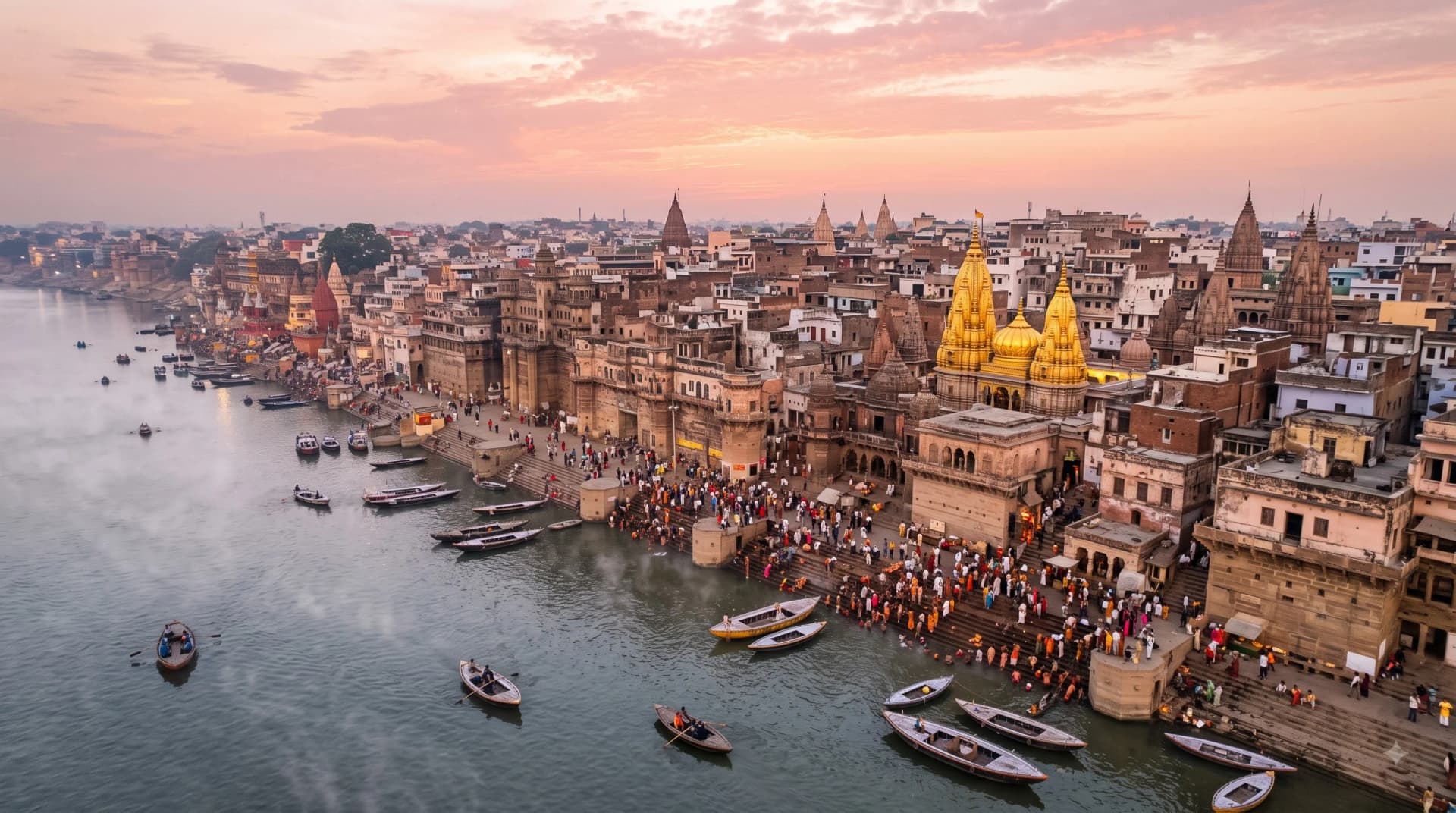
काशी विश्वनाथ मंदिर उत्तर प्रदेश के वाराणसी (काशी) नगर के हृदय स्थल में, पवित्र गंगा के पश्चिमी तट पर स्थित है। यह मंदिर भगवान शिव को 'विश्वनाथ' यानी 'संपूर्ण ब्रह्मांड के स्वामी' के रूप में समर्पित है।
यह मंदिर भारत के बारह ज्योतिर्लिंगों में अत्यंत पूज्य है। सनातन परंपरा में काशी का स्थान सबसे अलग और सर्वोच्च है: शास्त्रों में इसे शिव की शाश्वत नगरी कहा गया है, जिसे प्रलयकाल में भी महादेव अपने त्रिशूल पर धारण कर लेते हैं और कभी नहीं छोड़ते।
मान्यता है कि काशी के पावन क्षेत्र में देह त्यागने वाले प्राणी के कान में स्वयं महादेव 'तारक मंत्र' सुनाते हैं, जिससे वह जन्म-मरण के चक्र से मुक्त हो जाता है। इसी अगाध श्रद्धा से प्रतिवर्ष लाखों भक्त काशी आते हैं।
ज्योतिर्लिंग — अनंत प्रकाश स्तम्भ
The Jyotirlinga
पुराणों में वर्णित कथा के अनुसार, जब ब्रह्मा जी और भगवान विष्णु में श्रेष्ठता को लेकर संवाद हुआ, तब भगवान शिव एक अंतहीन ज्योतिर्मय स्तम्भ के रूप में प्रकट हुए। न तो ब्रह्मा जी इसका शिखर देख पाए और न ही विष्णु जी इसका आधार खोज सके। तब महादेव ने साक्षात दर्शन देकर दोनों देवों को संतुष्ट किया।
पृथ्वी पर जिन बारह पावन स्थानों पर यह दिव्य ज्योति प्रकट हुई, वे ज्योतिर्लिंग कहलाए। काशी विश्वनाथ का शिवलिंग साधारण पाषाण नहीं, बल्कि उसी तेजोमय आदि ज्योति का साक्षात स्वरूप माना जाता है।
इतिहास और पुनर्निर्माण
History
स्कंद पुराण के 'काशी खंड' में इस पावन स्थल और मंदिर की प्राचीन महिमा का विस्तार से वर्णन मिलता है। मध्यकाल में यह मंदिर कई बार आक्रांताओं के हमलों का शिकार हुआ और हर बार श्रद्धालुओं ने इसका पुनर्निर्माण कराया।
1669 में तत्कालीन मुगल शासक औरंगजेब के आदेश से मूल मंदिर को क्षति पहुंचाई गई और उस स्थान के पास ज्ञानवापी मस्जिद का निर्माण हुआ। यह ऐतिहासिक तथ्य तत्कालीन अभिलेखों में दर्ज है।
वर्तमान मंदिर का निर्माण 1780 में इंदौर की धर्मपरायण महारानी अहिल्याबाई होल्कर ने मूल स्थल से लगभग 100 मीटर की दूरी पर कराया था। इसके बाद 1835 में पंजाब के महाराजा रणजीत सिंह ने मंदिर के शिखर और तीन गुंबदों को स्वर्ण से मंडित करने के लिए लगभग 23 टन सोना दान किया था।
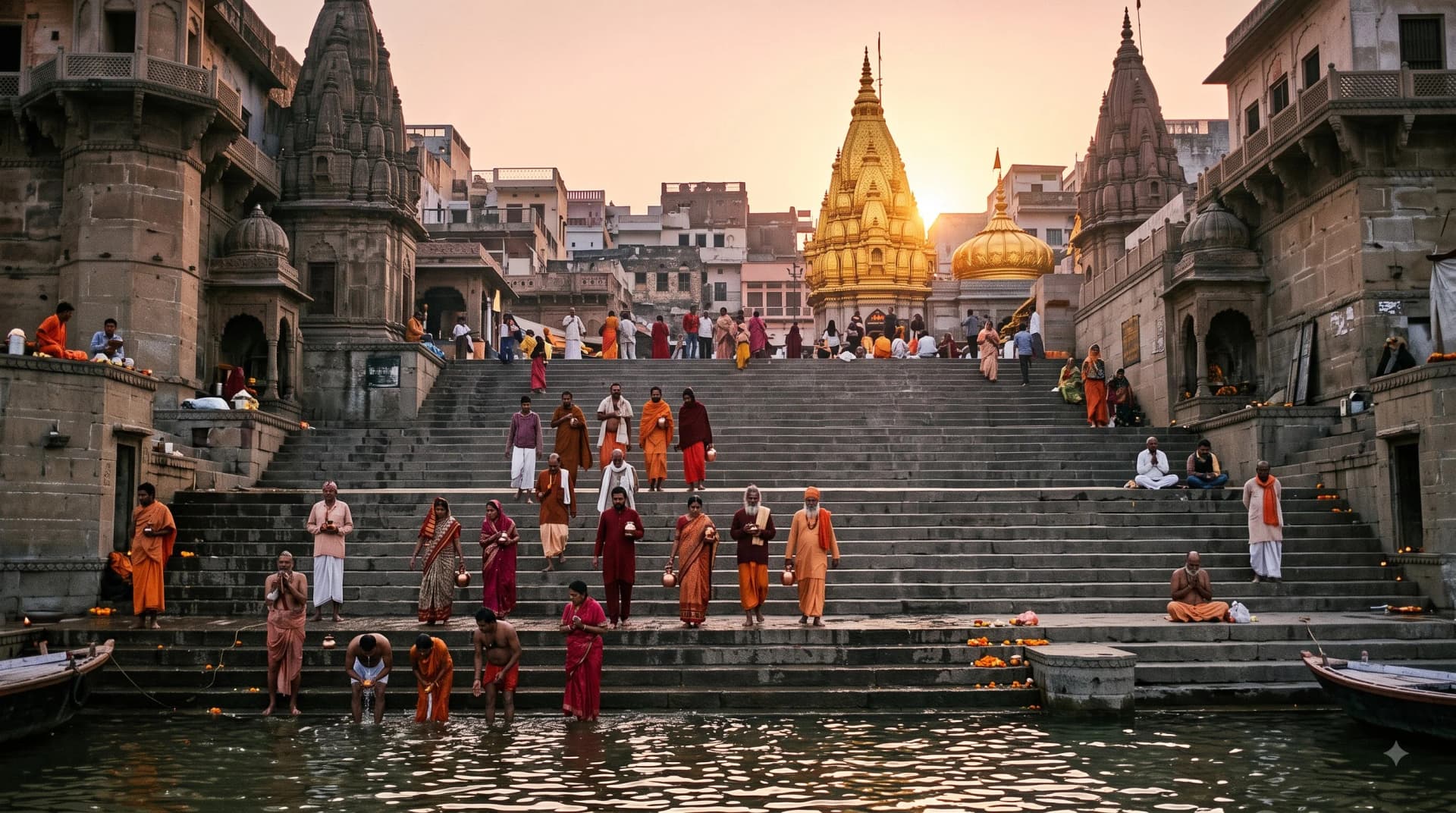
दिसंबर 2022 में 'श्री काशी विश्वनाथ धाम (कॉरिडोर)' का लोकार्पण हुआ, जिसने गंगा तट के दशाश्वमेध और ललिता घाट से मंदिर तक एक भव्य और सुगम मार्ग बनाकर भक्तों के लिए दर्शन को अत्यंत सहज बना दिया।
मंदिर का स्वरूप और परिक्रमा
The Temple
वर्तमान मंदिर परिसर के मुख्य रूप से तीन भाग हैं: गर्भगृह जहां पावन शिवलिंग स्थापित है, अंतर्गृह और सभा मंडप। लगभग 15 मीटर ऊंचे मुख्य शिखर पर लगा स्वर्ण कलश महाराजा रणजीत सिंह के दान का साक्षी है।
शैव परंपरा के अनुसार गर्भगृह के सामने नंदी जी की प्रतिमा स्थापित है। मंदिर परिसर में काल भैरव, दंडपाणि, अविमुक्तेश्वर, भगवान विष्णु, गणेश जी और शनि देव के पावन उप-मंदिर भी स्थित हैं।
नवनिर्मित काशी विश्वनाथ कॉरिडोर के माध्यम से अब श्रद्धालु गंगा स्नान करके सीधे पावन परिसर में प्रवेश कर सकते हैं और गंगा के तट से ही मंदिर के स्वर्ण शिखर के दर्शन कर सकते हैं।
दैनिक आरती और पूजा परंपरा
Worship
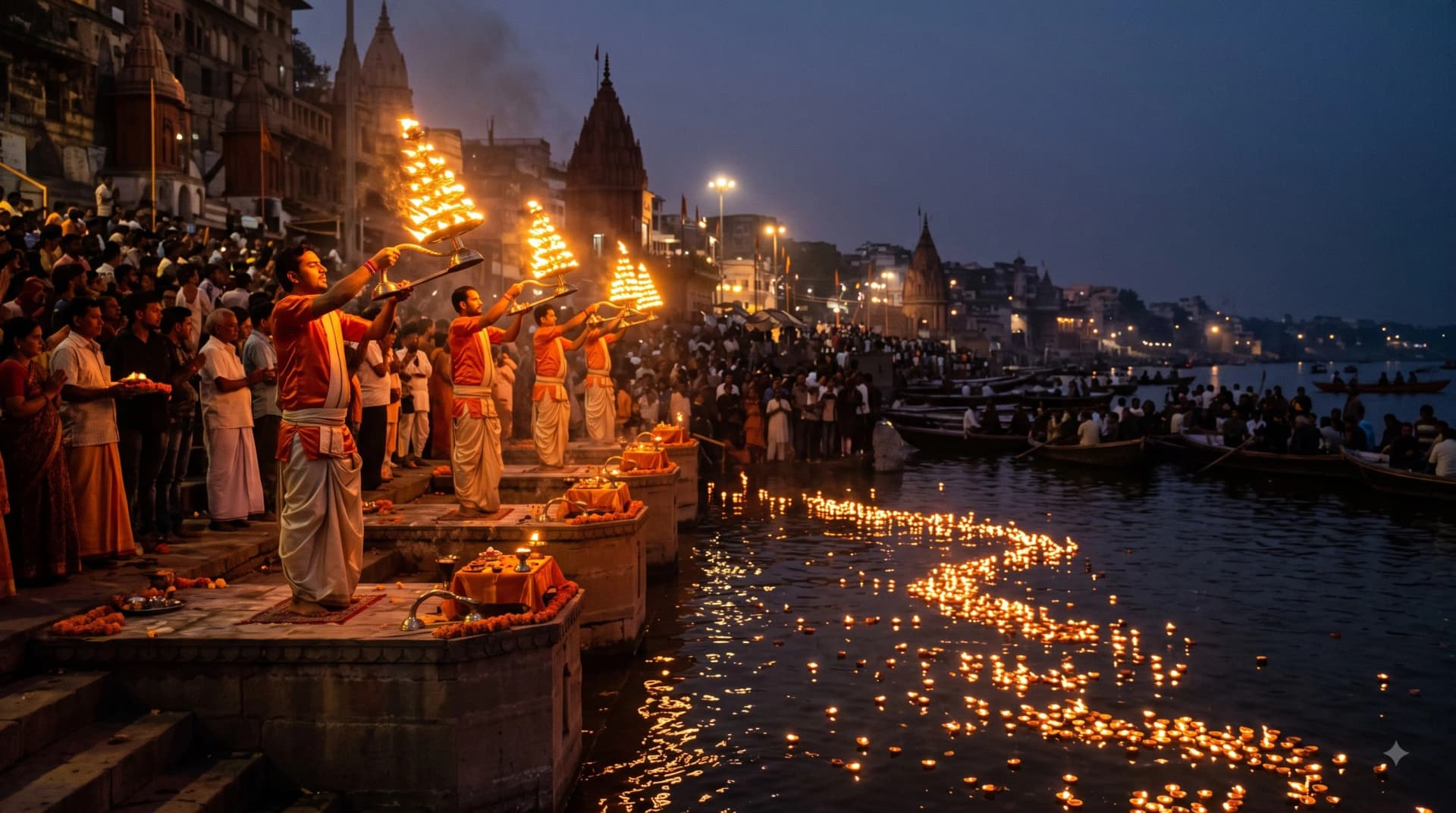
मंदिर में प्रतिदिन पांच मुख्य आरतियां होती हैं: ब्रह्ममुहूर्त में मंगला आरती (सबसे पावन और फलदायी), मध्याह्न में भोग आरती, दोपहर में सप्तऋषि आरती, सायं काल में श्रृंगार आरती और रात्रि में शयन आरती।
भगवान विश्वनाथ को बेलपत्र अत्यंत प्रिय है। भक्त गंगाजल, दूध, भस्म, धतूरा और सफेद पुष्प अर्पित करते हैं। दशाश्वमेध घाट पर गंगा स्नान करके विश्वनाथ जी के दर्शन करने की सदियों पुरानी परंपरा है।
श्रावण मास, महाशिवरात्रि और कार्तिक मास में यहां देश भर से लाखों श्रद्धालुओं का तांता लगता है।
दर्शन और यात्रा की जानकारी
गर्भगृह के भीतर मोबाइल फोन और फोटोग्राफी प्रतिबंधित है। मंदिर के प्रवेश द्वारों के पास सामान रखने के लिए लॉकर की उत्तम व्यवस्था है।
मंदिर कैसे पहुँचें
मंदिर का निकटतम क्षेत्र केवल पैदल यात्रियों के लिए है। दशाश्वमेध या ललिता घाट की ओर से नए कॉरिडोर में प्रवेश सबसे सुगम और सुंदर मार्ग है।
आस-पास के पवित्र स्थल
गंगा तट पर स्थित सातवां पावन ज्योतिर्लिंग, जो मोक्ष का अविचल केंद्र है।
मीर घाट पर मां सती के कुंडल का पावन शक्तिपीठ।
मुख्य गंगा आरती घाट — जहां प्रतिदिन सायं काल भव्य और अलौकिक आरती होती है।
काशी के कोतवाल — मान्यता है कि इनके दर्शन के बिना काशी यात्रा अधूरी रहती है।
गोस्वामी तुलसीदास जी द्वारा स्थापित प्राचीन व सिद्ध हनुमान मंदिर।
सफेद संगमरमर का सुंदर मंदिर, जहां तुलसीदास जी ने रामचरितमानस की रचना की थी।
पावन स्थल जहां ज्ञान प्राप्ति के बाद भगवान बुद्ध ने अपना प्रथम उपदेश दिया था।
गंगा पार स्थित काशी नरेश का 18वीं शताब्दी का ऐतिहासिक किला व संग्रहालय।
स्रोत
- Kashi Khanda, Skanda Purana(scripture)
- Kashi Vishwanath Temple official — kashivishwanath.org(official)
- Archaeological Survey of India, Varanasi Circle(government)
- Kashi Vishwanath Corridor project documentation, Government of Uttar Pradesh (2022)(government)
- Wikipedia — Kashi Vishwanath Temple (for cross-check; not primary source)(reference)
त्वरित लिंक और संबंधित तीर्थ
अन्य प्रमुख पवित्र धाम, ज्योतिर्लिंग एवं तीर्थ यात्राओं का अन्वेषण करें।