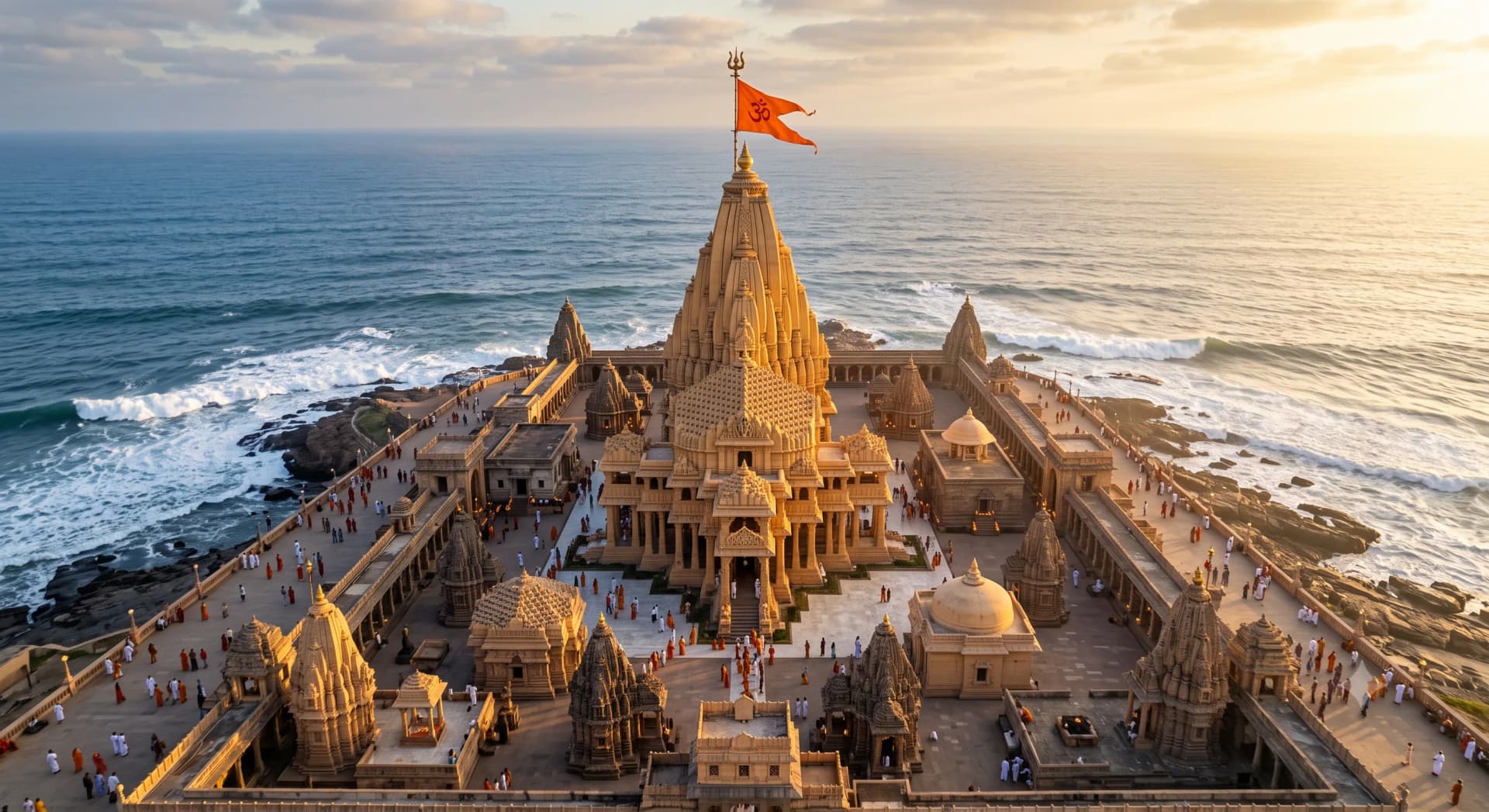
द्वादश ज्योतिर्लिंगों में प्रथम और सबसे प्रमुख पावन धाम सोमनाथ, गुजरात के सौराष्ट्र समुद्र तट पर स्थित है। मान्यता है कि यहां चंद्र देव (सोम) ने महादेव की तपस्या करके उनके आशीर्वाद से क्षय रोग से मुक्ति पाई थी। बार-बार नष्ट होने के बाद भी अपने अदम्य विश्वास के साथ पुनर्जीवित होना इस मंदिर की अमर पहचान है।
प्रभास पाटन का पावन समुद्र तट
The Shore of Prabhas
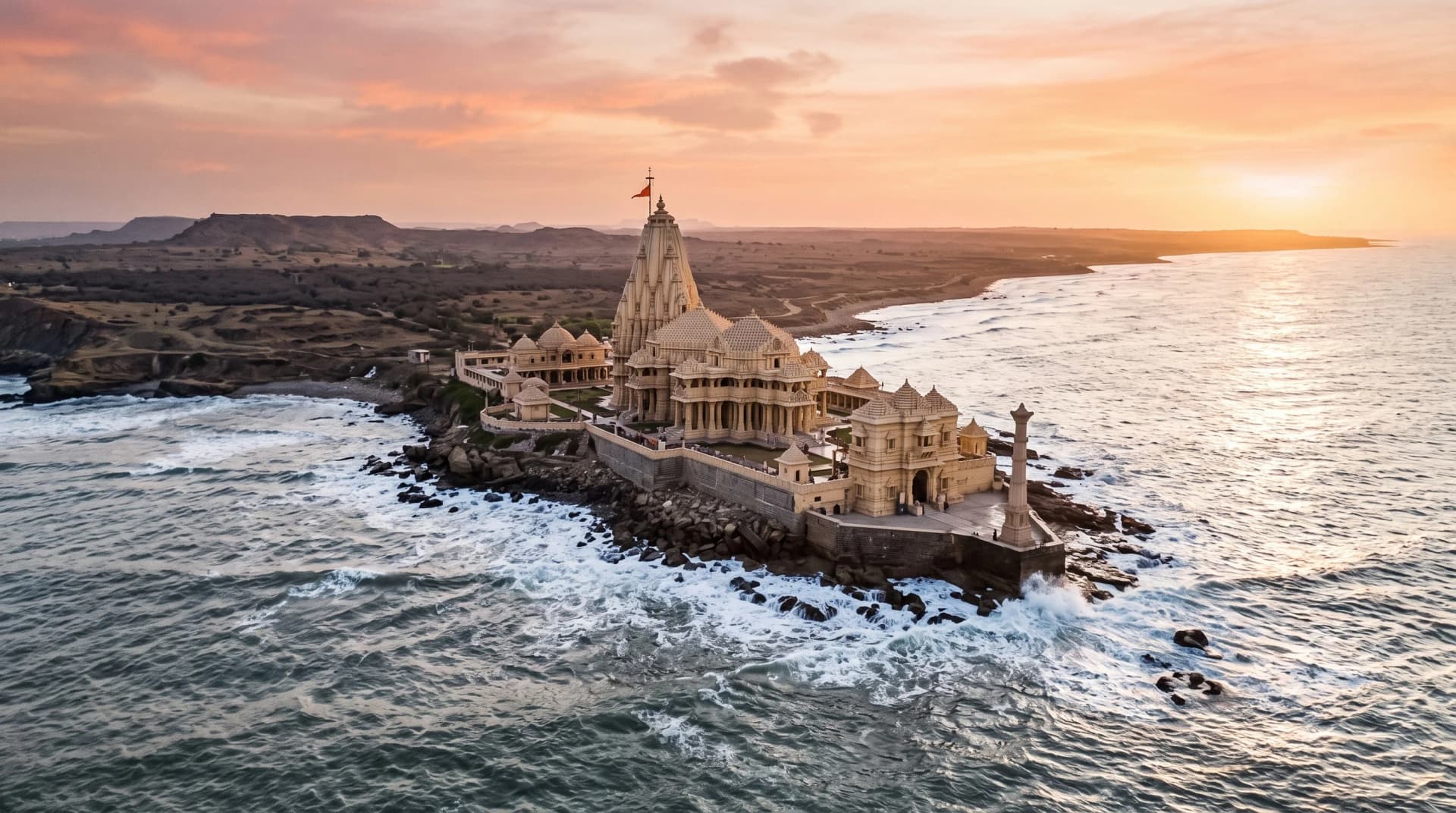
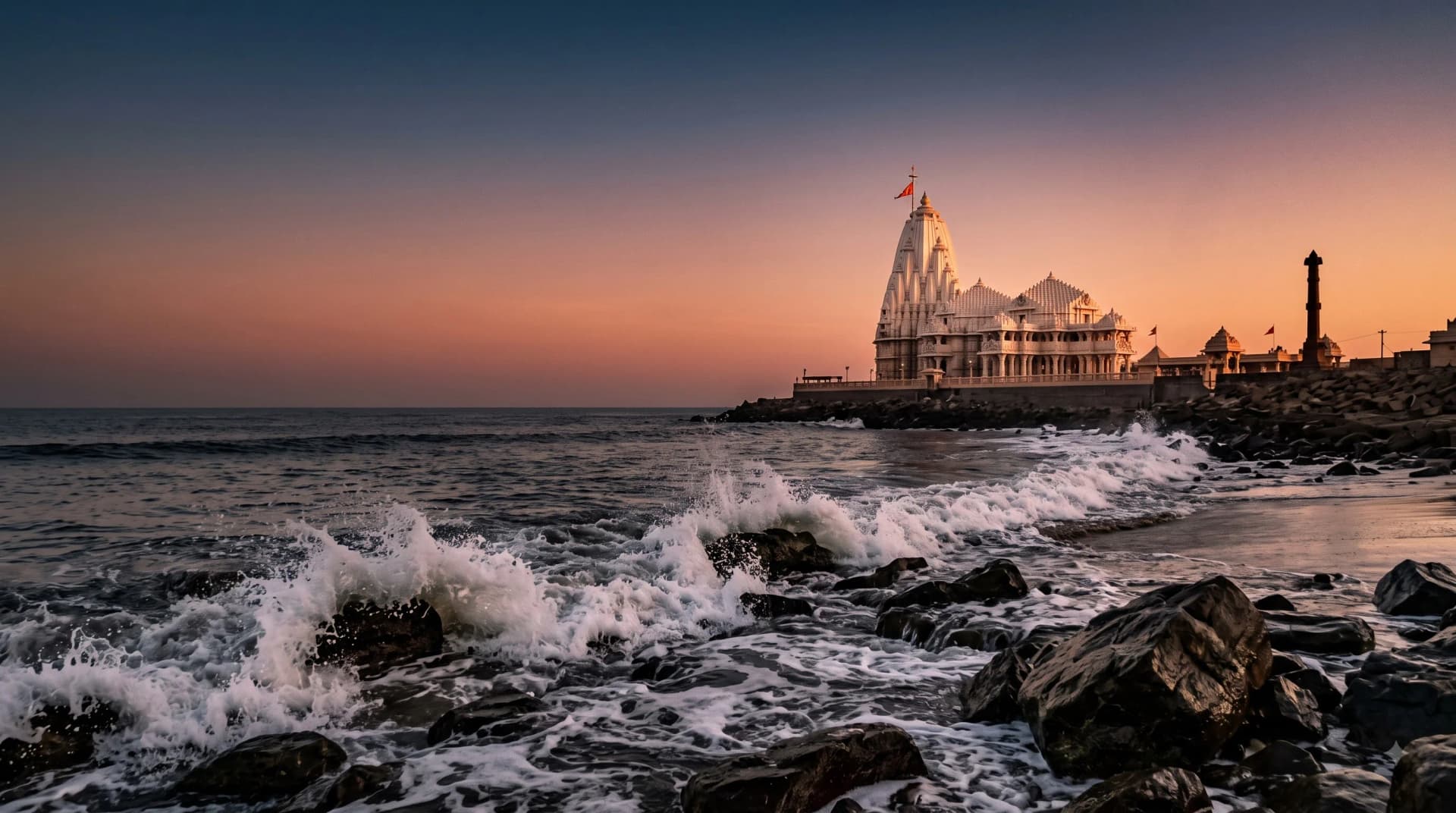
सोमनाथ मंदिर गुजरात के सौराष्ट्र तट पर प्रभास पाटन में स्थित है, जहां अरब सागर की लहरें मंदिर के चरणों को छूती हैं। यहां कपिला, सरस्वती और सागर का पावन त्रिवेणी संगम माना जाता है, जहां श्रद्धालु स्नान करके पुण्य प्राप्त करते हैं।
मंदिर परिसर के दक्षिण छोर पर प्रसिद्ध 'बाण स्तम्भ' स्थित है। इस स्तम्भ पर लिखे शिलालेख के अनुसार, इस बिंदु से दक्षिण ध्रुव (अंटार्कटिका) तक समुद्र के बीच में कोई भी भूभाग या रुकावट नहीं है। यह स्तंभ सीधे खुले महासागर की ओर इंगित करता है।
द्वादश ज्योतिर्लिंगों की स्तुति में सोमनाथ का नाम सबसे पहले आता है। यह स्थान न केवल अपनी प्राचीनता बल्कि पुराणों में वर्णित अपनी अत्यधिक महिमा के कारण सभी ज्योतिर्लिंगों का सिरमौर माना जाता है।
चंद्र देव की तपस्या और महादेव की कृपा
The Moon God's Penance
सोमनाथ के प्राकट्य की कथा चंद्र देव से जुड़ी है। 'सोम' का अर्थ चंद्रमा है, और सोमनाथ का अर्थ है 'चंद्रमा के नाथ'।
पौराणिक कथा के अनुसार, चंद्र देव का विवाह दक्ष प्रजापति की सत्ताईस कन्याओं (सत्ताईस नक्षत्रों) से हुआ था। इनमें से वे रोहिणी से सबसे अधिक प्रेम करते थे और अन्य पत्नियों की उपेक्षा करते थे। इससे क्रोधित होकर दक्ष प्रजापति ने चंद्रमा को धीरे-धीरे क्षय (कमजोर होकर लुप्त) होने का शाप दे दिया। इस शाप के कारण चंद्रमा की चमक घटने लगी, जिससे संपूर्ण सृष्टि में औषधियों, ज्वार-भाटा और जीवन पर संकट आ गया।
चिंतित होकर सभी देवता ब्रह्मा जी के पास गए। ब्रह्मा जी के सुझाव पर चंद्रमा ने प्रभास क्षेत्र में आकर समुद्र तट पर भगवान शिव की घोर तपस्या की। महादेव ने प्रसन्न होकर दर्शन दिए और वरदान दिया कि चंद्रमा का पूर्ण क्षय नहीं होगा; वे 15 दिन घटेंगे (कृष्ण पक्ष) और 15 दिन बढ़ेंगे (शुक्ल पक्ष)। यही चंद्रमा की कलाओं की शुरुआत मानी जाती है।
आभार स्वरूप चंद्र देव ने यहां स्वर्ण का भव्य मंदिर बनवाया था। बाद में इसे रावण ने चांदी का, श्री कृष्ण ने चंदन की लकड़ी का और कालांतर में राजाओं ने पाषाण का बनवाया।
पुनर्निर्माण और अटूट आस्था का इतिहास
Destruction and Reconstruction
सोमनाथ का इतिहास अद्वितीय संपदा और बार-बार के आक्रमणों के बाद फिर से उठ खड़े होने की गाथा है।
सन् 1026 में महमूद गजनवी ने इस समृद्ध मंदिर पर आक्रमण कर भारी लूटपाट की। इसके बाद मालवा के राजा भोज और अन्हिलवाड़ के सोलंकी राजा भीमदेव प्रथम ने मंदिर का पुनः निर्माण कराया। इसके बाद अलाउद्दीन खिलजी की सेना (1299) और बाद में कई अन्य आक्रांताओं ने मंदिर को नुकसान पहुंचाया, लेकिन हर बार श्रद्धालुओं और राजाओं ने इसे फिर से भव्य रूप दिया।
स्वतंत्रता के बाद 1947 में भारत के प्रथम गृह मंत्री सरदार वल्लभभाई पटेल ने सोमनाथ के खंडहरों का दौरा किया और इसके भव्य पुनर्निर्माण का संकल्प लिया। श्री कन्हैयालाल माणिकलाल मुंशी के मार्गदर्शन में चालुक्य (सोलंकी) शैली में नए पाषाण मंदिर का निर्माण हुआ, और मई 1951 में भारत के प्रथम राष्ट्रपति डॉ. राजेंद्र प्रसाद ने गर्भगृह में ज्योतिर्लिंग की प्राण-प्रतिष्ठा की।
वर्तमान सोमनाथ मंदिर इस पवित्र भूमि पर बना सातवां मुख्य मंदिर है। इसका बार-बार बनना यह सिद्ध करता है कि आस्था को कभी नष्ट नहीं किया जा सकता।
मंदिर का वास्तुशिल्प और दर्शन
The Temple
वर्तमान सोमनाथ मंदिर चालुक्य (सोलंकी) नागर शैली के 'कैलाश महामेरु प्रासाद' रूप में निर्मित है। इसका मुख्य शिखर 155 फीट ऊंचा है। मंदिर का मुख पूर्व दिशा की ओर है, जिससे सूर्य की पहली किरणें गर्भगृह को आलोकित करती हैं।
मंदिर के दक्षिण में सुरक्षा प्राचीर बनाई गई है, जिससे मंदिर परिसर से ही अरब सागर की विशाल लहरें दिखाई देती हैं। शाम की आरती के समय समुद्र की गर्जना, शंख और घंटियों की मधुर ध्वनि मिलकर एक अलौकिक आध्यात्मिक वातावरण बनाती है।
मंदिर परिसर में एक सुंदर संग्रहालय भी है, जिसमें प्राचीन काल के नक्काशीदार स्तंभ, मूर्तियां और अवशेष सुरक्षित रखे गए हैं, जो मंदिर के गौरवशाली अतीत की झलक दिखाते हैं।
दर्शन और यात्रा की जानकारी
मंदिर परिसर के भीतर मोबाइल फोन, कैमरा और इलेक्ट्रॉनिक उपकरण ले जाना पूरी तरह वर्जित है। क्लॉक रूम में सामान सुरक्षित रखने की नि:शुल्क व्यवस्था है।
मंदिर कैसे पहुँचें
सोमनाथ और द्वारकाधीश मंदिर की यात्रा अक्सर एक साथ की जाती है; दोनों के बीच की दूरी लगभग 235 किमी है।
आस-पास के पवित्र स्थल
12 पावन ज्योतिर्लिंगों की तीर्थ यात्रा का प्रथम व सर्वोच्च धाम।
प्रभास पाटन के पावन समुद्र संगम पर सती के उदर (पेट) का शक्तिपीठ।
कपिला, सरस्वती और समुद्र का पावन संगम — श्रद्धालु यहां पवित्र स्नान करते हैं।
वह पावन स्थल जहां जरा नामक शिकारी का बाण लगने के बाद भगवान श्री कृष्ण ने अपनी लीला संवरण की थी।
प्राचीन तीर्थ स्थल जहां सम्राट अशोक के शिलालेख और भगवान दत्तात्रेय की चरण पादुकाएं स्थित हैं।
एशियाई शेरों का एकमात्र प्राकृतिक आवास — सोमनाथ यात्रा के साथ कई लोग यहां भी जाते हैं।
स्रोत
- Prabhasa Khanda, Skanda Purana(scripture)
- Somnath Temple Trust (somnath.org)(official)
- Archaeological Survey of India, Gujarat Circle(government)
- K.M. Munshi, 'Somnath: The Shrine Eternal' (1951)(historical)
- Wikipedia — Somnath Temple (cross-check)(reference)
त्वरित लिंक और संबंधित तीर्थ
अन्य प्रमुख पवित्र धाम, ज्योतिर्लिंग एवं तीर्थ यात्राओं का अन्वेषण करें।