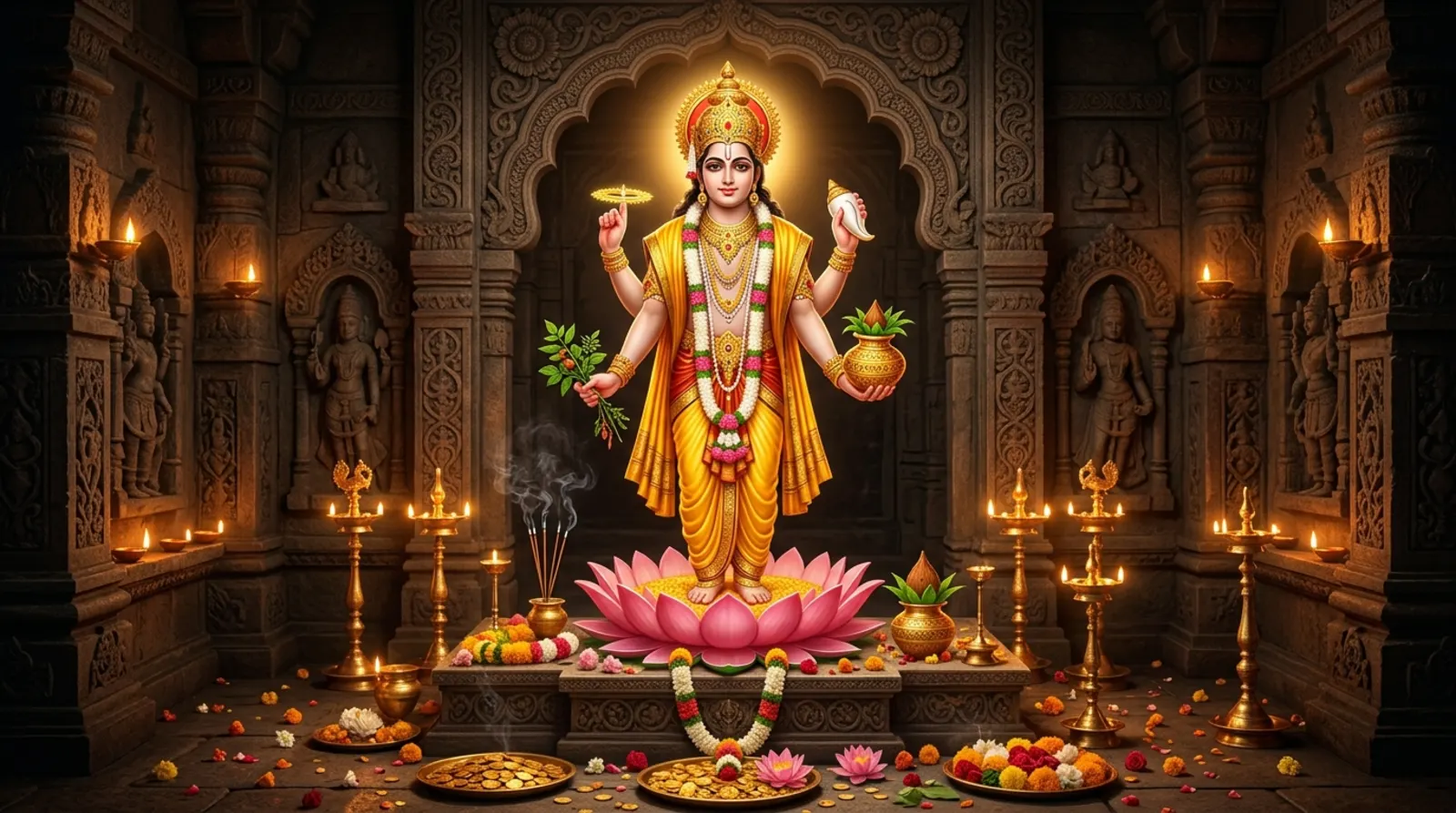
What is Dhanteras?
Dhanteras, also known as Dhantrayodashi, marks the thirteenth lunar day (Trayodashi) of the waning fortnight (Krishna Paksha) in the month of Kartik. It is the opening day of the five-day Diwali festival. The day is traditionally observed as Dhanvantari Jayanti, honoring Lord Dhanvantari—an avatar of Lord Vishnu revered as the divine originator of Ayurveda. Families also worship Goddess Lakshmi and Lord Kubera, the custodian of treasures, while purchasing metal utensils, gold, silver, or household items to welcome renewal into the home.
Why is it observed?
By tradition, Lord Dhanvantari emerged during the Samudra Manthan (churning of the cosmic ocean) on Kartik Krishna Trayodashi, carrying the Amrita Kalash (pot of celestial nectar) and the wisdom of natural healing. Alongside this, a popular folk legend associates the evening with the sixteen-year-old son of King Hima. He was foretold to die of a snakebite on the fourth day of his marriage. His bride placed a heap of gold and silver ornaments at the entrance and lit lamps throughout the chamber. When Lord Yama arrived in the guise of a serpent, the dazzling light kept him at the doorway, sparing the prince's life.
How is it observed?
In the morning, homes are cleaned and threshold decorations are set out. During Pradosh Kaal (the twilight hour after sunset), families offer prayers to Lord Dhanvantari, Goddess Lakshmi, and Lord Kubera with flowers, incense, and sweets. Devotees also light a lamp outside the entrance facing south—the direction associated with Yama—to pray for health and freedom from untimely harm. Specific lamp customs vary by region: while many use a four-wick earthen lamp filled with mustard or sesame oil, some traditions fashion the lamp from kneaded wheat flour. Across markets, families purchase durable utensils (traditionally brass or copper), jewelry, or a simple broom.
When does it occur?
Dhanteras is observed on Kartik Krishna Trayodashi when the Trayodashi tithi prevails during Pradosh Kaal (evening dusk). Because lunar tithis vary in length, the observance is set by the overlap of Trayodashi with evening twilight.
Key Highlights
Dhanvantari Jayanti
Commemorates the traditional appearance of Lord Dhanvantari with the divine nectar pot (Amrita Kalash) and the healing wisdom of Ayurveda.
Yama Deepam
Lighting an earthen lamp outside the house facing south during Pradosh Kaal to honor Lord Yama and seek protection from untimely harm.
Kubera & Lakshmi Puja
Prayers to Goddess Lakshmi and Lord Kubera, the celestial treasurer, for righteous prosperity and stability in the household.
Auspicious Purchases
Buying durable household metals such as brass, copper, or silver, or a broom, symbolizing domestic renewal and cleanliness.
Frequently asked questions
Why do people purchase metal utensils and gold on Dhanteras?
Lord Dhanvantari emerged from the cosmic ocean carrying an Amrita Kalash (nectar pot), which inspired the popular association of metal vessels with health and abundance. While buying brass, copper, silver, or gold is a long-standing festive custom, it is an auspicious tradition rather than an obligatory scriptural rule.
What is Yama Deepam and in which direction is it placed?
Yama Deepam is a lamp lit during Pradosh Kaal on Dhanteras to honor Lord Yama. It is placed outside the threshold of the home facing southward—the direction associated with Yama—accompanied by prayers to protect the household from untimely adversity.
Who is primarily worshiped on Dhanteras — Dhanvantari, Kubera, or Lakshmi?
Traditions vary across regions and families. In many homes, all three—Lord Dhanvantari (for health and healing), Goddess Lakshmi (for auspiciousness and grace), and Lord Kubera (as custodian of resources)—are worshiped together during the evening puja, with no single obligatory sequence.
Is fasting (vrat) observed on Dhanteras?
Dhanteras is primarily a celebratory and ritual observance (puja, deepam, and festive cleaning) rather than an obligatory full-day fast. However, some families choose to observe a simple fast until the evening puja and Yama Deepam are completed.
Why is buying a broom considered auspicious on Dhanteras?
In Indian folk tradition, the broom is associated with domestic cleanliness and the removal of poverty and stagnation. Bringing a new broom home on Dhanteras symbolizes sweeping away negativity and preparing the dwelling for Goddess Lakshmi ahead of Diwali.