Pilgrimage
Dwadash Jyotirlinga Yatra
द्वादश ज्योतिर्लिंग यात्रा
1. Somnath · 2. Mallikarjuna · 3. Mahakaleshwar · 4. Omkareshwar & Mamleshwar · 5. Kedarnath · 6. Bhimashankar · 7. Kashi Vishwanath · 8. Trimbakeshwar · 9. Vaidyanath (Baidyanath) · 10. Nageshwar · 11. Ramanathaswamy (Rameswaram) · 12. Grishneshwar (Ghushmeshwar)
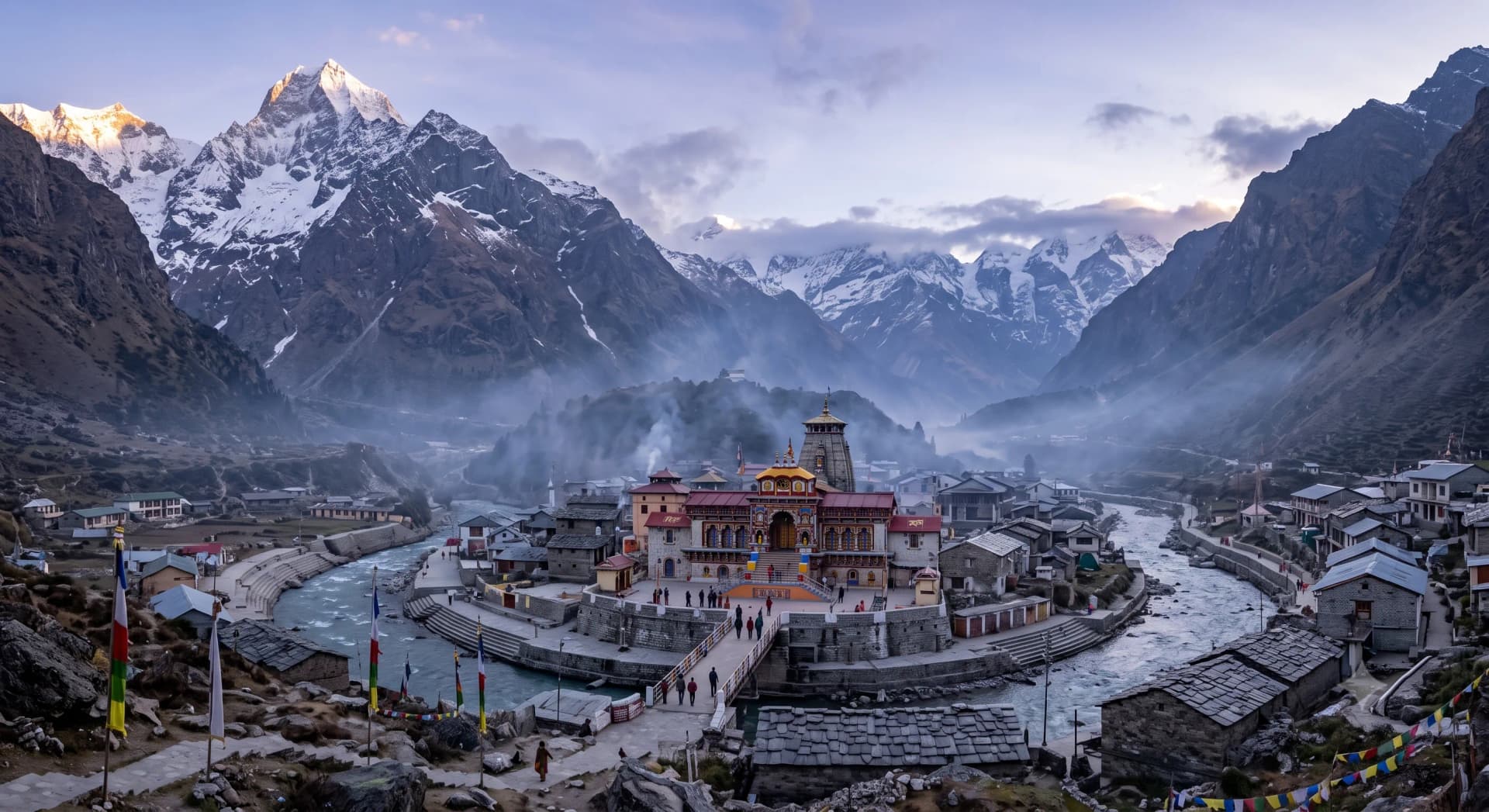
The supreme Shaivite pilgrimage of India, encompassing the twelve self-manifested (Swayambhu) pillars of cosmic light where Lord Shiva revealed Himself. Stretching from Kedarnath in the high Himalayas to Rameswaram in the southern sea, completing the circuit is traditionally believed to dissolve the cycle of rebirth.
The Twelve Luminous Pillars of Shiva
द्वादश ज्योतिर्लिंग — भगवान शिव के 12 ज्योतिर्मय स्वरूप
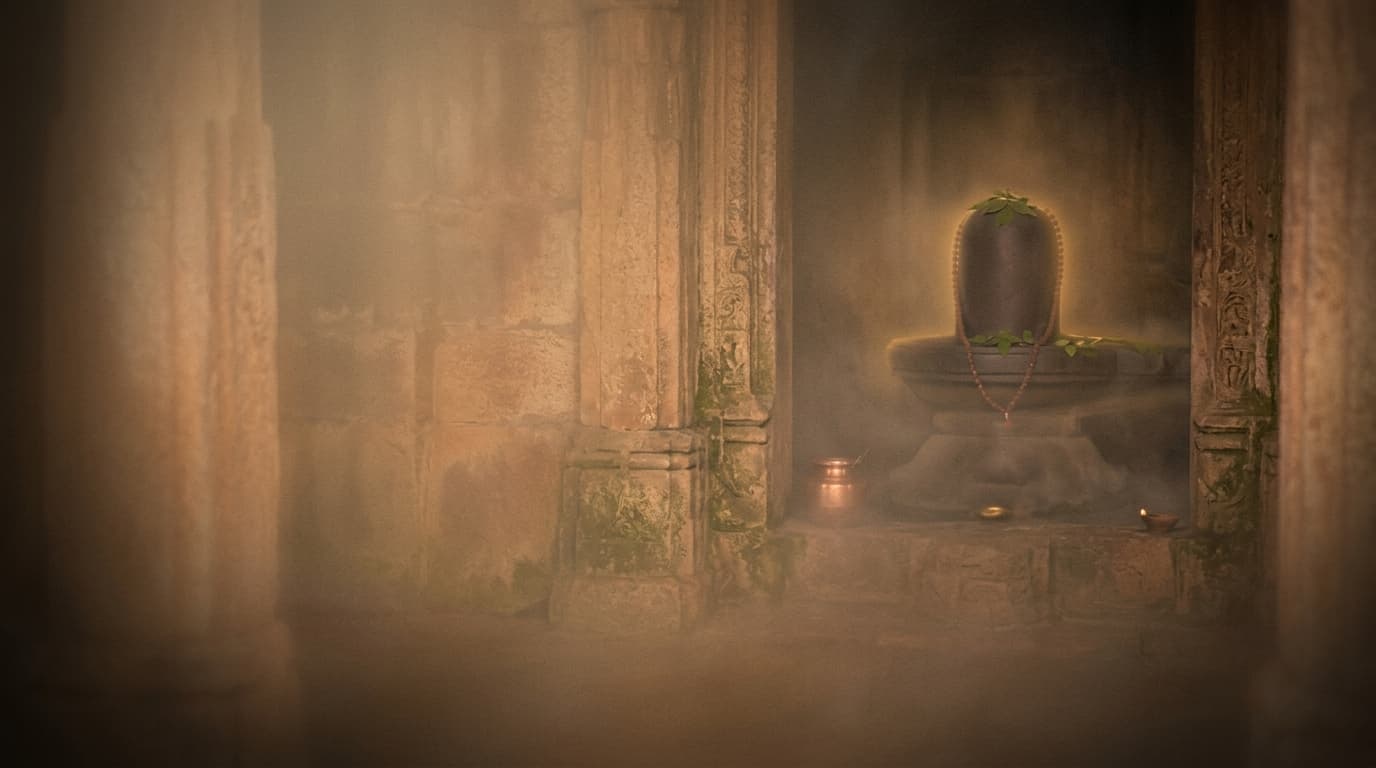
The concept of the Jyotirlinga is foundational to Puranic Shaivism. As recounted in the Shiva Purana and the Linga Purana, a cosmic dispute once arose between Brahma (the Creator) and Vishnu (the Preserver) regarding supremacy. To pierce their illusion, Shiva manifested as a beginningless, endless column of fiery light (Jyotirlinga) that traversed through all worlds.
Unable to discover its beginning or end, Vishnu admitted his limitation with humility, while Brahma falsely claimed to have reached the summit. Shiva revealed Himself, blessing Vishnu for his truthfulness. At the earnest prayer of both divinities for the welfare of mortals, Shiva agreed to permanently manifest a subtle portion of that infinite pillar of light at twelve sanctified geographical locations across the earth.
The word 'Jyoti' signifies divine, self-illumined spiritual light, while 'Linga' represents the unmanifest sign or cosmic mark of the formless Absolute (Nirguna Brahman). Thus, each Jyotirlinga is not a mere stone carved by human artisans, but a living vortex of self-manifested divine consciousness (Swayambhu).
Scriptural Enumeration and the Stotram Sequence
द्वादश ज्योतिर्लिंग स्तोत्र और परंपरा
The canonical order of the twelve Jyotirlingas is derived from the Shiva Purana (Koti Rudra Samhita, 1.21–24) and popularized across the subcontinent by Adi Shankaracharya's celebrated Sanskrit hymn, the 'Dwadasha Jyotirlinga Stotram':
> *Saurashtre Somanatham cha Srisaile Mallikarjunam |* > *Ujjayinyam Mahakalam Omkaram Amaleshwaram ||* > *Paralyam Vaidyanatham cha Dakinyam Bhimashankaram |* > *Setubandhe tu Ramesham Nagesham Darukavane ||* > *Varanasyam tu Vishwesham Tryambakam Gautami tate |* > *Himalaye tu Kedaram Ghrishnesham cha Shivalaye ||*
In accordance with this venerable hymn, the traditional sequence begins at Somnath on the western shore of Saurashtra, proceeds to Mallikarjuna atop Srisailam, moves north-west through Mahakaleshwar and Omkareshwar, ascends to the high glaciers of Kedarnath, journeys through the Western Ghats at Bhimashankar and Trimbakeshwar, purifies at Kashi on the Ganga, extends to Baidyanath in the east, sweeps down to Rameswaram in the southern ocean, touches Nageshwar, and concludes at Grishneshwar in Maharashtra.
Scriptural Recensions and Regional Traditions
पारंपरिक मत और क्षेत्रीय मान्यताएं
A thoughtful exploration of the Jyotirlinga tradition must acknowledge two historical instances where distinct regional communities hold authentic, competing scriptural identifications:
1. Vaidyanath / Baidyanath: - The pan-Indian consensus and largest pilgrimage centre is Baidyanath Dham at Deoghar in Jharkhand (identified with the Chitabhumi cemetery and Ravana's penance). - A longstanding tradition in Maharashtra reveres Parli Vaidyanath in Beed district as the true 'Vaidyanatham Paralyam' named in the stotram. 2. Nageshwar: - The widely visited shrine is Nageshwar Temple near Dwarka in Gujarat, identified with the mythological Darukavana forest. - Another ancient tradition in Maharashtra identifies Aundha Nagnath in Hingoli district as the primary Darukavana shrine, supported by stone architecture dating back to the Seuna (Yadava) period.
Rather than dismissing one in favor of the other, respectful tradition regards both claimants as consecrated seats of the divine presence, with many devout pilgrims choosing to visit both sites in their lifetime.
Modern Yatra Planning: Practical Regional Circuits
यात्रा की सरल योजना — 5 प्रमुख क्षेत्रीय समूह
Undertaking all twelve Jyotirlingas in an uninterrupted single journey requires covering more than 10,000 kilometres across eight states (Gujarat, Madhya Pradesh, Maharashtra, Uttarakhand, Uttar Pradesh, Jharkhand, Andhra Pradesh, and Tamil Nadu), taking at least 30 to 45 days.
Consequently, most pilgrims complete the Dwadash Jyotirlinga Yatra over multiple years through five practical geographic clusters: - Maharashtra Cluster (3 or 4 shrines): Trimbakeshwar (Nashik), Bhimashankar (Pune), Grishneshwar (Ellora), and optionally Parli/Aundha. Can be completed in 4 to 6 days. - Madhya Pradesh Cluster (2 shrines): Mahakaleshwar (Ujjain) and Omkareshwar (Khandwa). Can be completed in 2 to 3 days via Indore. - Gujarat Cluster (2 shrines): Somnath (Veraval) and Nageshwar (Dwarka). Can be completed in 3 to 4 days. - Northern / Eastern Cluster (3 shrines): Kashi Vishwanath (Varanasi), Baidyanath (Deoghar), and Kedarnath (Himalayas, open May–October). - Southern Cluster (2 shrines): Mallikarjuna (Srisailam, Andhra Pradesh) and Ramanathaswamy (Rameswaram, Tamil Nadu).
The Destinations
1. Somnath
सोमनाथ (गुजरात)
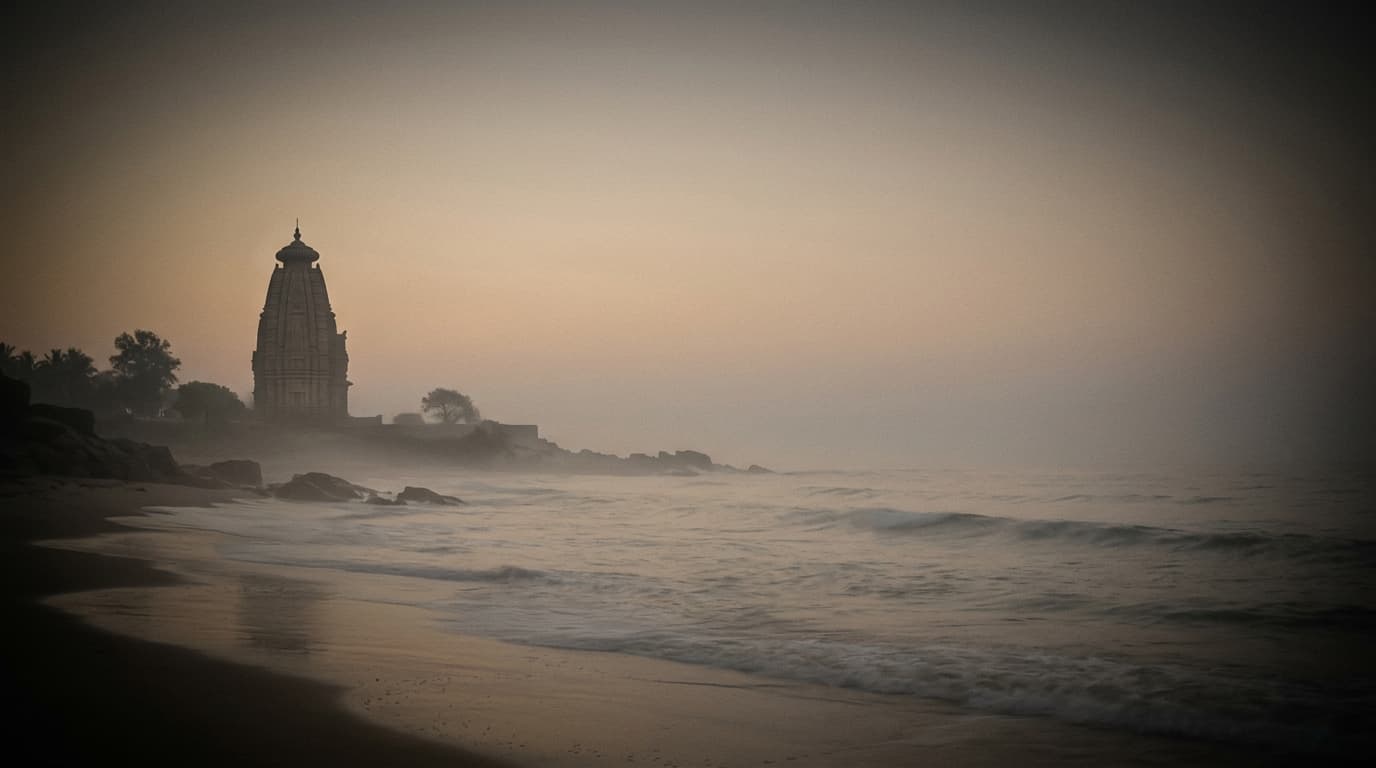
Prabhas Patan, Saurashtra, Gujarat. The foremost and first of the twelve Jyotirlingas, where Chandra (the Moon God) prayed to Shiva to be cured of Daksha's curse. Stands on the Arabian Sea coast, celebrated for its legendary resilience and rebirth.
2. Mallikarjuna
मल्लिकार्जुन (आंध्र प्रदेश)
Srisailam, Nallamala Hills, Andhra Pradesh. Perched atop the sacred Srisailam mountain overlooking the Krishna River (Patalaganga). Concurrently one of the 18 Maha Shakti Peethas (Bhramaramba Devi), where wild jasmine (Mallika) offerings remain central.
3. Mahakaleshwar
महाकालेश्वर (मध्य प्रदेश)
Ujjain, Madhya Pradesh. The only south-facing (Dakshinmukhi) Jyotirlinga, positioned at the cosmic centre of time and celebrated for its pre-dawn Bhasma Aarti using consecrated sacred ashes on the banks of the holy Shipra river.
4. Omkareshwar & Mamleshwar
ओंकारेश्वर एवं ममलेश्वर (मध्य प्रदेश)
Mandhata Island, Narmada River, Madhya Pradesh. Situated on an island naturally contoured like the Devanagari sacred syllable 'ॐ'. Comprises twin shrines: Omkareshwar on the island and Mamleshwar on the south mainland bank.
5. Kedarnath
केदारनाथ (उत्तराखंड)
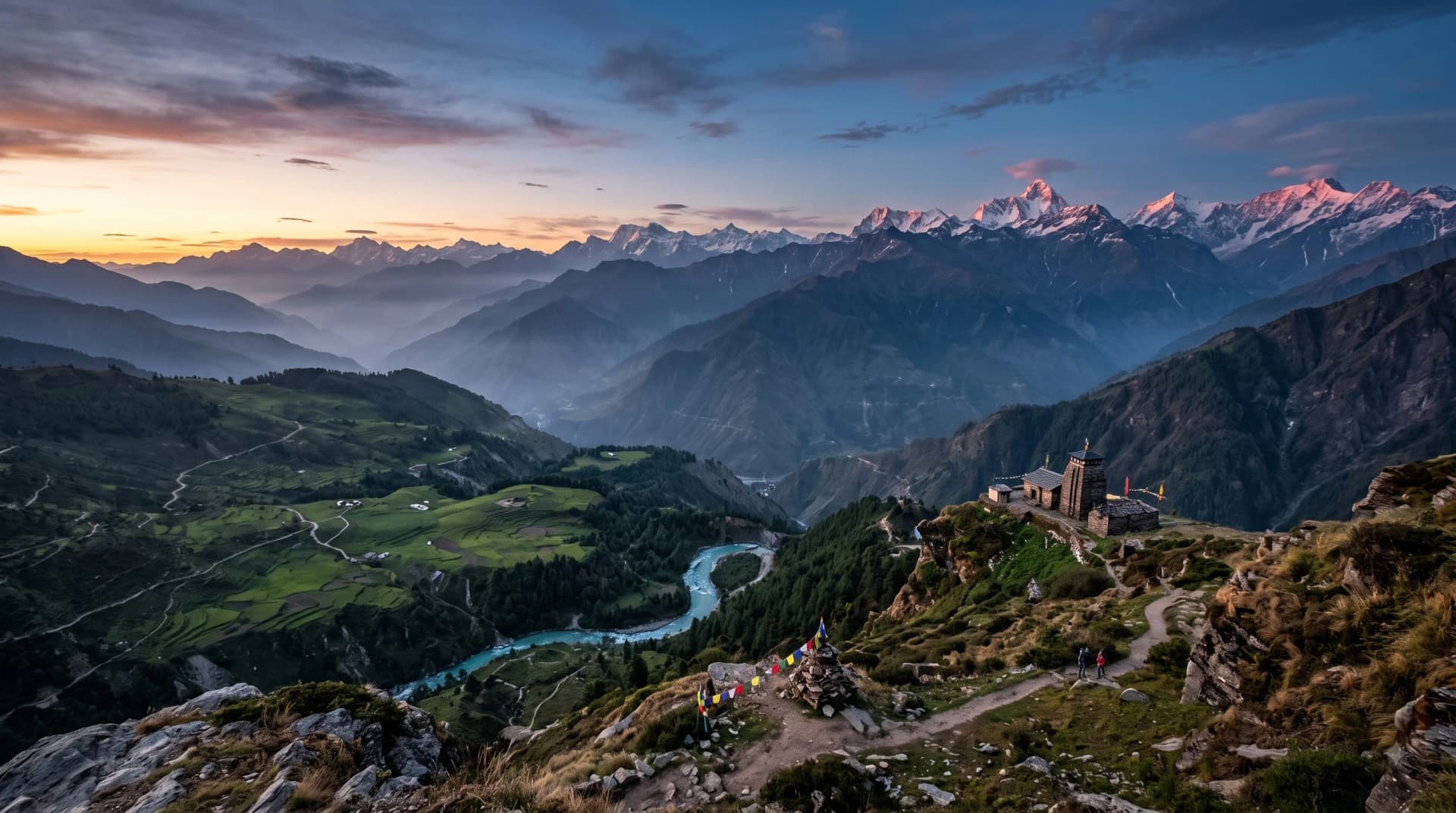
Rudraprayag District, Garhwal Himalayas, Uttarakhand. The northernmost and highest Jyotirlinga at 3,584 metres, surrounded by towering glaciers in the Mandakini valley. Venerated as the triangular hump of the cosmic bull manifestation.
6. Bhimashankar
भीमाशंकर (महाराष्ट्र)
Bhorgiri near Pune, Sahyadri Mountains, Maharashtra. Situated in the dense, cloud-forested Western Ghats at the origin of the sacred Bhima River. Dedicated to Shiva as the slayer of the demon Bhima, son of Kumbhakarna.
7. Kashi Vishwanath
काशी विश्वनाथ (उत्तर प्रदेश)
Varanasi, Uttar Pradesh. Situated on the western bank of the holy Ganga in the eternal city of Kashi. Traditionally revered as the immovable centre of liberation (Moksha Lakshmi Vilasa) where Shiva whispers the Taraka mantra.
8. Trimbakeshwar
त्र्यंबकेश्वर (महाराष्ट्र)
Trimbak, near Nashik, Maharashtra. Located at the base of Brahmagiri mountain at the sacred origin of the Godavari River. Unique for its hollow cavity enshrining three lingams representing the Trinity: Brahma, Vishnu, and Rudra.
9. Vaidyanath (Baidyanath)
वैद्यनाथ (झारखंड / महाराष्ट्र)
Deoghar, Santhal Parganas, Jharkhand (widely venerated pan-India); a parallel regional tradition venerates Parli Vaidyanath in Maharashtra. Celebrated as the Divine Physician (Vaidya) where Ravana's austerities took place; famous for the Shravani Mela Kanwar Yatra.
10. Nageshwar
नागेश्वर (गुजरात / महाराष्ट्र)
Near Dwarka, Saurashtra, Gujarat (traditionally held as Darukavana); a second historic tradition venerates Aundha Nagnath in Hingoli, Maharashtra. Dedicated to the Lord of Serpents, symbolizing mastery over time and illusion.
11. Ramanathaswamy (Rameswaram)
रामेश्वरम (तमिलनाडु)
Pamban Island, Tamil Nadu. The southernmost Jyotirlinga and the southern Char Dham. Consecrated by Sri Rama on the sea coast to atone for Brahmahatya dosha; renowned for its 1,200-pillar corridor and 22 sacred freshwater wells.
12. Grishneshwar (Ghushmeshwar)
घृष्णेश्वर (महाराष्ट्र)
Verul, near Ellora Caves, Chhatrapati Sambhaji Nagar, Maharashtra. The twelfth and final Jyotirlinga, associated with the pious devotee Ghushma. The red basalt temple was rebuilt in the 18th century by Rani Ahilyabai Holkar.
Yatra Guidance
Pilgrims may follow the scriptural order of the Dwadasha Jyotirlinga Stotram or complete the pilgrimage across 5 geographic clusters. The Indian Railway Catering and Tourism Corporation (IRCTC) and private tour operators run dedicated 'Dwadash Jyotirlinga Special Tourist Trains' covering the major accessible sites over a 15 to 20 day itinerary. Kedarnath must be planned between May and October, whereas central and southern shrines are best visited between October and March.
October to March is ideal for 11 of the 12 Jyotirlingas, offering cool and pleasant weather across the plains and coastal regions. Kedarnath operates on an alpine schedule, accessible strictly from Akshaya Tritiya (May) to Diwali (October/November).
30 to 45 days for a continuous pan-Indian circuit; or completed in 5 regional segments of 3 to 6 days each.
Related Temples
Sources
- Shiva Purana, Koti Rudra Samhita (Chapter 1)(scripture)
- Dwadasha Jyotirlinga Stotram (Adi Shankaracharya tradition)(scripture)
- Archaeological Survey of India (ASI) National & Regional Circles(government)
- Shree Somnath Trust, Kashi Vishwanath Devasthanam, & Mahakaleshwar Temple Trust(official)
- IRCTC Bharat Gaurav Tourist Train Circuit Records(official)