Pilgrimage
Char Dham
चार धाम
Badrinath · Dwarka · Jagannath Puri · Rameswaram
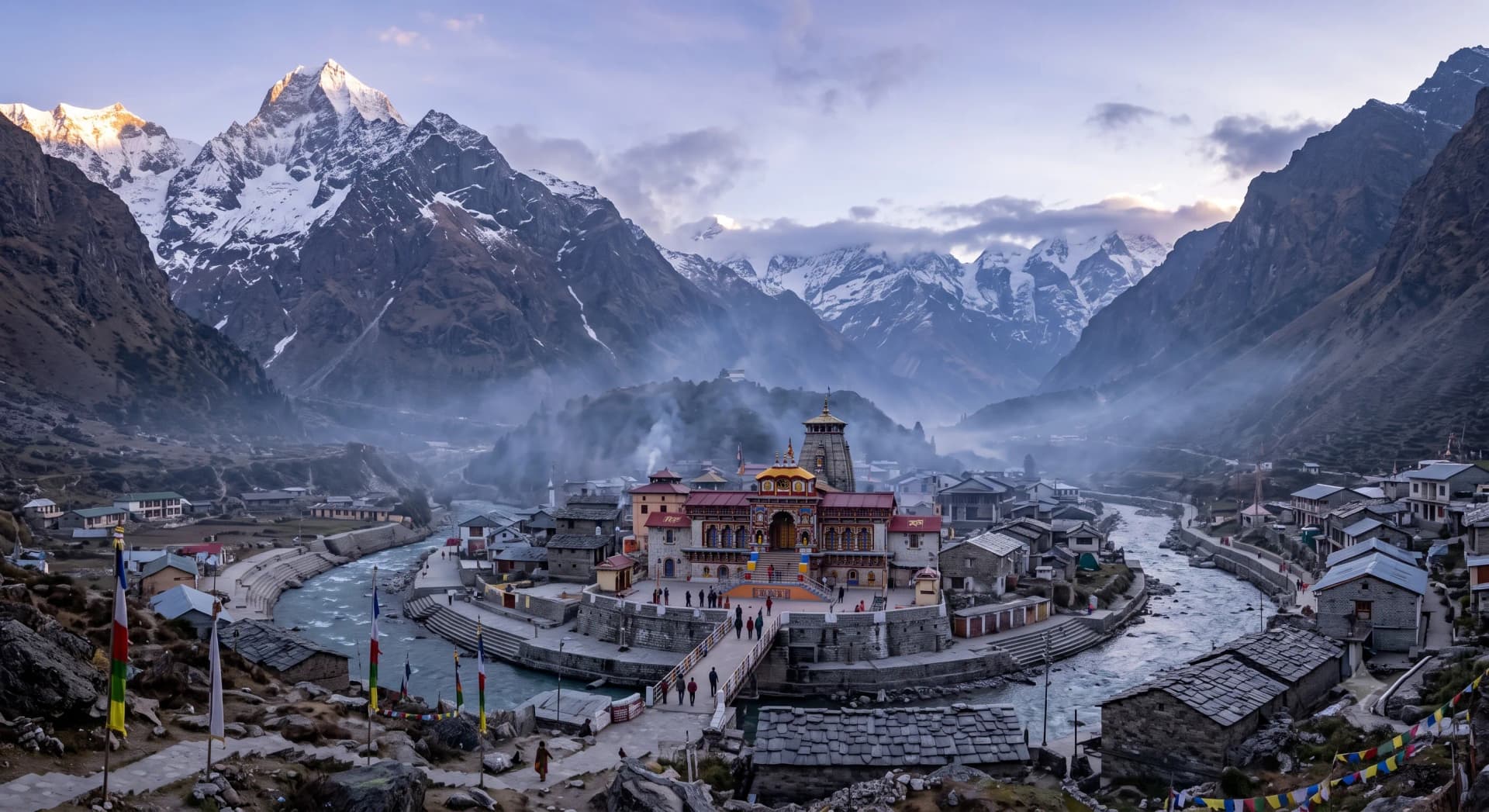
The four sacred abodes at the four cardinal points of the Indian subcontinent — Badrinath in the north, Dwarka in the west, Puri in the east, and Rameswaram in the south. Attributed to Adi Shankaracharya as a unifying pilgrimage. Completing all four is considered among the most meritorious acts in the Hindu tradition.
The Four Abodes
भारत के चार पावन धाम
The Char Dham (four abodes) are the four most sacred pilgrimage sites of Hinduism, located at the four cardinal points of the Indian subcontinent:
North — Badrinath (Uttarakhand), in the Garhwal Himalayas West — Dwarka (Gujarat), at the tip of the Kathiawar peninsula East — Jagannath Puri (Odisha), on the Bay of Bengal South — Rameswaram (Tamil Nadu), on Pamban Island in the Palk Strait
Completing the Char Dham pilgrimage — visiting all four sites — is considered among the most meritorious acts in the Hindu tradition. The full circuit, if undertaken by road and rail, covers roughly 7,500–8,000 km across the subcontinent.
Adi Shankaracharya and the Unifying Vision
आदि शंकराचार्य और चार धाम की परंपरा
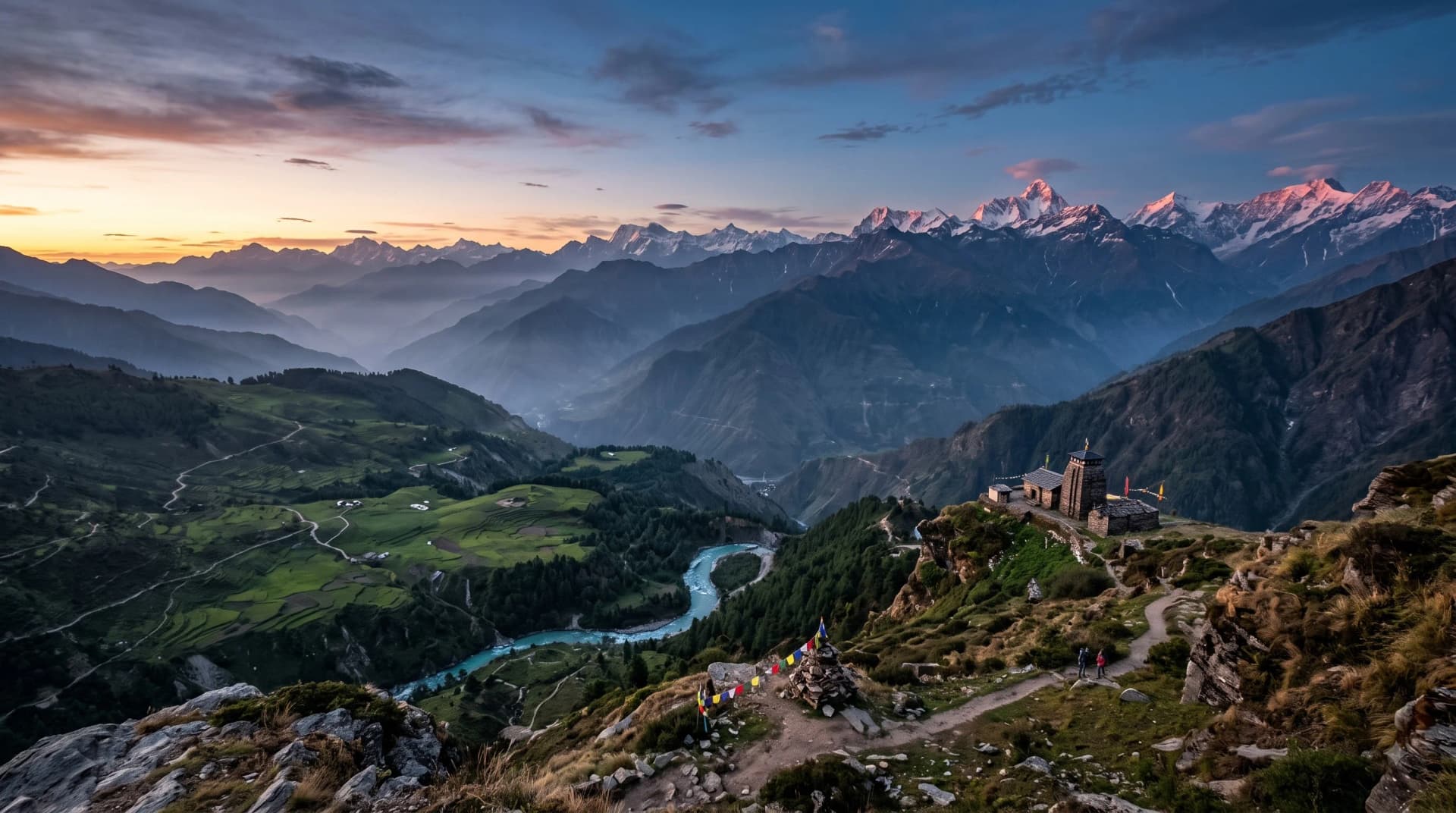
The Char Dham pilgrimage circuit is traditionally attributed to Adi Shankaracharya, the philosopher-saint of the 8th–9th century CE who is credited with revitalizing and unifying Hindu practice across India after a period of significant fragmentation.
Shankaracharya traveled across the entire Indian subcontinent in his relatively short life (traditionally dated to 788–820 CE), establishing four mathas (centres of learning) — at Sringeri (south), Dwaraka (west), Puri (east), and Joshimath near Badrinath (north) — and designating one site at each cardinal direction as a supreme pilgrimage destination.
The four sites are notable for their theological breadth: Badrinath is Vaishnava (Vishnu); Rameswaram is Shaiva (Shiva, installed by Ram himself); Puri transcends sectarian boundaries (Jagannath is claimed by Vaishnava, Shaiva, and Shakta traditions); Dwarka is Vaishnava (Krishna). A pilgrimage that spans Shiva and Vishnu, south and north, forest and ocean, is a pilgrimage across Hinduism itself.
The Four Sites — What Awaits
चारों पावन धामों का स्वरूप और दर्शन
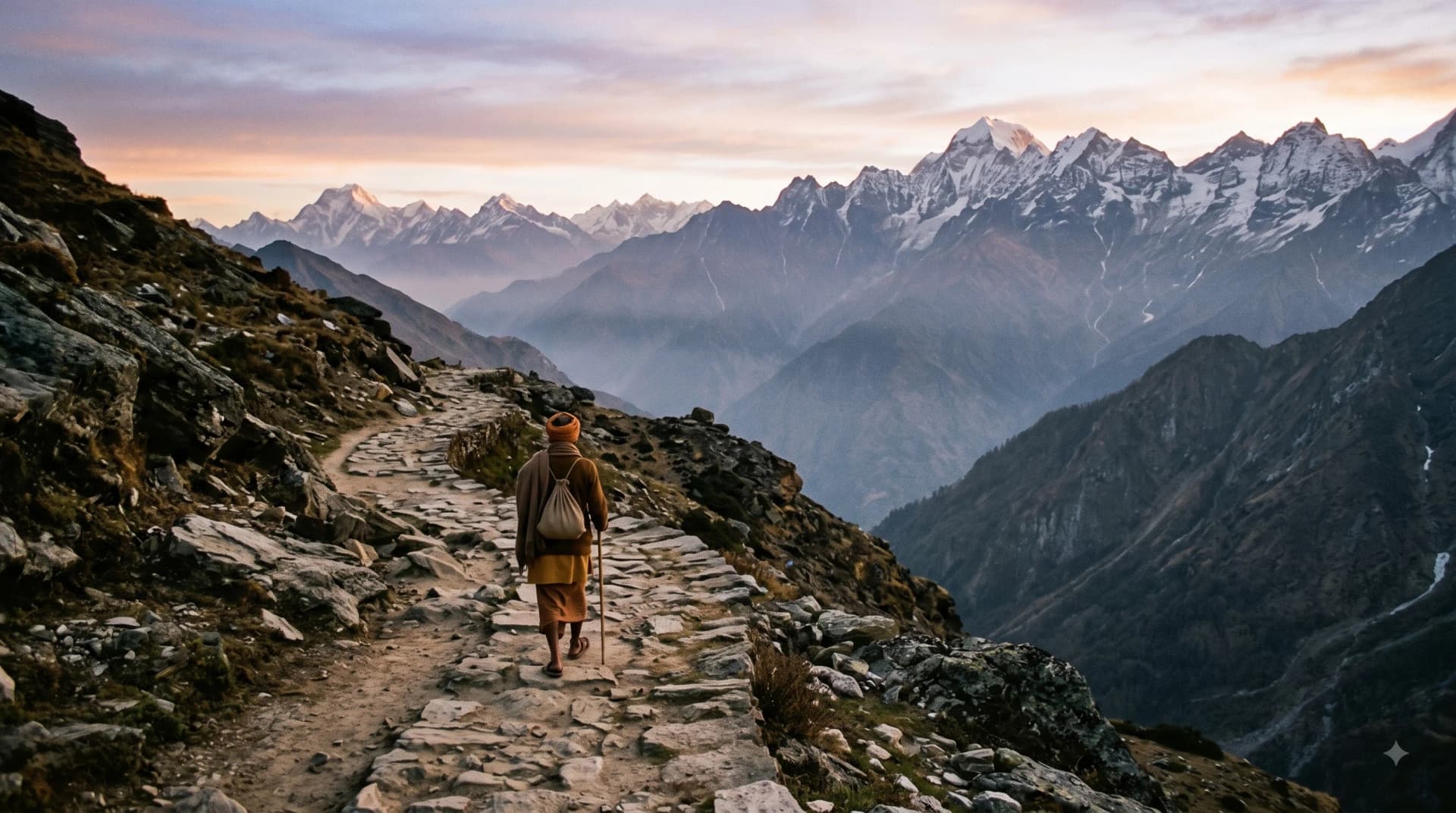
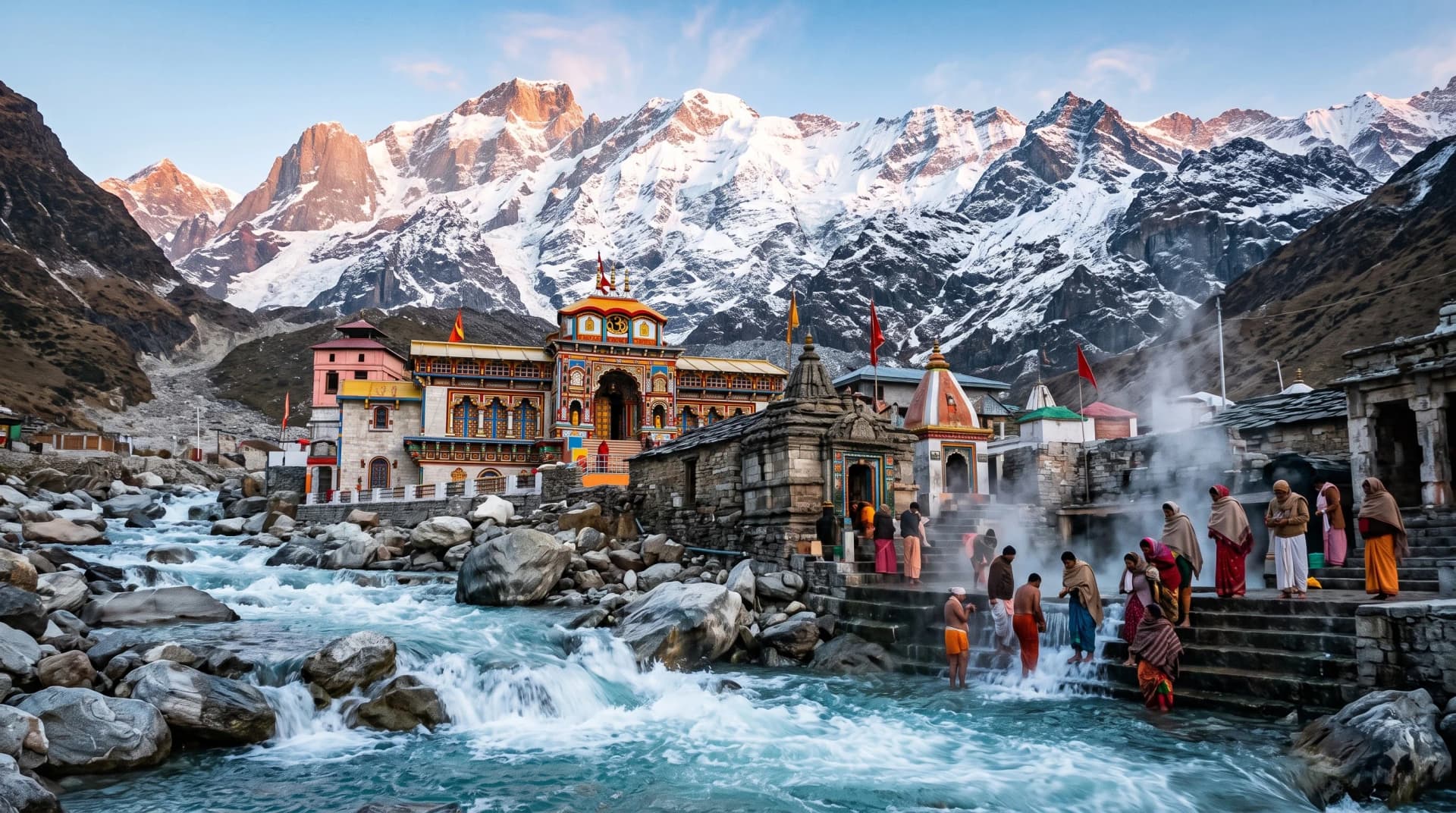
At Badrinath, Vishnu is worshipped in the Badri tree form (Badrinarayan) — a self-manifested black stone idol discovered in the Alaknanda river. The setting is extreme: snow peaks, a natural hot spring (Tapt Kund) where pilgrims bathe before darshan even when air temperatures are near zero, and the constant roar of the glacier-fed river. The temple opens in May and closes in November; in winter, the idol is carried to Joshimath for worship.
At Dwarka, Krishna is worshipped as Dwarkadhish (Lord of Dwarka) in a 72-metre Chalukya tower that is visible from the sea. The site is where the mythological golden city of Krishna is said to have stood — and, archaeologically, where ancient underwater structures have been found off the coast. The Gomati meets the Arabian Sea at this point.
At Jagannath Puri, the wooden deities of Jagannath, Balabhadra, and Subhadra are among the most distinctive in Indian sacred art — large, circular-faced, without conventional human proportions. The Rath Yatra pulls these deities through the streets of Puri on enormous wooden chariots, in a procession that has not stopped for centuries.
At Rameswaram, the Ramanathaswamy temple has the longest temple corridor in India — 1,212 metres of pillared walkway. Ram is said to have worshipped a Shivalinga here, which he named Ramanatha, after the battle of Lanka — making Rameswaram a site that is simultaneously sacred to Shaivite and Vaishnava traditions. The ritual requires bathing in 22 sacred wells (theerthams) within the temple complex.
The Destinations
Badrinath
बदरीनाथ
In the Garhwal Himalayas at 3,133 m — the most northerly Char Dham. Vishnu worshipped as Badrinarayan in a self-manifested idol (Shaligrama). The temple sits between the Nar and Narayan mountain ranges, on the banks of the Alaknanda river. Open only in summer (May–November); closed in winter as the valley receives heavy snowfall.
Dwarka
द्वारका
On the western tip of Gujarat, where the Gomati river meets the Arabian Sea. Krishna's legendary city. The 72-metre Dwarkadhish Jagat Mandir is a Chalukya masterpiece. The pilgrimage includes Bet Dwarka island (Krishna's palace) and the Rukmini Devi temple.
Jagannath Puri
जगन्नाथ पुरी
On the Bay of Bengal in Odisha — the easternmost Char Dham. Lord Jagannath (a form transcending sectarian boundaries) worshipped in a unique wooden form. The 12th-century Eastern Ganga temple. Site of the annual Rath Yatra, the world's largest chariot procession.
Rameswaram
रामेश्वरम
On Pamban Island in Tamil Nadu, in the Palk Strait between India and Sri Lanka — the southernmost Char Dham. Ramanathaswamy temple has the longest corridor (1,212 m) of any temple in India. Associated with Ram's bridge-building to Lanka. One of the 12 Jyotirlingas (Ramanathaswamy Jyotirlinga).
Yatra Guidance
The traditional Char Dham yatra follows the sequence: Badrinath (north) → Dwarka (west) → Puri (east) → Rameswaram (south), though the order is not fixed. Most pilgrims complete the circuit over 18–25 days. Some undertake it in shorter segments (one or two sites per journey) over multiple years; some complete it in a single extended journey. Group tours (typically departing from major cities) are widely available and reduce logistical complexity. Railway-based packages (Bharat Gaurav Train) and helicopter (for Badrinath) reduce the physical demands.
Badrinath restricts the window to May–November (closed in winter). This makes the pilgrimage season for the full circuit May–November. For the south and west (Rameswaram, Dwarka), October–March is most comfortable. Puri is accessible year-round but monsoon (June–September) is humid. A practical approach: Badrinath first (May–June), then Puri, Rameswaram, and Dwarka (October–November or February–March).
Minimum 18–25 days for the full circuit. Most pilgrims allow 30+ days to reduce exhaustion.
Related Temples
Sources
- Adi Shankaracharya biographical tradition (documented in the Shankara Vijaya texts)(scripture)
- Badrinath Kedarnath Temples Committee (badrinath-kedarnath.gov.in)(official)
- Jagannath Temple Administration (jagannath.nic.in)(official)
- Dwarkadhish Temple Trust (dwarkadhish.org)(official)
- Rameswaram — Ramanathaswamy Temple Administration, Tamil Nadu Hindu Religious and Charitable Endowments(government)
- Archaeological Survey of India (ASI)(government)