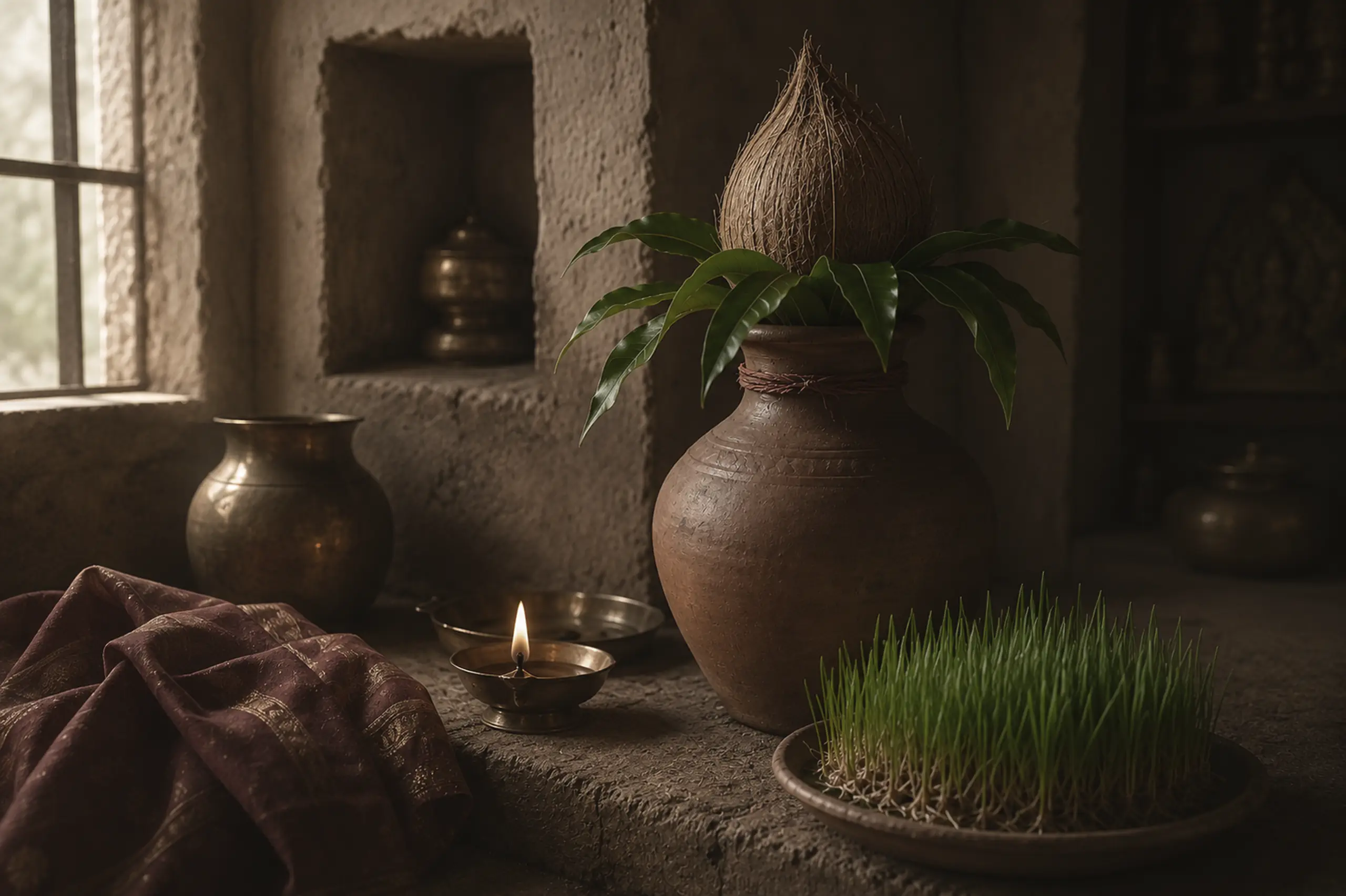
What is Durga Puja?
Durga Puja (दुर्गा पूजा / दुर्गोत्सव) is a major five-day socio-religious celebration honoring Goddess Durga's triumph over Mahishasura. It is celebrated with great artistic pandals, traditional drumming (Dhak), community gatherings, and ritual worship primarily in Bengal, Assam, Odisha, Tripura, and across global diaspora communities.
Why is it observed?
The festival marks Goddess Durga's annual arrival from her heavenly abode in Mount Kailash to her earthly home, accompanied by her four children — Lakshmi, Saraswati, Ganesha, and Kartikeya. It celebrates maternal protection, spiritual power, and the defeat of evil forces.
How is it observed?
Observances begin with Mahalaya (invoking the Goddess via Chandi Path). Idols are unveiled on Bodhon (Shashthi), followed by Pran Pratistha, Kola Bou bathing on Saptami, Sandhi Puja on Ashtami, Dhunuchi dance on Navami, and concluding with Sindoor Khela and idol immersion (Visarjan) on Vijayadashami.
When does it occur?
Durga Puja coincides with the second half of Shardiya Navratri in the lunar month of Ashwin (September-October). The main public and ritual celebrations span from Shashthi (sixth lunar day) to Vijayadashami (tenth lunar day).
Key Highlights
Mahalaya & Chandi Path
A week before Durga Puja, Mahalaya marks the dawn of the Goddess's journey. Families wake before sunrise to listen to sacred chants of the Devi Mahatmya (Mahishasura Mardini).
Maha Ashtami & Sandhi Puja
Maha Ashtami is the most solemn day of worship. Sandhi Puja takes place during the precise 48-minute transition window between Ashtami and Navami tithis, lit by 108 lamps.
Dhunuchi Naach & Dhak
On Evening Aarti and Navami, devotees dance before the deity holding earthen incense burners (Dhunuchi) filled with burning coconut husk and camphor to the rhythmic beats of Dhak drums.
Sindoor Khela & Visarjan
On Vijayadashami, married women offer sweets and apply red vermilion (Sindoor) to the Goddess and each other before carrying the idols in joyful processions for river immersion (Visarjan).
Frequently asked questions
How long does Durga Puja last?
While ritual preparation begins on Mahalaya, the main Durga Puja festival spans five core days from Bilva Nimantran / Shashthi to Vijayadashami.
What is Sandhi Puja?
Sandhi Puja is a highly sacred ritual performed during the last 24 minutes of Ashtami tithi and the first 24 minutes of Navami tithi, marking the exact moment Goddess Durga defeated Chanda and Munda.
Who are the deities worshipped alongside Durga?
Goddess Durga is worshipped together with her four divine children: Goddess Lakshmi (wealth), Goddess Saraswati (knowledge), Lord Ganesha (wisdom), and Lord Kartikeya (courage).
What is Sindoor Khela?
Sindoor Khela is a vibrant Vijayadashami ritual where married women offer vermilion and sweets to Goddess Durga and then gently smear vermilion on each other's faces wishing long life and happiness.
What is the difference between Navratri and Durga Puja?
Both occur simultaneously in autumn. Navratri focuses on nine nights of fasting and Navadurga worship (or Garba), while Durga Puja is a grand five-day ritual and cultural celebration centered on the Mahishasura Mardini idol complex.