What is Govardhan Puja?
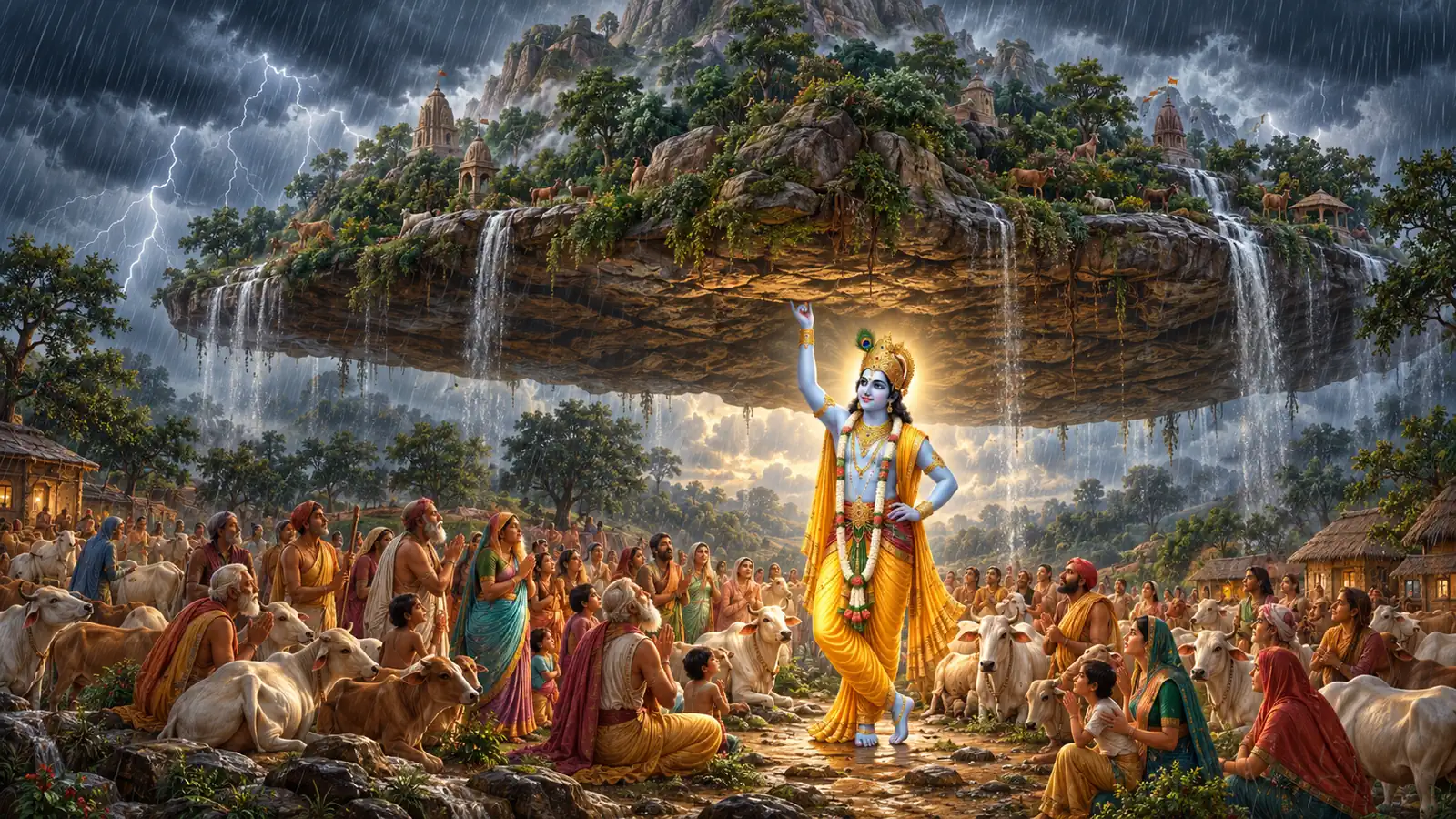
Govardhan Puja, also celebrated as Annakut (meaning 'mountain of food'), falls on the first lunar day (Pratipada) of the bright fortnight (Shukla Paksha) in the month of Kartik. It is the fourth day of the five-day Diwali festival cluster. The festival commemorates Lord Krishna lifting Mount Govardhan on his little finger to shelter the people and cattle of Vraja from torrential storms. Families create symbolic miniature hillocks from cow dung or earth, decorate them with flowers, perform circumambulation (parikrama), and offer a vast array of vegetarian dishes to Lord Krishna and Govardhan Hill. In Gujarat, this day marks the beginning of the Gujarati New Year (Bestu Varas), while in Maharashtra and southern India, it is observed as Bali Pratipada.
Why is it observed?
In the Srimad Bhagavatam (10.24–27), Sri Krishna sees the cowherds of Vraja preparing their yearly sacrifice to Indra, the god of rain. He reasons with his father Nanda and the elders that their living comes from the cows, the forests and Mount Govardhan, which give pasture and water, and the cowherds worship the hill instead. An angered Indra sends the Samvartaka storm clouds over Vraja. Krishna lifts Govardhan and holds it up with one hand for seven days, sheltering people and cattle beneath it; tradition and art show it resting on the little finger of his left hand. Indra then lays down his pride and comes with Surabhi, the celestial cow, to offer prayers.
How is it observed?
In the morning, families build a symbolic figure of Mount Govardhan in the courtyard or neighborhood ground using fresh cow dung or clay. The figure is decorated with flowers, cotton, and miniature cowherd shapes. Devotees offer milk, water, and sweets while performing parikrama (circumambulation) around it. A hallmark of the festival is the Annakut, where dozens of traditional vegetarian preparations—curries, grains, fried savories, sweets, and seasonal produce—are arranged in mounds before the deity before being shared as prasad. Cows and calves are bathed, garlanded, and fed fresh grass and jaggery as an expression of gratitude. In western and southern regions, prayers to King Bali and traditional indoor games are also observed.
When does it occur?
Govardhan Puja is observed on Kartik Shukla Pratipada, traditionally in the morning; some panchangs also give an evening time. It usually falls on the day after Diwali. When Amavasya runs on into the next day and Pratipada begins late, the puja moves a day further, so in some years there is a gap day between Diwali and Govardhan Puja. Panchangs can differ on this, so follow the one your family keeps.
Key Highlights
Lifting of Mount Govardhan
Remembers Lord Krishna holding up Govardhan for seven days to shelter the people and cattle of Vraja from the storm.
Annakut & Chhappan Bhog
Offering elaborate mounds of newly harvested grains, sweets, and traditional dishes in gratitude for nature's sustenance.
Veneration of Cows (Gau Puja)
Bathing, decorating, and feeding cows and calves, recognizing their central role in pastoral life and sustainable agriculture.
Regional Traditions
Celebrated as Bestu Varas (New Year) in Gujarat, and as Bali Pratipada across Maharashtra, Karnataka, and southern India.
Frequently asked questions
What is the difference between Govardhan Puja and Annakut?
The two terms describe different aspects of the same celebration. Govardhan Puja refers to creating and worshiping the symbolic form of Mount Govardhan and the cows, while Annakut (meaning 'mountain of food') refers specifically to the large feast of grains, vegetables, and sweets offered to Lord Krishna.
Why is the symbolic Govardhan made from cow dung?
In rural Indian tradition, cow dung is valued as a sacred, purifying material closely linked with agricultural fertility. Since the Govardhan festival centers on pastoral life and gratitude to cattle, using fresh cow dung connects the ritual directly to the earth and the cows that sustain it.
Why are cows worshiped on Govardhan Puja?
Lord Krishna grew up among the cowherds of Vraja and is called Gopala, the keeper of cows. In the Bhagavatam he tells the cowherds that tending cows is their own calling and that the cows and the hill sustain them, so the day is kept with gratitude to the cows.
Why does Govardhan Puja sometimes fall two days after Diwali instead of the next day?
Govardhan Puja follows Kartik Shukla Pratipada. When Amavasya runs on into the day after Diwali and Pratipada begins late, the puja moves to the following day, leaving a gap day in between. The date shown on this page is the one checked for the current year; panchangs can differ, so follow the one your family keeps.
What is Bali Pratipada and how is it related to this day?
In Maharashtra, Karnataka and some other regions, this day remembers King Bali, to whom Lord Vamana gave the rule of the netherworld and, by tradition, leave to visit the earth once a year. Where the north dwells on Krishna and Govardhan, these regions welcome King Bali; in Gujarat the same day begins the new year.