What is Pitru Paksha?
Pitru Paksha (पितृ पक्ष) is a 16-day lunar fortnight dedicated to honoring and offering gratitude to ancestors and departed family members. It begins on the Purnima (full moon) of Bhadrapada month or the first day of the waning fortnight (Krishna Paksha) of Ashwin month, concluding on Mahalaya Amavasya.
Why is it observed?
In Hindu tradition, remembrance of forebears is held as an essential reflection of personal gratitude (Pitru Rina). Observing Pitru Paksha offers families a dedicated period each year to express quiet thankfulness for the life, values, and care passed down by previous generations.
How is it observed?
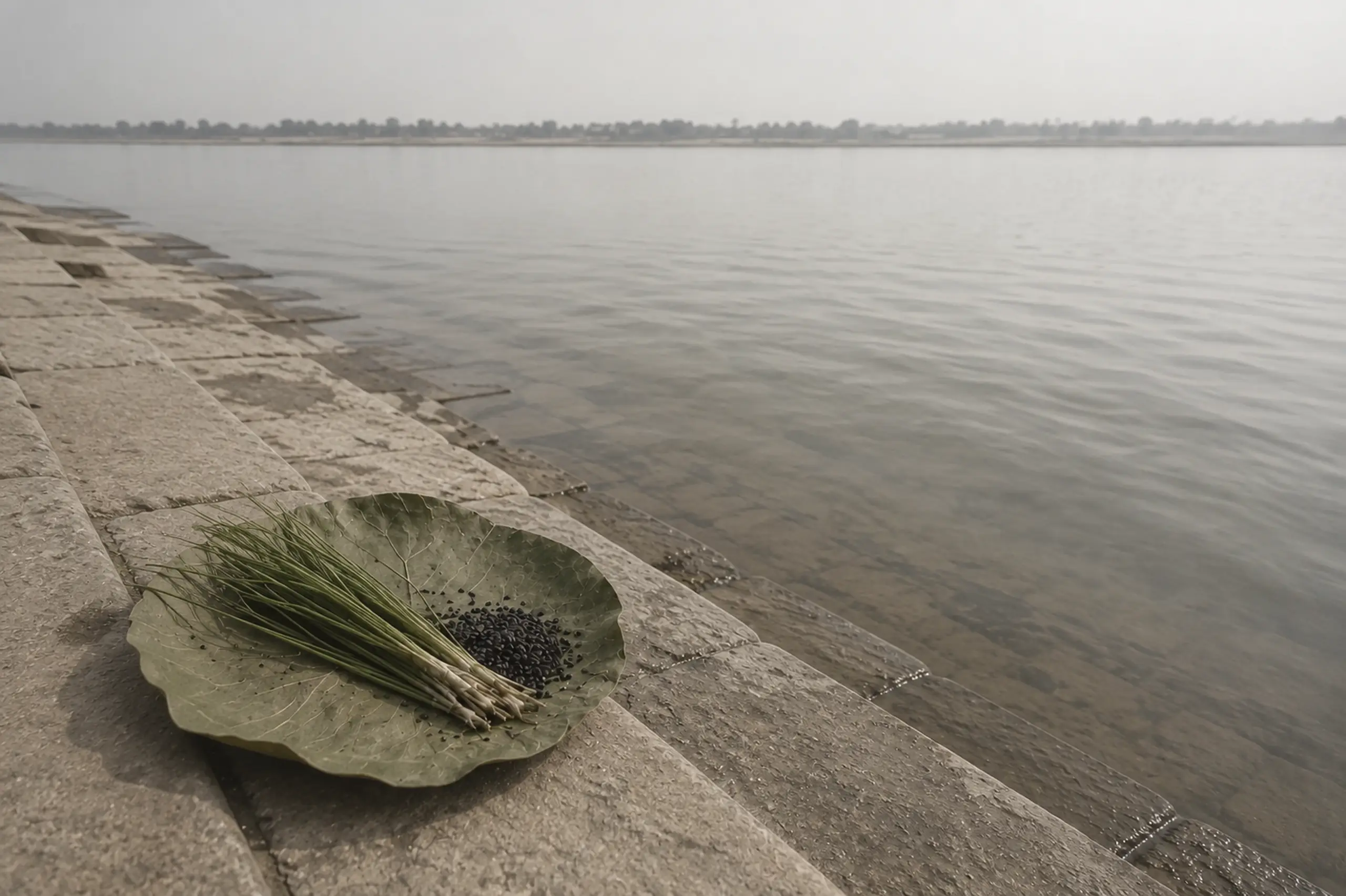
Observances typically involve offering water and sesame seeds (Tarpan), preparing traditional meals offered in memory of departed relatives, donating food and clothes to the needy, and observing a serene atmosphere of reflection during the afternoon hours (Aparahna kaal).
When does it occur?
Pitru Paksha recurs annually during the dark fortnight (Krishna Paksha) of the lunar month of Ashwin, typically falling between mid-September and mid-October on the Gregorian calendar. The exact date shifts yearly according to the Hindu lunar calendar.
Key Highlights
Mahalaya Amavasya
The final day of Pitru Paksha is Mahalaya Amavasya, considered the most prominent day of the fortnight when remembrance offerings are made for all ancestors collectively.
Aparahna Kaal Timing
According to classic liturgical texts like Nirnaya Sindhu, ancestral remembrance rituals are traditionally performed during Aparahna kaal — the afternoon window of the day.
Tarpan & Acts of Kindness
Offerings of clean water, barley, and black sesame seeds (Tarpan) alongside acts of charity and feeding animals or those in need are central practices during this period.
Focus on Gratitude & Memory
The spirit of Pitru Paksha emphasizes mindful gratitude, humility, and family reflection rather than elaborate rituals or fear of omission.
Frequently asked questions
What is the primary significance of Pitru Paksha?
Pitru Paksha is a designated annual period of quiet remembrance and gratitude for departed ancestors, acknowledging their contribution to our lives and lineage.
Which day of Pitru Paksha is observed for a specific ancestor?
Traditionally, remembrance is observed on the specific lunar tithi (day) on which the family member passed away, regardless of the month.
What if the exact tithi of an ancestor's passing is not known?
Traditional texts suggest performing remembrance on Mahalaya Amavasya (the last day of the fortnight), which honors all ancestors collectively.
Why is Aparahna kaal emphasized for Shraddha rituals?
Puranic and Dharmashastra texts define the day into five time windows (Kaal), assigning Aparahna — the afternoon window — as the dedicated time for ancestral offerings.
Are new celebrations or purchases restricted during Pitru Paksha?
Cultural customs vary by region. Many families choose to keep the period quiet and somber out of respect for memory, though practice is guided by personal and family tradition.
How can someone honor ancestors simply if full rituals cannot be performed?
Simple gestures like offering water, remembering departed loved ones in quiet reflection, feeding animals, or donating to charitable causes carry deep spiritual significance.