What is Raksha Bandhan?
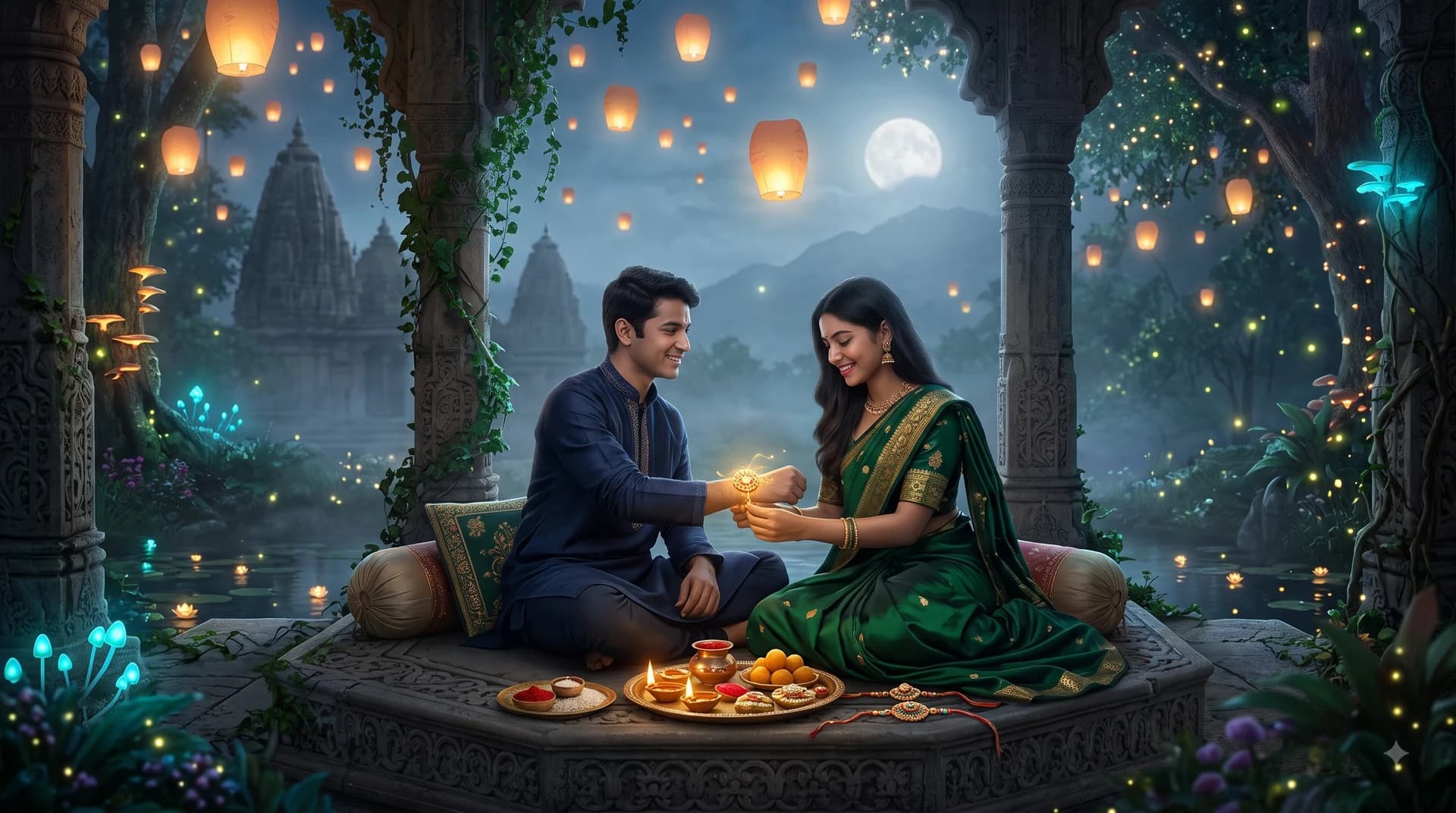
Raksha Bandhan (रक्षाबंधन, also known as Rakhi, Shravani, or Saluno) is an ancient Hindu festival celebrating the sacred bond of protection, love, and duty between siblings. It falls on Shravana Purnima — the full moon day of the lunar month of Shravana (August). On this day, sisters tie a decorative thread (Rakhi) on their brothers' right wrists, praying for their long life and prosperity, while brothers offer gifts and pledge protective support.
Why is it observed?
The word 'Raksha' means protection and 'Bandhan' means to tie. According to Nirnaya Sindhu, tying the Raksha Sutra on Shravana Purnima during an auspicious Bhadra-free window grants spiritual protection and harmony for the entire year. Ancient scriptures record Raksha Sutra traditions spanning deities, sages, and warriors, including Indrani tying the thread on Indra's wrist in the Bhavishya Purana.
How is it observed?
Devotees perform a morning bath followed by puja. The sister prepares a thali containing Rakhi, Roli, Akshat, Diya, and sweets. In an auspicious Bhadra-free window, she applies a tilak, ties the Rakhi on her brother's wrist, performs Aarti, and offers sweets. The brother responds with gifts and blessing vows. Simultaneously, Vedic scholars perform Shravani Upakarma (changing the sacred thread / Yajnopavita).
When does it occur?
Raksha Bandhan is celebrated on Shravana Purnima tithi during Aparahna Kaal (afternoon). If Bhadra Kaal (Vishti Karana) overlaps with Aparahna, the ceremony is strictly delayed until Bhadra ends (often during Pradosh Kaal). On the Gregorian calendar, it falls in August.
Key Highlights
Aparahna Kaal & Strict Bhadra Exclusion
According to Nirnaya Sindhu, the primary timing for Raksha Bandhan is Aparahna Kaal on Shravana Purnima. Performing the ceremony during Bhadra Kaal (Vishti Karana) is strictly forbidden ('भद्रायां द्वे न कर्तव्ये श्रावणी फाल्गुनी तथा').
Puranic Legends: Indrani, Bali & Draupadi
Bhavishya Purana narrates Indrani tying a sacred thread on Indra's wrist before war. Bhagavata Purana details Goddess Lakshmi tying a thread on King Bali. Mahabharata describes Draupadi tying a cloth strip on Krishna's wounded finger.
Shravani Upakarma & Avani Avittam
Shravana Purnima is also revered across India for Shravani Upakarma — the Vedic ritual of renewing the sacred thread (Yajnopavita) and initiating Vedic studies (known as Avani Avittam in South India).
The Sacred Rakhi Ritual
A Rakhi is not merely a decorative thread, but a sacred vow of protection, mutual respect, and familial harmony that transcends geographical boundaries.
Frequently asked questions
Why is Bhadra Kaal strictly avoided during Raksha Bandhan?
According to Nirnaya Sindhu, performing Raksha Bandhan (Shravani) or Holika Dahan (Phalguni) during Bhadra Kaal brings suffering. Therefore, the ritual is performed only after Bhadra Kaal ends.
What is the most auspicious time (muhurat) to tie Rakhi?
Aparahna Kaal (afternoon) on Shravana Purnima is the most auspicious window, provided it is free from Bhadra. If Bhadra overlaps with Aparahna, Pradosh Kaal after Bhadra ends is selected.
What is Shravani Upakarma?
Shravani Upakarma is an ancient Vedic ritual performed on Shravana Purnima where people take a holy bath, offer Tarpan to Vedic Rishis, and change their Yajnopavita (sacred thread).
What scriptures detail the history of Raksha Bandhan?
Nirnaya Sindhu, Dharmasindhu, Bhavishya Purana, Srimad Bhagavata Purana, and the Mahabharata all contain references to the Raksha Sutra tradition.