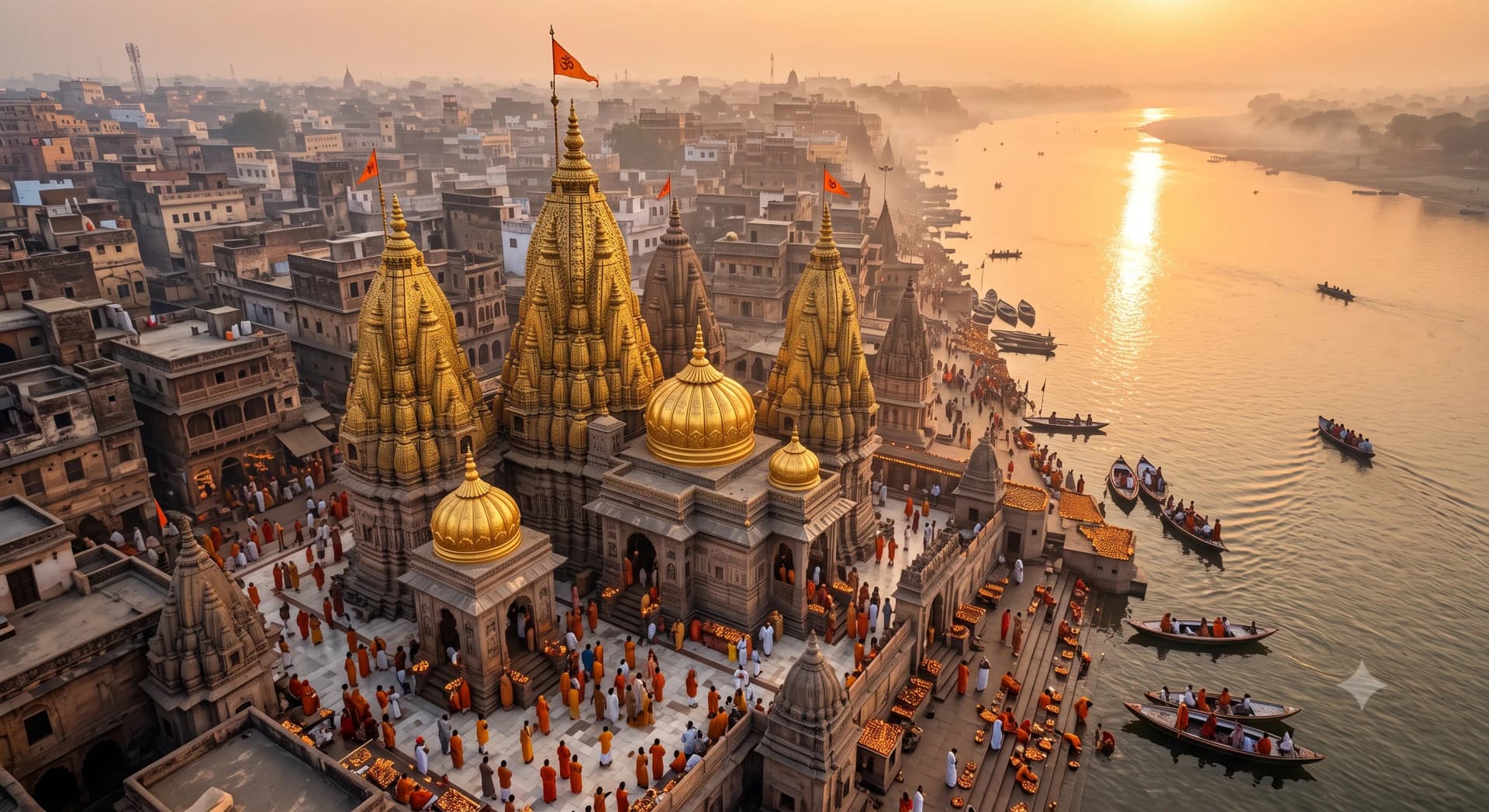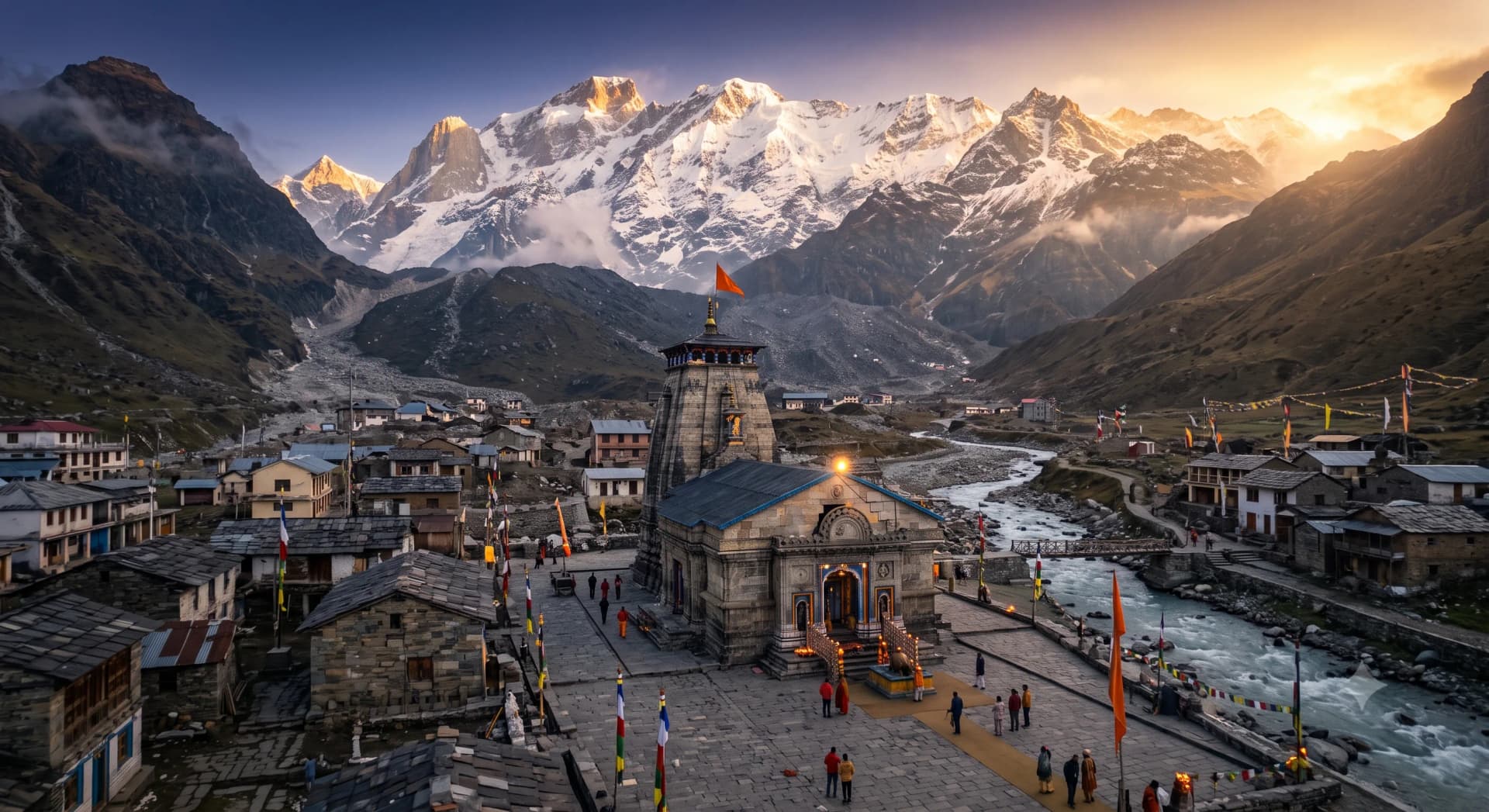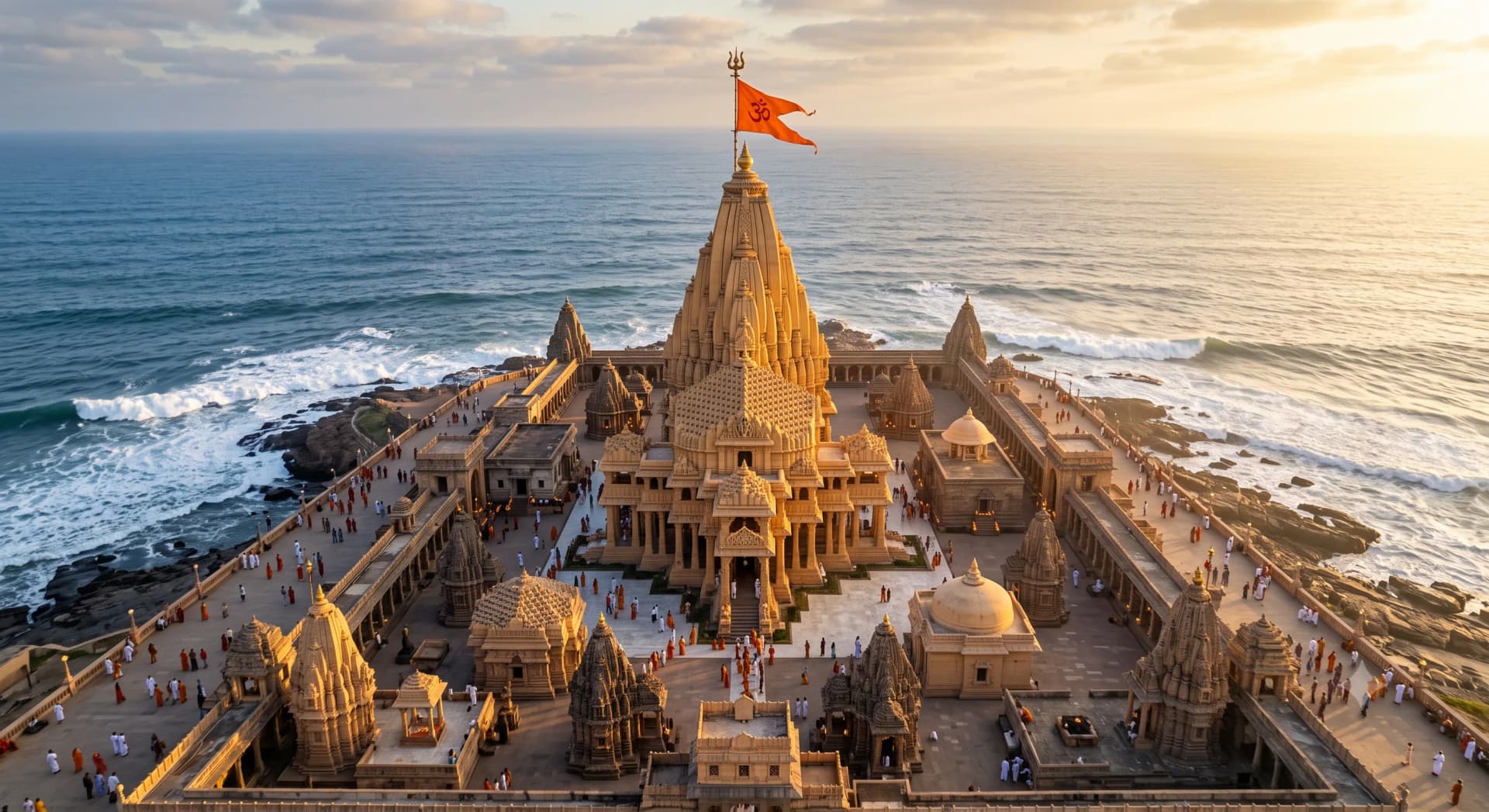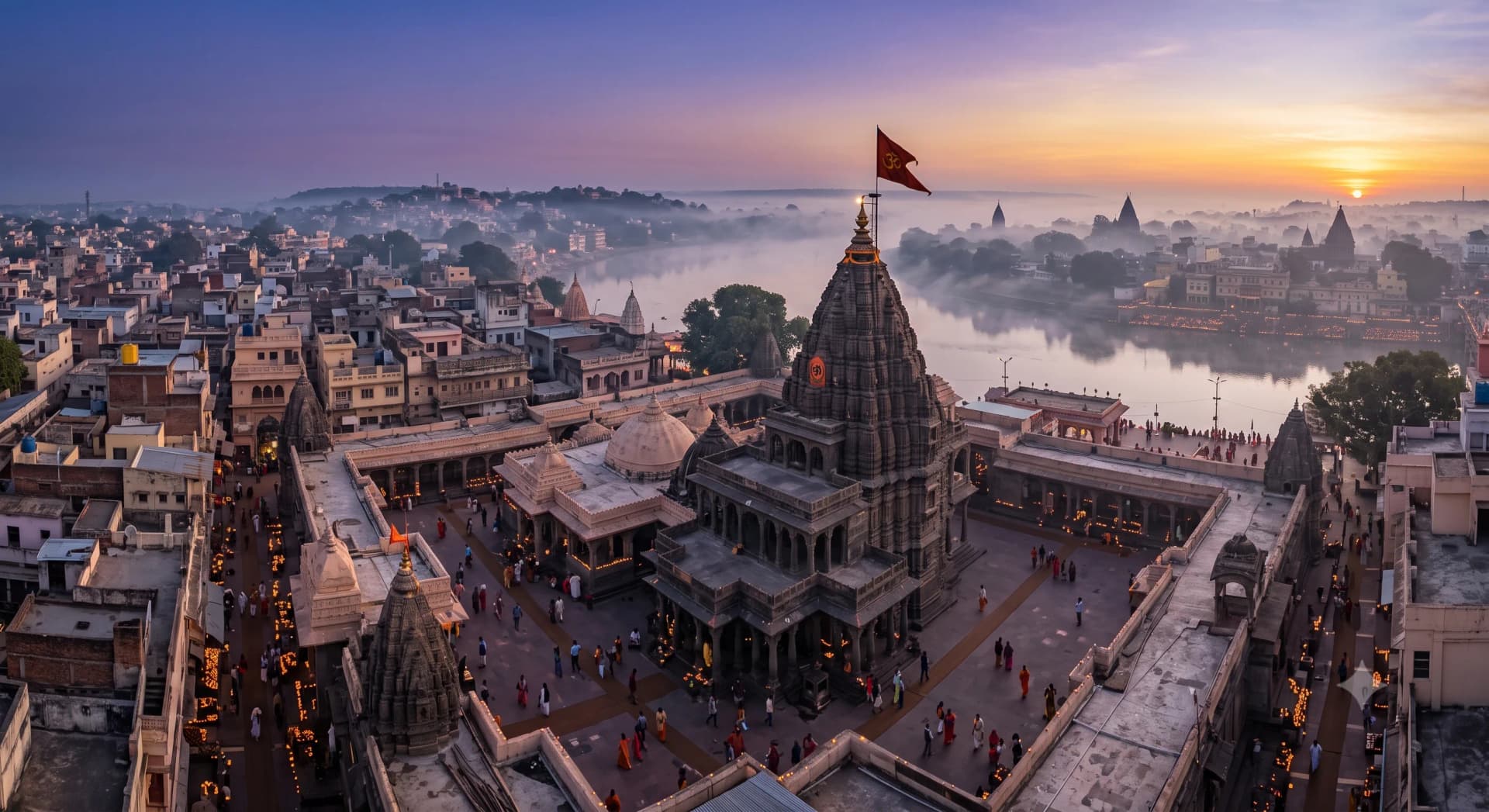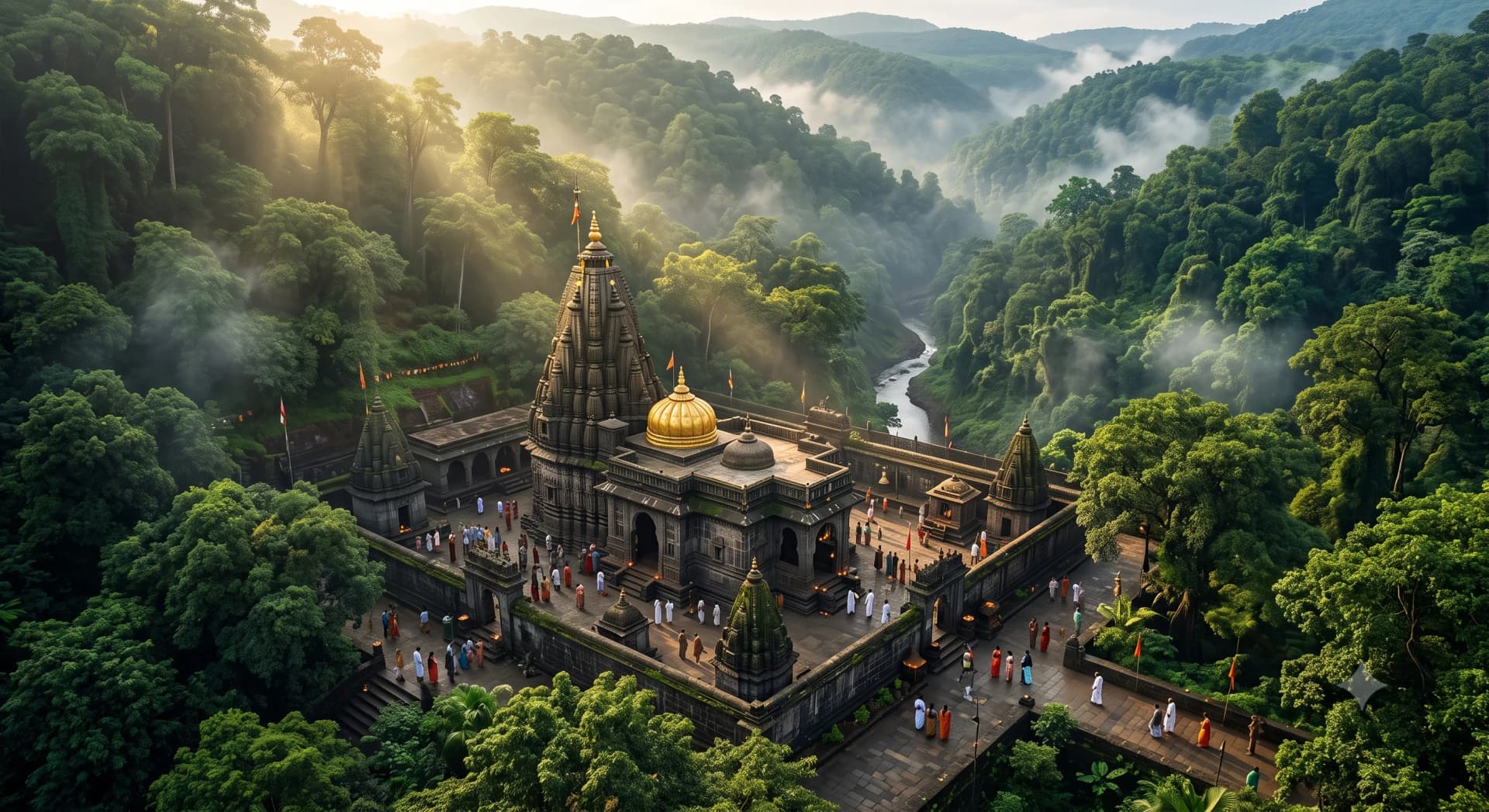
Bhorgiri near Pune, Sahyadri Mountains, Maharashtra
भीमाशंकर ज्योतिर्लिंग मंदिर
Bhimashankar Jyotirlinga Temple
द्वादश ज्योतिर्लिंगों में छठा पावन धाम, जहां सह्याद्रि पर्वतमाला के सघन वनों से पवित्र भीमा नदी का उद्गम होता है। यहां भगवान शिव ने अपने अनन्य भक्त सुदक्षिण की रक्षा हेतु असुर भीम का संहार कर ज्योतिर्लिंग स्वरूप धारण किया था।
सह्याद्रि की वादियों में पावन उद्गम
The Origin in the Sahyadri Cloud Forest
Bhimashankar is situated at an elevation of approximately 1,000 metres (3,280 feet) in the Khed taluka of Pune district, Maharashtra. Perched on a crest of the Sahyadri Range (the Western Ghats), the temple is surrounded by the Bhimashankar Wildlife Sanctuary, a biodiversity hotspot renowned as the natural habitat of the Malabar giant squirrel (Shekru), the state animal of Maharashtra.
The geographical setting is intensely sacred: directly behind the temple complex emerges the sacred Bhima River (often referred to as Chandrabhaga downstream at Pandharpur), which cascades down through forested gorges before traversing southeast across Maharashtra and Karnataka to unite with the holy Krishna River.
Unlike city temples, Bhimashankar retains an untamed, contemplative mountain atmosphere. Throughout the monsoon months from June to September, the entire temple precinct is enveloped in drifting mountain clouds, morning mist, and rushing rainfed streams that tumble over basalt rock formations.
असुर भीम वध और ज्योतिर्लिंग प्राकट्य की कथा
The Legend of Demon Bhima and King Kamrupeshwar
The sacred manifestation of the Bhimashankar Jyotirlinga is recounted in the 20th chapter of the Koti Rudra Samhita of the Shiva Purana.
According to the scripture, an Asura named Bhima was born to Kumbhakarna (the brother of Ravana) and his wife Karkati. When Bhima learned that his father had been slain in the Treta Yuga during Sri Rama's expedition to Lanka, he burned with vengeful rage against the divine cosmic order. Retiring to the deep Sahyadri wilderness, Bhima undertook thousand-year austerities to propitiate Lord Brahma. Pleased by his penance, Brahma granted him invincibility against mortal weapons.
Drunk with celestial power, Bhima conquered the three worlds, dethroned Indra, and laid siege to the kingdom of Kamarupa. There, he imprisoned the saintly king Sudakshina (Kamrupeshwar), a supreme devotee of Lord Shiva. Even in dark confinement, the king fashioned an earthen lingam from river clay and performed continuous meditation, chanting the holy Panchakshari mantra.
Enraged by the king's unyielding devotion, Bhima unsheathed his scimitar to strike down the clay lingam. The moment the demon's blade moved forward, Lord Shiva burst through the lingam in a blaze of cosmic fire. Proclaiming Himself the protector of his surrendered devotees, Shiva struck the demon down with His divine trident (Trishula), reducing his demonic horde to ashes.
At the heartfelt prayers of the assembly of rishis and Devas, Shiva agreed to reside permanently at that spot in the form of a Swayambhu (self-manifested) Jyotirlinga, ever known as Bhimashankar.
हेमाडपंथी स्थापत्य और पेशवा कालीन धरोहर
Hemadpanthi Architecture and Maratha Heritage
The Bhimashankar temple is an exemplary specimen of Nagara stone craftsmanship executed in the regional Hemadpanthi style. Built from dark, weathered Deccan basalt, the temple features an underground Garbhagriha (sanctum sanctorum) situated a few steps below the general courtyard level. The Swayambhu Jyotirlinga sits directly at the centre of the sanctum floor, flanked by a natural water groove where spring water continuously bathes the lingam.
The historic sabhamandapa (assembly hall) and outer fortifications owe their present structural grandeur to the prominent figures of the Maratha Empire: - **Chimaji Appa**: The celebrated military commander and younger brother of Peshwa Baji Rao I renovated the temple premises following his historic capture of Vasai Fort from the Portuguese in 1739. In thanksgiving, Chimaji Appa presented a massive, ornamental Roman-lettered bronze bell to the temple, which remains hung in the outer courtyard to this day. - **Nana Fadnavis**: The influential 18th-century statesman of the Peshwa administration commissioned the soaring stone shikhara (spire) and developed water reservoirs and pilgrim resting pavilions.
Carved stone pillars depicting floral arabesques, guardian deities, and Puranic scenes adorn the exterior, harmonizing seamlessly with the austere mountain surroundings.
पूजा विधान, रुद्राभिषेक और महाशिवरात्रि
Worship Rituals and Pilgrimage Traditions
Daily worship at Bhimashankar follows strict Vedic traditions governed by local Sansthan priests: - **Niranjan Aarti**: Pre-dawn lighting of brass lamps marking the waking of the deity around 4:30 AM. - **Panchamrita Snan**: Ritual bathing of the Jyotirlinga with holy water from the Bhima spring, cow's milk, curds, honey, ghee, and sugar, accompanied by the chanting of the Sri Rudram. - **Maha Puja & Shringar**: Midday decorative adornment with fresh Bilva patra (bael leaves), sandalwood paste, and fragrant mountain flowers. - **Shej Aarti**: The peaceful evening lullaby ritual around 9:30 PM before the sanctum doors close for the night.
The festival of **Maha Shivaratri** in the Hindu month of Phalguna attracts tens of thousands of walking pilgrims (Warkaris and Shaiva devotees) from across Pune, Mumbai, Nashik, and the Marathwada region. Devotees often observe a strict 24-hour fast, maintaining an unbroken vigil of singing abhangas and reciting Shiva hymns.
दर्शन और यात्रा की जानकारी
The temple is accessible via approximately 200–250 stone steps leading down from the bus/parking terminal to the temple courtyard; palanquins (dolis) are available for senior citizens.
मंदिर कैसे पहुँचें
The final 40 km from Manchar winds through scenic ghats and forested sanctuary reserve; daytime travel is recommended due to dense wildlife and thick monsoon fog.
आस-पास के पवित्र स्थल
The original forest spring where the Bhima river originates beneath a natural rock formation, accessible by a scenic jungle trail through the wildlife sanctuary.
Bhimashankar is the sixth sacred Jyotirlinga in the traditional pan-Indian circuit of 12 luminous Shiva shrines.
Neighboring Jyotirlinga in the Sahyadris at the source of the Godavari river, frequently combined with Bhimashankar.
The twelfth Jyotirlinga located near the Ellora Caves in Chhatrapati Sambhaji Nagar, Maharashtra.
One of the eight sacred Ashtavinayak shrines, carved into a rock cave on a high hill near Junnar.
Another revered Ashtavinayak temple dedicated to Lord Ganesha, situated on the banks of the Kukadi river.
स्रोत
- Maharashtra Tourism Development Corporation (MTDC)(government)
- Archaeological Survey of India (ASI), Mumbai Circle(government)
- Shiva Purana, Koti Rudra Samhita (Chapter 20)(scripture)
- Gazetteer of the Bombay Presidency: Poona District (1885)(historical)
त्वरित लिंक और संबंधित तीर्थ
अन्य प्रमुख पवित्र धाम, ज्योतिर्लिंग एवं तीर्थ यात्राओं का अन्वेषण करें।