Two Puranic stories of Tulasi and Vishnu, told separately: Vrinda and Jalandhara, and Tulasi and Shankhachuda
Pujan Samagri
Pujan Vidhi(शाम को, परंपरा के अनुसार / In the evening, by custom)
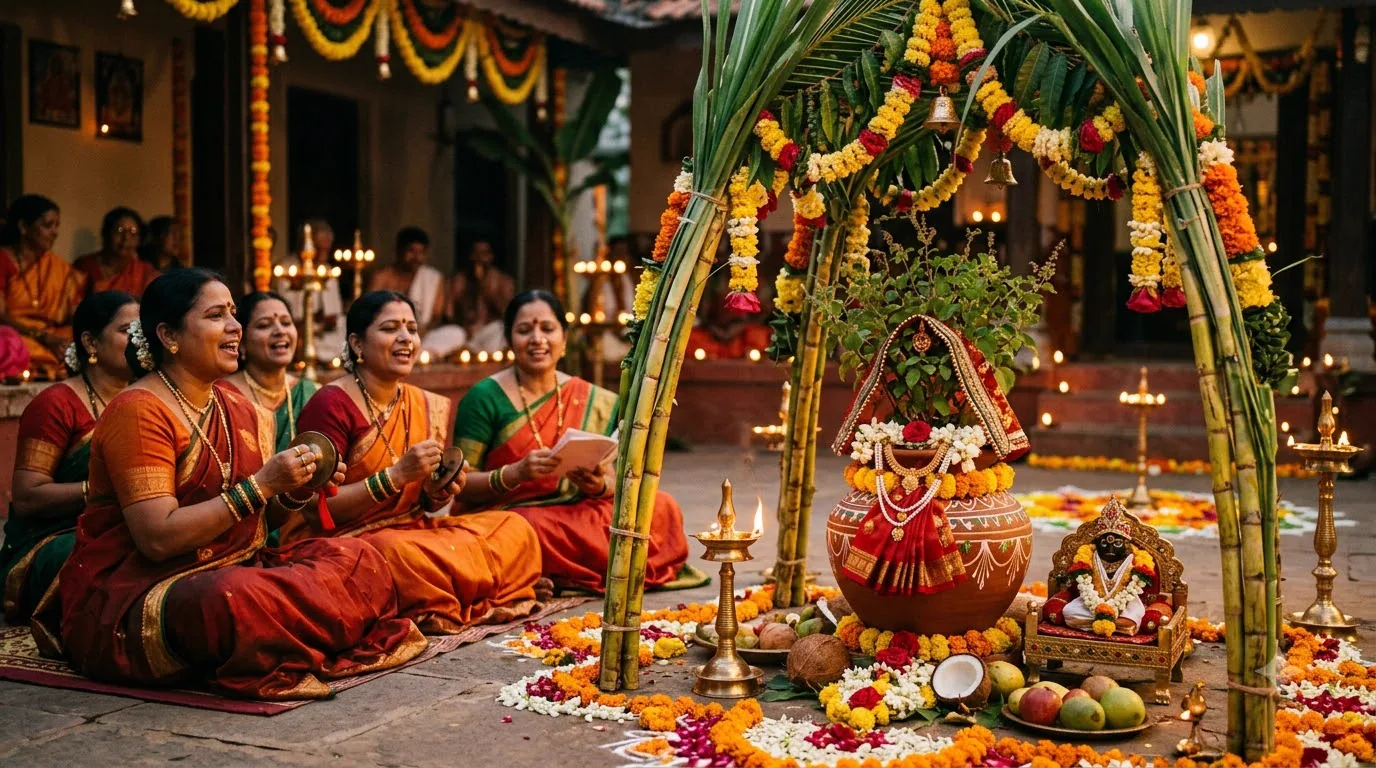
Custom: In the evening the Tulasi plant is dressed as a bride, and the Shalagrama or the image of Vishnu is set beside it as the groom.
Custom: A small canopy is made, often of sugarcane; a lamp is lit, and flowers, fruit and sweets are offered.
Custom: The two are joined with a thread or a garland as in a wedding, wedding songs are sung, and the katha is heard.
Custom: The rite ends with aarti and the sharing of prasad. Details differ widely from region to region and family to family.
Date: By custom Tulsi Vivah is kept between Prabodhini Ekadashi and Kartik Purnima; many keep it on the Ekadashi or the Dwadashi. See the Panchang for the day in your tradition.
Sampurna Katha
समुद्र के पुत्र कहे जाने वाले जालंधर की पत्नी वृंदा पतिव्रता थी। कथा के अनुसार भगवान विष्णु ने उसका व्रत भंग करने का निश्चय किया। वृंदा ने अशुभ स्वप्न देखे: उसने अपने पति को भैंसे पर दक्षिण दिशा की ओर जाते और अपनी नगरी को डूबते देखा। वह भयभीत होकर वन की ओर चली गई, जहाँ दो राक्षसों ने उसे डराया, पर एक मुनि ने उन्हें वहाँ से भगा दिया।
Vrinda, wife of Jalandhara, who is called the Ocean's son, was a faithful wife. The story says Lord Vishnu resolved to break her vow. Vrinda had troubling dreams: she saw her husband riding a buffalo toward the south, and her city sinking. Frightened, she went into the forest, where two demons terrified her, but a sage drove them away.
पतिव्रता वृंदा ने अशुभ स्वप्न देखे और भयभीत होकर वन में गई, जहाँ एक मुनि ने उसे राक्षसों से बचाया।
वन में दो वानर जालंधर का कटा हुआ सिर और शरीर लेकर आए। वृंदा के कहने पर मुनि ने कहा कि वे उसे जीवित कर देंगे और अंतर्धान हो गए; तभी जालंधर वहाँ प्रकट हुआ। वृंदा उसे अपना पति समझकर कुछ समय वन में उसके साथ रही। बाद में उसे पता चला कि वह वास्तव में भगवान विष्णु थे।
In the forest two monkeys brought the severed head and body of Jalandhara. At Vrinda's plea the sage said he would revive him and vanished; then Jalandhara appeared. Vrinda lived with him in the forest for a time, believing him to be her husband. Later she found that he was in truth Lord Vishnu.
मुनि के अंतर्धान होते ही जालंधर प्रकट हुआ; वृंदा उसे पति समझकर साथ रही, फिर जाना कि वह भगवान विष्णु थे।
वृंदा ने भगवान विष्णु को शाप दिया कि जो दो द्वारपाल तुमने मुझे दिखाए, वे राक्षस बनकर तुम्हारी पत्नी का हरण करेंगे, और तुम उसके वियोग में वन-वन भटकोगे, जहाँ वानर तुम्हारी सहायता करेंगे। इसके बाद, भगवान के रोकने पर भी, वृंदा अग्नि में प्रवेश कर गई।
Vrinda cursed Lord Vishnu that the two door-keepers he had shown her would become demons and carry off his wife, and that he would wander the forests grieving for her, helped by monkeys. Then, though the Lord forbade it, Vrinda entered the fire.
वृंदा ने शाप दिया कि विष्णु की पत्नी का हरण होगा और वे वानरों की सहायता से वन में भटकेंगे; फिर वह अग्नि में प्रवेश कर गई।
भगवान विष्णु वृंदा की चिता की भस्म से ढके हुए वहीं रह गए, और किसी के समझाने पर भी उन्हें शांति नहीं मिली। उधर भगवान शिव ने चक्र से जालंधर का सिर काट दिया, और उसका तेज भगवान शिव में समा गया।
Lord Vishnu stayed there, covered with the ash of Vrinda's pyre, and found no peace whoever counselled him. Meanwhile Lord Shiva beheaded Jalandhara with the disc, and Jalandhara's radiance merged into Shiva.
विष्णु वृंदा की चिता की भस्म लगाए वहीं रहे; शिव ने चक्र से जालंधर का वध किया।
देवताओं ने भगवान शिव को भगवान विष्णु की दशा बताई। शिव के कहने पर उन्होंने मूल प्रकृति की स्तुति की, जिन्होंने उन्हें गौरी, लक्ष्मी और स्वरा के पास भेजा। इन तीनों ने बीज दिए और कहा कि इन्हें वहाँ बो दो जहाँ विष्णु हैं। उन बीजों से तीन पौधे उत्पन्न हुए: धात्री, मालती और तुलसी।
The gods told Lord Shiva of Lord Vishnu's state. On Shiva's advice they praised Mula Prakriti, who sent them to Gauri, Lakshmi and Svara. These three gave seeds and told them to sow them where Vishnu was. From those seeds three plants arose: Dhatri, Malati and Tulasi.
गौरी, लक्ष्मी और स्वरा के दिए बीजों से धात्री, मालती और तुलसी उत्पन्न हुईं।
तुलसी और धात्री को देखकर भगवान विष्णु का दुःख दूर हुआ और वे उन दोनों के साथ वैकुंठ चले गए। पद्म पुराण के इसी प्रसंग में कार्तिक व्रत की समाप्ति पर तुलसी की जड़ में भगवान विष्णु की पूजा का वर्णन है।
Seeing Tulasi and Dhatri, Lord Vishnu's grief left him, and he went to Vaikuntha with the two of them. The same passage of the Padma Purana describes the worship of Lord Vishnu at the root of Tulasi at the close of the Kartika vow.
विष्णु का दुःख दूर हुआ और वे धात्री तथा तुलसी के साथ वैकुंठ गए।
राजा धर्मध्वज और माधवी की पुत्री तुलसी का जन्म कार्तिक पूर्णिमा के दिन हुआ। उन्होंने भगवान नारायण को पति रूप में पाने की इच्छा से बदरी वन में बहुत लंबे समय तक तपस्या की।
Tulasi was born to King Dharmadhvaja and Madhavi on the full moon of Kartik. Wishing to have Lord Narayana as her husband, she performed austerities in the Badari forest for a very long time.
धर्मध्वज की पुत्री तुलसी ने नारायण को पति रूप में पाने के लिए बदरी वन में तपस्या की।
कथा के अनुसार तुलसी पूर्वजन्म में गोलोक की एक गोपी थीं और राधा के शाप से पृथ्वी पर जन्मी थीं। ब्रह्मा ने उन्हें बताया कि शंखचूड़ भी पूर्वजन्म में गोलोक का गोप सुदामा था, और यह कि वे पहले उसकी पत्नी बनेंगी और बाद में भगवान नारायण की।
The story says Tulasi had been a gopi in Goloka and was born on earth through Radha's curse. Brahma told her that Shankhachuda too had been Sudama, a gopa of Goloka, and that she would first be his wife and afterwards Lord Narayana's.
तुलसी और शंखचूड़ दोनों पूर्वजन्म में गोलोक में थे; ब्रह्मा ने कहा कि तुलसी पहले शंखचूड़ की और फिर नारायण की पत्नी बनेंगी।
ब्रह्मा की आज्ञा से शंखचूड़ बदरी वन पहुँचा। ब्रह्मा ने दोनों को गांधर्व विधि से विवाह करने को कहा, और उनका विवाह हुआ। शंखचूड़ ने बहुत लंबे समय तक राज्य किया और देवताओं के अधिकार भी अपने हाथ में ले लिए।
At Brahma's command Shankhachuda came to the Badari forest. Brahma told the two to marry by the gandharva rite, and they were married. Shankhachuda ruled for a very long age and took the powers of the gods into his own hands.
ब्रह्मा के कहने पर तुलसी और शंखचूड़ का गांधर्व विवाह हुआ; शंखचूड़ ने देवताओं के अधिकार ले लिए।
देवता ब्रह्मा के पास गए, ब्रह्मा उन्हें भगवान शिव के पास ले गए, और शिव उन्हें वैकुंठ में भगवान विष्णु के पास ले गए। भगवान ने बताया कि शंखचूड़ को उसके कवच के रहते नहीं मारा जा सकता, और ब्रह्मा के वरदान के कारण उसकी मृत्यु तभी होगी जब उसकी पत्नी का पातिव्रत्य भंग हो।
The gods went to Brahma, Brahma took them to Lord Shiva, and Shiva took them to Lord Vishnu in Vaikuntha. The Lord explained that Shankhachuda could not be killed while he wore his kavacha, and that by Brahma's boon his death would come only when his wife's chastity was broken.
भगवान विष्णु ने बताया कि कवच के रहते और पत्नी के पातिव्रत्य के रहते शंखचूड़ नहीं मारा जा सकता।
भगवान शिव और शंखचूड़ के बीच सौ वर्ष तक युद्ध हुआ, पर कोई नहीं जीता। तब भगवान विष्णु ने वृद्ध ब्राह्मण का रूप लेकर शंखचूड़ से उसका कवच माँग लिया, और फिर शंखचूड़ का रूप धारण करके तुलसी के पास पहुँचे।
Lord Shiva and Shankhachuda fought for a hundred years, and neither won. Then Lord Vishnu, in the form of an old Brahmin, asked Shankhachuda for his kavacha and was given it, and afterwards took Shankhachuda's form and went to Tulasi.
विष्णु ने ब्राह्मण बनकर शंखचूड़ का कवच माँगा, फिर शंखचूड़ का रूप लेकर तुलसी के पास गए।
उसी समय भगवान शिव के त्रिशूल से शंखचूड़ भस्म हो गया। मृत्यु के बाद वह गोप रूप में गोलोक चला गया, और उसकी अस्थियाँ शंख बन गईं।
At that time Lord Shiva's trident burnt Shankhachuda to ash. After his death he went to Goloka in the form of a gopa, and his bones became conch shells.
शिव के त्रिशूल से शंखचूड़ का अंत हुआ; वह गोलोक गया और उसकी अस्थियाँ शंख बन गईं।
तुलसी ने पहचान लिया कि जो उनके सामने है वह उनका पति नहीं, भगवान नारायण हैं। उन्होंने भगवान को पत्थर हो जाने का शाप दिया। तब भगवान ने उनसे कहा कि दिव्य शरीर धारण करके मुझसे विवाह करो। कथा के अनुसार उनका शरीर गंडकी नदी बना, उनके केशों से तुलसी का पौधा हुआ, और भगवान गंडकी के तट पर शालिग्राम शिला के रूप में स्थित हुए।
Tulasi saw that the one before her was not her husband but Lord Narayana. She cursed the Lord to become a stone. The Lord then told her to take a divine body and marry him. The story says her body became the Gandaki river and her hair the Tulasi plant, and the Lord came to rest as the Shalagrama stone on the Gandaki's bank.
तुलसी ने नारायण को पत्थर होने का शाप दिया; उनका शरीर गंडकी नदी, केश तुलसी का पौधा और भगवान शालिग्राम शिला बने।
इसके बाद तुलसी भगवान के साथ वैकुंठ चली गईं। इसी प्रसंग में तुलसी दल को शालिग्राम से अलग करना दोष बताया गया है।
After this Tulasi went with the Lord to Vaikuntha. The same passage calls it a fault to separate Tulasi leaves from the Shalagrama.
तुलसी भगवान के साथ वैकुंठ गईं; तुलसी दल को शालिग्राम से अलग करना दोष कहा गया है।
तुलसी विवाह से एक से अधिक पौराणिक कथाएँ जुड़ी हैं, और यहाँ दो कथाएँ अलग-अलग दी गई हैं। प्रचलित कथाओं में इन दोनों के प्रसंग अक्सर एक-दूसरे में मिला दिए जाते हैं। पर इन ग्रंथों में दोनों कथाएँ अलग हैं: वृंदा और जालंधर की कथा में विष्णु को पत्थर होने का शाप नहीं है, जबकि तुलसी और शंखचूड़ की कथा में तुलसी का यह शाप और शालिग्राम की उत्पत्ति दोनों हैं। दोनों में से किसी कथा में विवाह की तिथि नहीं दी गई है।
Tulsi Vivah is linked to more than one Puranic story, and two are given here separately. Popular tellings often blend episodes from the two. In these texts, however, the stories are distinct: the story of Vrinda and Jalandhara has no curse turning Vishnu to stone, while the story of Tulasi and Shankhachuda has both that curse and the origin of the Shalagrama. Neither story gives a date for the wedding.
पत्थर होने का शाप और शालिग्राम तुलसी-शंखचूड़ की कथा में हैं, वृंदा-जालंधर की कथा में नहीं; प्रचलित कथाएँ दोनों को मिला देती हैं।
Aarti
More Aartis