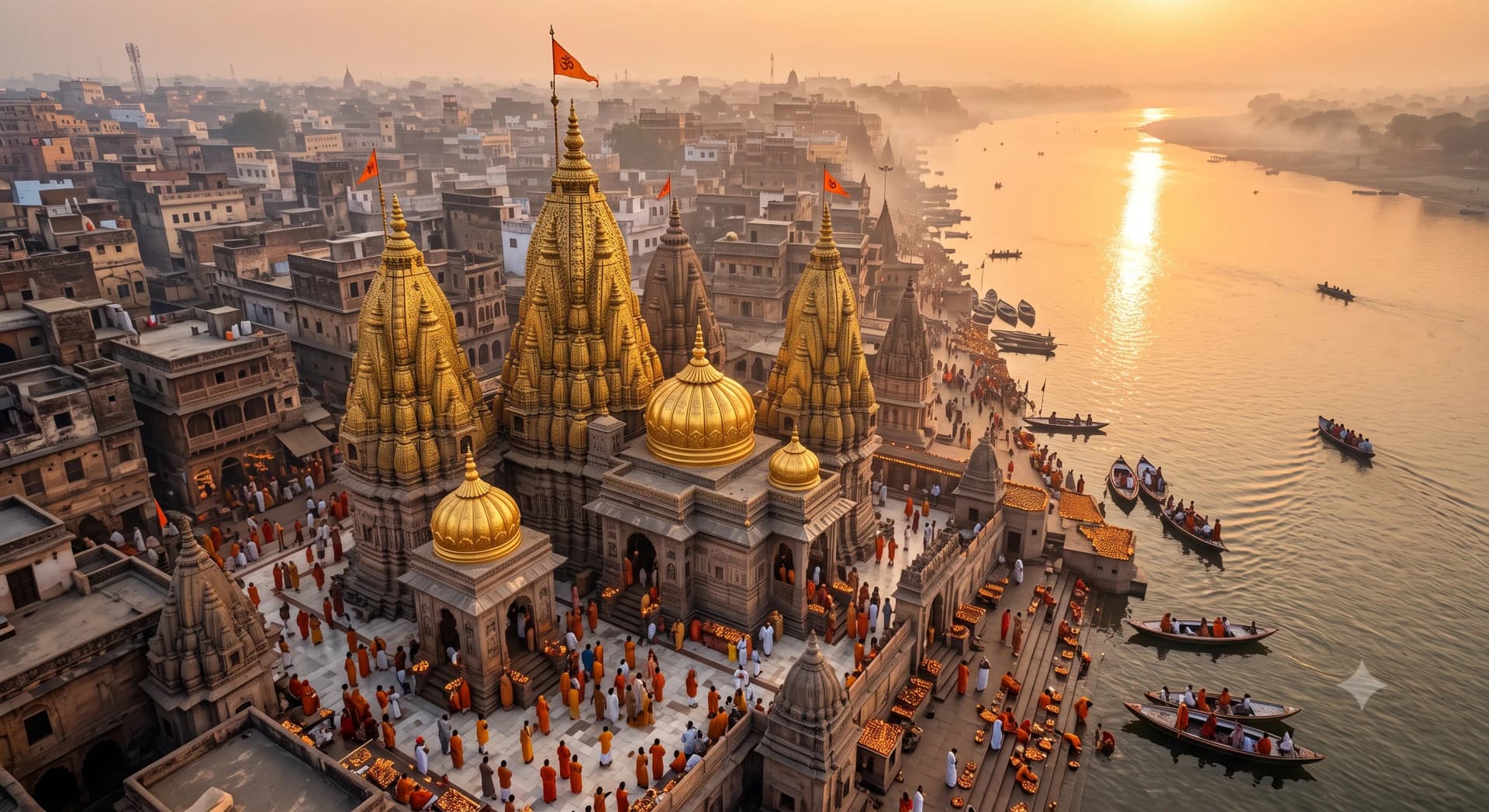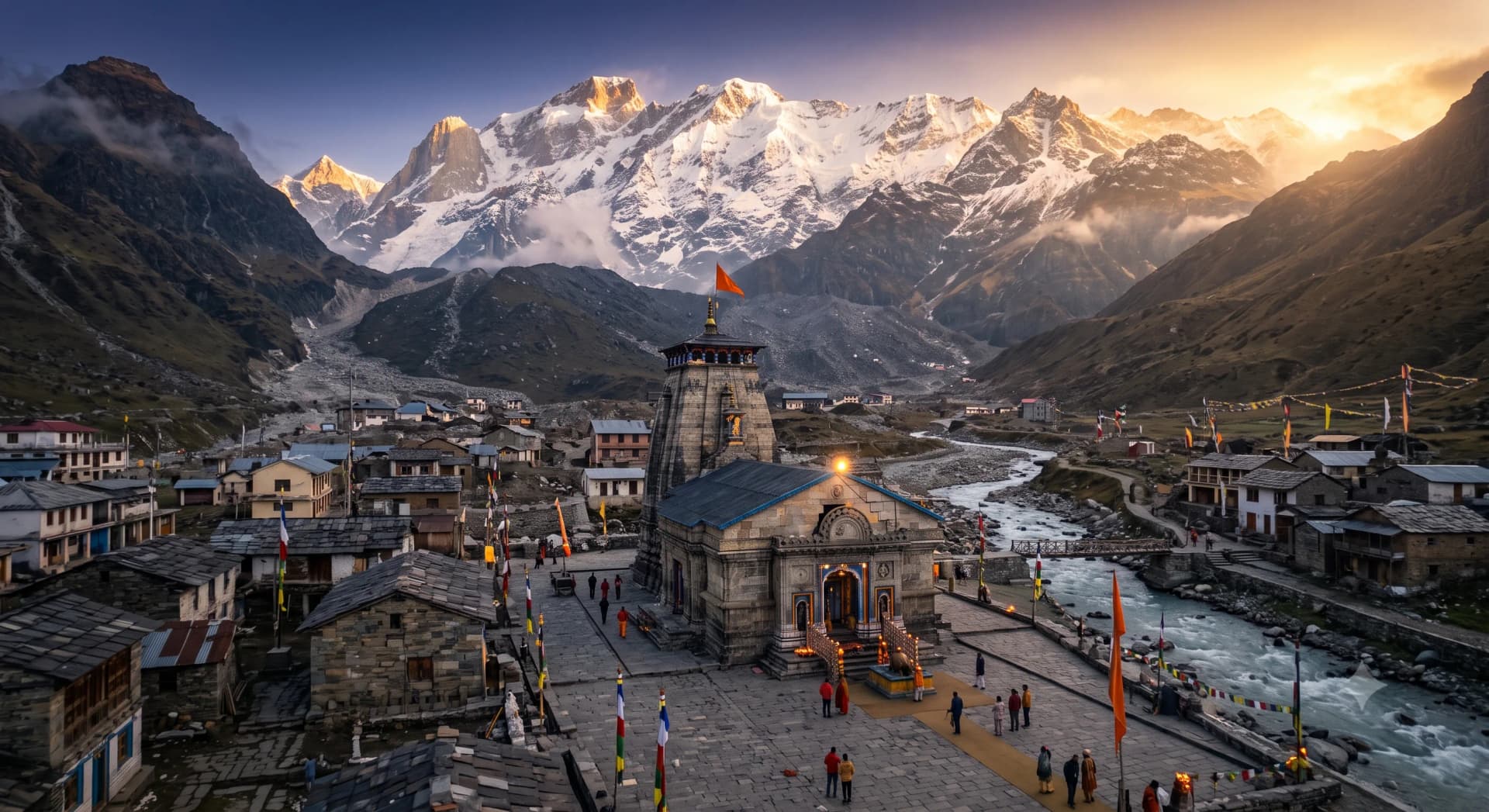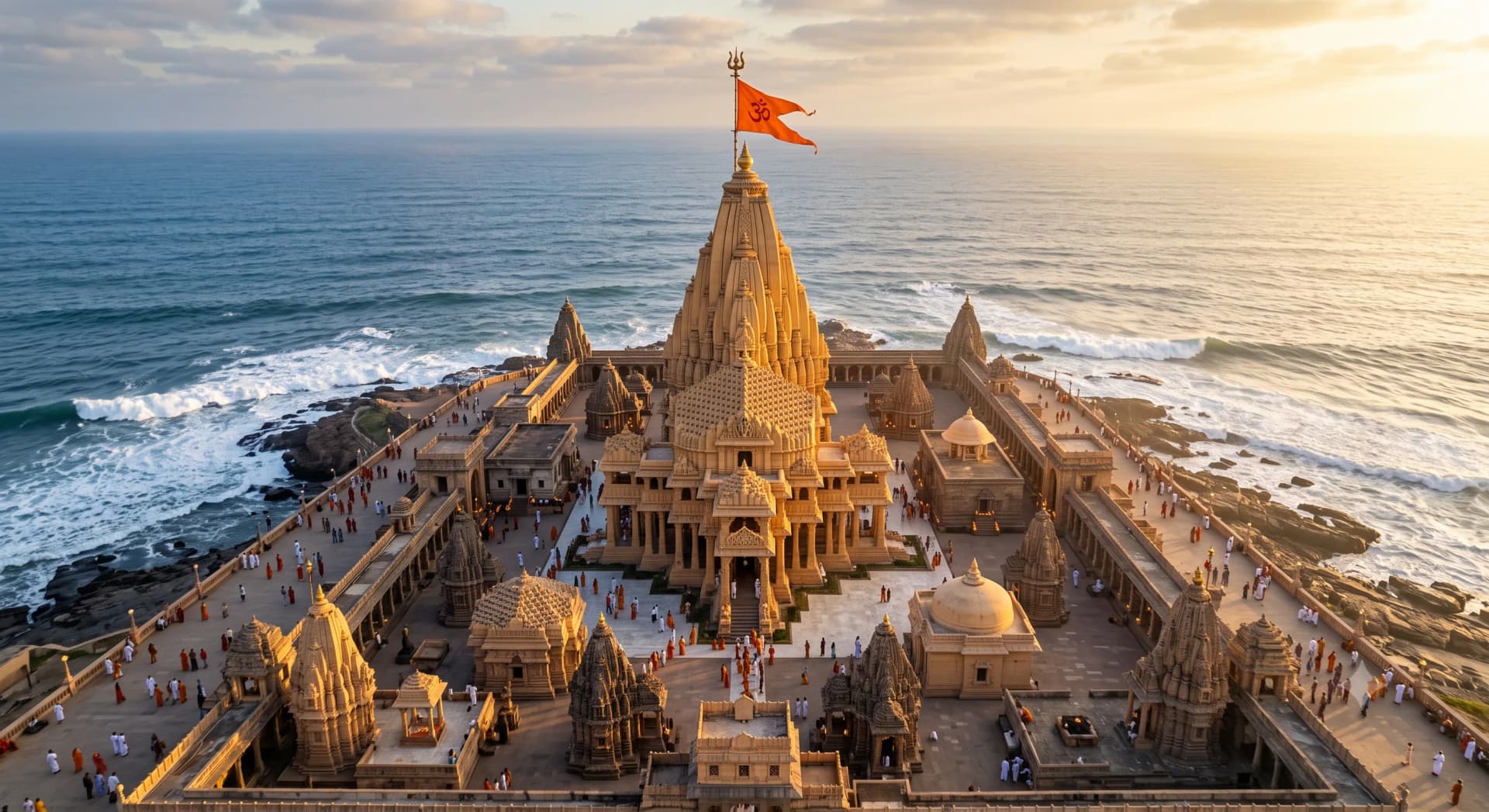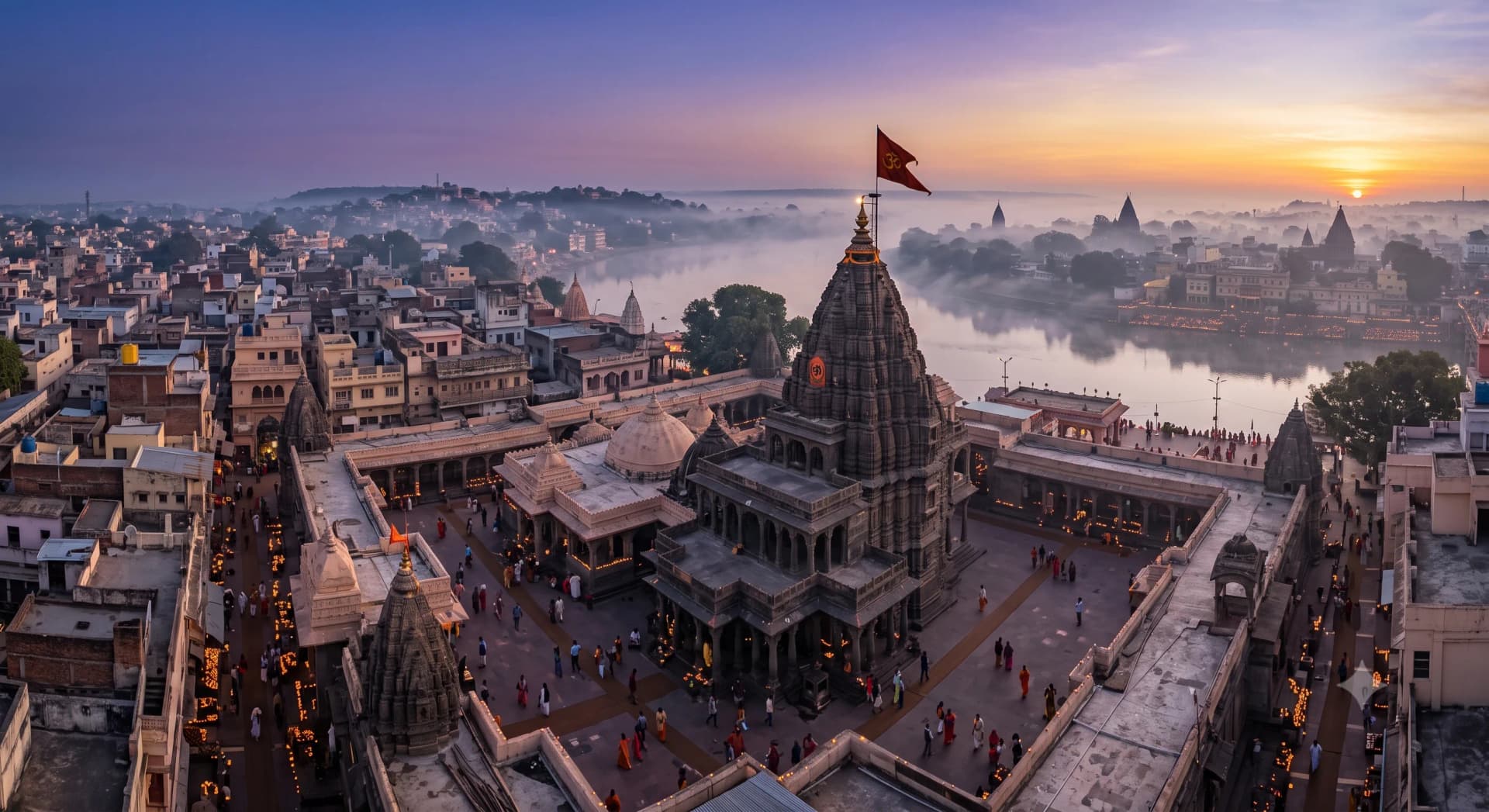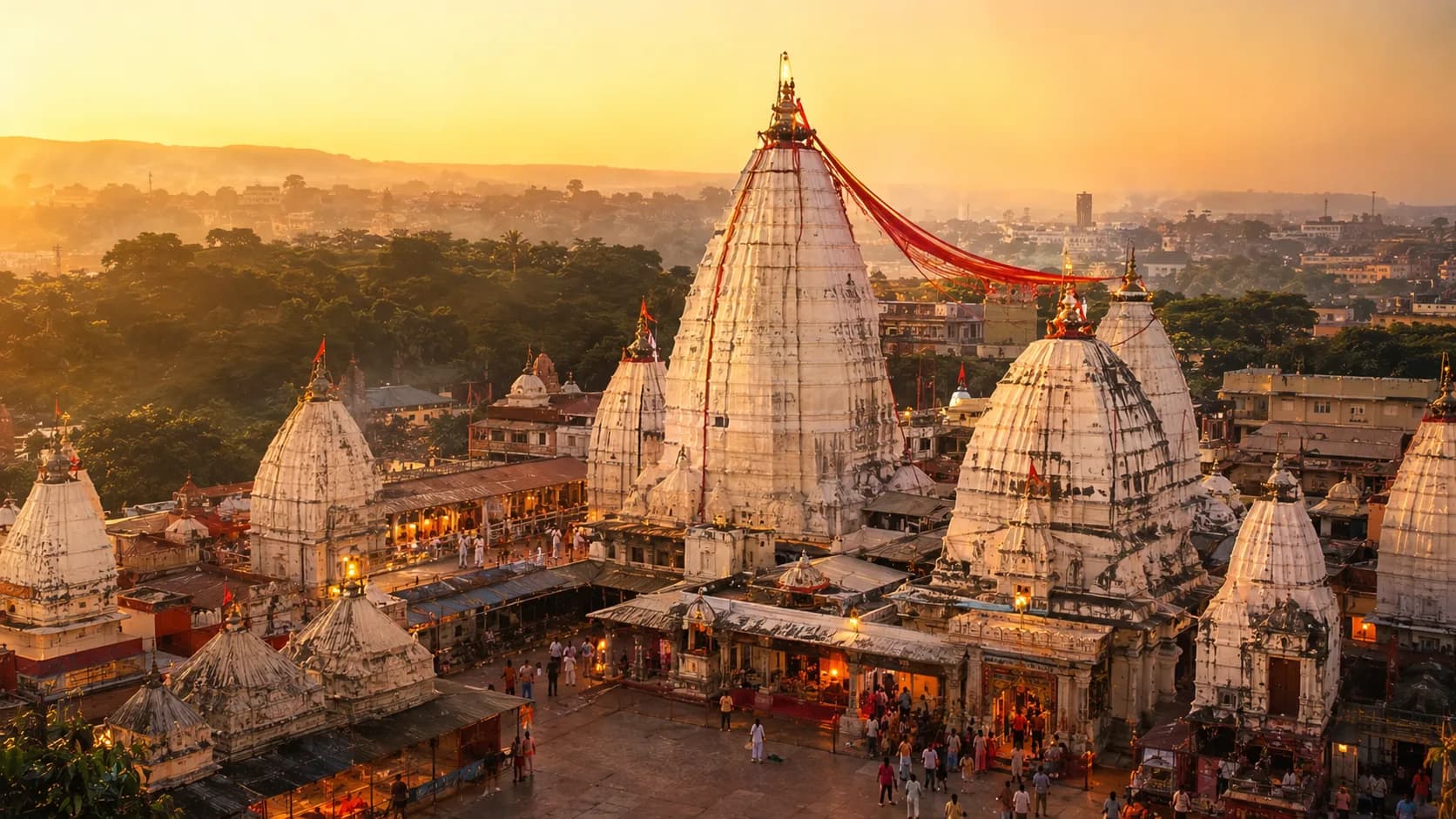
Deoghar, Santhal Parganas, Jharkhand (with Parli, Maharashtra tradition)
Baidyanath (Vaidyanath) Temple
बाबा बैद्यनाथ धाम (वैद्यनाथ ज्योतिर्लिंग)
The revered ninth Jyotirlinga where Lord Shiva cured Ravana's self-inflicted wounds acting as the Divine Physician (Vaidya), also worshipped as Kamada Lingam (the fulfiller of all pure desires). Concurrently sacred as the Hridayapeetha of the 51 Shakti Peethas. World-famous for the epic 105 km Shravani Mela Kanwar Yatra from Sultanganj.
The Sanctum of the Divine Physician
परम पावन बाबा बैद्यनाथ धाम — देवघर
Baba Baidyanath Dham—situated in the city of Deoghar in the Santhal Parganas division of Jharkhand—is celebrated across India as one of the most spiritually vibrant Shaivite pilgrimage sanctuaries in the world. The city's name itself, 'Deoghar' (or Baidyanathdham), translates literally to 'The Abode of the Gods'.
The sanctum enshrines a Swayambhu (self-manifested) stone lingam approximately 5 inches in diameter and 4 inches in height above the basalt floor. A distinct concave depression is visible upon the apex of the lingam, which centuries of devotion identify with the mark left by the ten-headed demon king Ravana when he tried to uproot the immovable stone.
The main stone temple rises 72 feet into the sky, characterized by a pyramidal shikhara adorned with a rare golden Panchashula (five-pronged trident)—unlike the traditional Trishula (three-pronged) seen atop most Shiva shrines. Surrounding the central sanctum within a fortified courtyard are twenty-one subsidiary temples dedicated to Parvati, Ganesha, Kartikeya, Brahma, Saraswati, Kali, and Hanuman, symbolizing a harmonious synthesis of Shaiva, Shakta, and Vaishnava devotion.
The Puranic Legend: Ravana's Tapasya and the Immovable Lingam
रावण की तपस्या, वैद्य रूप में शिव और कामना लिंग प्राकट्य
The origin of the Baidyanath Jyotirlinga is detailed in the 28th chapter of the Koti Rudra Samhita of the Shiva Purana and the Padma Purana.
Desiring to make his capital in Lanka invincible, the demon-king Ravana performed thousands of years of intense penance upon Mount Kailash to persuade Lord Shiva to relocate there permanently. When Shiva remained unmoved, Ravana decided to make the ultimate sacrifice: constructing a sacrificial altar (Chitabhumi), he began cutting off his ten heads one by one and offering them into the sacred fire.
Just as Ravana was about to sever his tenth and final head, Lord Shiva manifested before him, overwhelmed by such unyielding surrender. Acting as a divine physician (**Vaidya**), Shiva reattached Ravana's severed heads, instantly healing his horrific bodily wounds and restoring him to vigor. On account of this celestial medicine, Shiva was praised as **Vaidyanatha** ('Lord of Physicians').
Ravana then begged for the boon of taking Shiva's Swayambhu lingam back with him to Lanka. Shiva consented, but laid down an absolute condition: > *"If thou shalt place this Linga on the earth anywhere during thy journey, there it shall remain rooted forever; no force of gods or mortals shall ever move it."*
Terrified of Lanka becoming impregnable, the Devas implored Lord Varuna and Lord Ganesha to intervene. As Ravana flew eastward carrying the lingam, Varuna entered his body, inducing an unbearable urge to relieve himself. Descending at Chitabhumi (Deoghar), Ravana saw a young cowherd boy (Lord Ganesha in disguise) and handed him the lingam, strictly urging him not to place it on the ground.
Ganesha, pretending to be unable to endure the unbearable weight of the cosmos, placed the lingam firmly upon the earth. When Ravana returned and realized the divine deception, he fell into despair. He attempted with all twenty arms to violently wrench the lingam from the bedrock, but succeeded only in pressing down its summit and cracking a portion of its edge. Bowing to the supreme decree of Mahadeva, Ravana performed final prayers and departed, leaving the consecrated lingam anchored at Deoghar forever as the **Kamada Lingam** ('fulfiller of all pure desires').
Scriptural Identifications: Deoghar and Parli Vaidyanath
शास्त्र सम्मत दो पावन परम्पराएं — देवघर एवं परली वैजनाथ
A profound and respectful exploration of the Jyotirlinga tradition must address the two venerable sites in India that hold scriptural and traditional identifications with the name Vaidyanath:
1. **Baidyanath Dham at Deoghar (Jharkhand)**: - Celebrated across northern, eastern, and central India as the primary seat of the Jyotirlinga. - Specifically mentioned in the Shiva Purana as being situated in *Chitabhumi* (the ancient cremation ground / sacrificial altar of Ravana). - Simultaneously revered as one of the 51 **Shakti Peethas** (the *Hridaya Peetha*, where Sati's heart is traditionally believed to have fallen), represented by the temple of Goddess Jai Durga directly opposite the main sanctum. - Connected by the sacred **Gathbandhan** ritual, in which long sanctified red fabric ropes are physically tied between the brass Panchashula of the Shiva temple and the dome of the Parvati temple, symbolizing the eternal union of Shiva and Shakti.
2. **Parli Vaidyanath (Beed District, Maharashtra)**: - Deeply revered across western and southern India in accordance with the exact wording of Adi Shankaracharya's *Dwadasha Jyotirlinga Stotram*: > *"Paralyam Vaidyanatham cha Dakinyam Bhimashankaram..."* - Located on the eastern slope of the Meru (Narayangad) hills near the Brahma and Saraswati rivers, where Lord Vishnu is said to have hidden the pot of nectar (Amrita) from the Asuras following the Samudra Manthan. - Constructed from dark basalt stone on an elevated hillock, celebrated for centuries by the saint-poets of Maharashtra including Sant Dnyaneshwar and Sant Eknath.
Rather than viewing these traditions as contradictory, Hindu pilgrimage philosophy embraces both sanctuaries as holy manifestations of the same supreme reality. Millions of devout seekers visit Deoghar during Shravan and Parli during their western pilgrimages, finding divine solace at both sacred seats.
The Shravani Mela: The 105 km Barefoot Kanwar Yatra
श्रावणी मेला — सुल्तानगंज से देवघर की 105 किमी कांवड़ यात्रा
During the sacred monsoon month of Shravan (July–August), Baidyanath Dham becomes the epicentre of the **Shravani Mela**, widely recognized as the longest and largest continuous religious walking congregation in human history.
Over thirty days, more than 5 to 7 million pilgrims (known as **Kanwariyas** or *Bol-Bam* pilgrims) dress in saffron robes and gather at **Sultanganj** on the banks of the sacred river Ganga in Bihar. Here, the Ganga uniquely turns northwards (*Uttaravahini*), a phenomenon considered exceptionally purifying in Vedic hydrology.
Pilgrims collect the holy Ganga water into twin earthen or copper pitchers balanced upon a decorated bamboo shoulder pole (**Kanwar**). The fundamental vow of the Kanwar Yatra is strict: - The Kanwar must never touch the ground until the destination is reached. If set down, it must be cleansed and refilled. - Pilgrims walk barefoot over unpaved pathways, riverbeds, and gravel roads for **105 kilometres** from Sultanganj across the hills of Tarapur, Katoria, and Dumka to Deoghar. - Continuous chanting of *"Bol Bam! Har Har Bam Bam!"* resonates unbroken along the trail day and night.
Upon arriving at Baidyanath Dham, the pilgrims offer their precious Ganga water directly upon the Swayambhu Jyotirlinga, seeking liberation, health, and spiritual awakening.
Darshan & Visit
During peak festival days, queue times for general darshan can exceed several hours; an official online token/Sheeghra Darshanam system is maintained by the district administration.
How to Reach
Jasidih Junction to Deoghar city centre is a 15-minute drive via pre-paid autos, battery rickshaws, and taxis.
Nearby Sacred Sites
Ancient Shiva sanctuary in Dumka district; traditional pilgrimage custom dictates that a visit to Baidyanath Dham is fulfilled only after paying homage at Basukinath.
Baidyanath is the ninth sacred Jyotirlinga in the traditional pan-Indian circuit of 12 luminous Shiva shrines.
Enshrining the heart (Hridaya) of Sati directly opposite the Jyotirlinga, forming one of India's rarest Shiva-Shakti confluences.
The revered western seat of Vaidyanath in Beed district, Maharashtra, venerated in the Dwadasha Jyotirlinga Stotram tradition.
Scenic cluster of three mountain peaks and ancient natural rock caves where Sage Valmiki and many ascetics meditated.
A splendid 146-foot high Radha-Krishna stone temple built in 1940 by Queen Charushila of Pathuriaghat, reminiscent of Belur Math.
The sacred origin of the Kanwar Yatra on the rock island in the north-flowing Ganga (Bihar).
Sources
- Baba Baidyanath Temple Management Board(official)
- Jharkhand Tourism Development Corporation (JTDC)(government)
- Archaeological Survey of India (ASI), Ranchi Circle(government)
- Shiva Purana, Koti Rudra Samhita (Chapter 28)(scripture)
- L.S.S. O'Malley, 'Bengal District Gazetteers: Santhal Parganas' (1910)(historical)
Quick Links & Sacred Exploration
Explore other revered temples, Jyotirlingas, and sacred pilgrimage routes across India.