What is Navratri?
Navratri (नवरात्रि, meaning 'nine nights') is a major Hindu festival celebrated over nine consecutive nights and ten days, dedicated to the worship of the Divine Mother Durga and her nine distinct forms, known as the Navadurga.
Why is it observed?
Navratri symbolizes the triumph of righteousness (Dharma) over cosmic imbalance, commemorating Goddess Durga's victory over the demon Mahishasura. It is observed as a period of spiritual renewal, inner purification, and reverence for the divine feminine energy (Shakti).
How is it observed?
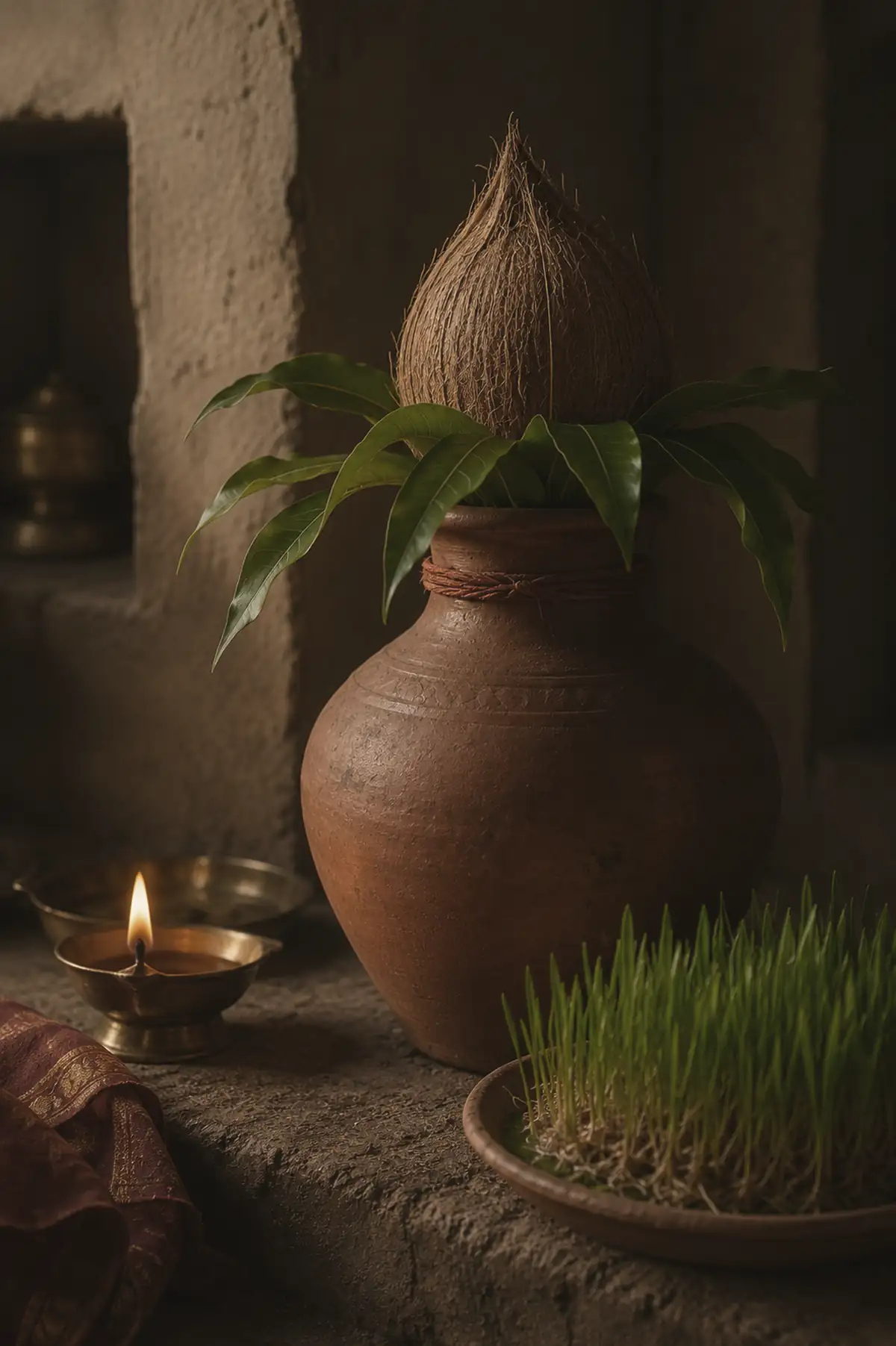
Observances begin with the sacred invocation of the Goddess into a consecrated water pot (Ghatasthapana). Devotees observe fasts, chant hymns from the Devi Mahatmya, perform daily aartis, engage in traditional community folk dances like Garba and Dandiya, and conclude with Kanya Pujan (honoring young girls as forms of the Goddess).
When does it occur?
While four Navratris occur across the year, Shardiya Navratri (in early autumn, during the lunar month of Ashwin) is the most widely celebrated. It starts on the day following Mahalaya Amavasya and shift dates annually based on the lunar calendar.
Key Highlights
Ghatasthapana — The Sacred Invocation
The festival commences on the first day (Pratipada) with Ghatasthapana, a ritual that invokes the presence of the Goddess into a sacred brass or clay pot filled with holy water and grains.
Worship of the Navadurga
Each of the nine nights is dedicated to one of the nine forms of the Divine Mother: Shailaputri, Brahmacharini, Chandraghanta, Kushmanda, Skandamata, Katyayani, Kalaratri, Mahagauri, and Siddhidatri.
Garba & Cultural Celebrations
In Western and Pan-Indian traditions, communities gather in festive attire to perform traditional circular dances (Garba and Dandiya Raas) around an illuminated lamp or image of the Goddess.
Kanya Pujan & Vijayadashami

On Ashtami or Navami (eighth/ninth day), nine young girls are revered and served meals as representatives of the Goddess's energy, followed by Vijayadashami (Dussehra) on the tenth day.
Frequently asked questions
What are the Nine Forms of Durga (Navadurga)?
The nine forms worshipped on each successive day are Shailaputri, Brahmacharini, Chandraghanta, Kushmanda, Skandamata, Katyayani, Kalaratri, Mahagauri, and Siddhidatri.
What is Ghatasthapana and why is muhurat important?
Ghatasthapana is the ceremonial installation of the sacred pot symbolizing the Goddess. It is traditionally performed during a specific auspicious window (muhurat) on the first day of Navratri.
Why do people fast during Navratri?
Fasting (Vrat) during Navratri is observed as a practice of self-discipline, inner cleansing, and devotion, with many abstaining from grains, onion, and garlic.
What is the difference between Shardiya Navratri and Chaitra Navratri?
Shardiya Navratri falls in autumn (Ashwin month) and is celebrated on a grand nationwide scale. Chaitra Navratri falls in spring (Chaitra month) and concludes with Ram Navami.
What is Kanya Pujan?
Kanya Pujan is a tradition observed on Maha Ashtami or Mahanavami where young girls are invited into homes, worshipped with washing of feet, offered prasada, and given gifts.
Explore More
Also associated with