The traditional story of the merchant's wife, her seven sons and Ahoi Mata, told on Kartik Krishna Ashtami
About this katha
Mothers keep this fast on Kartik Krishna Ashtami, about four days after Karwa Chauth and about eight days before Diwali, with a prayer for their children. In the evening the women gather to hear the katha, worship the image of Ahoi Mata, and end the fast after seeing the stars.
Pujan Samagri
Pujan Vidhi(सूर्योदय से तारों के दर्शन तक / From sunrise until the stars are seen)
Sankalp: On the morning of Kartik Krishna Ashtami, bathe and take the vow to keep the fast for your children. Some families keep it without water; in others water, milk or fruit is taken. Follow the custom of your own home.
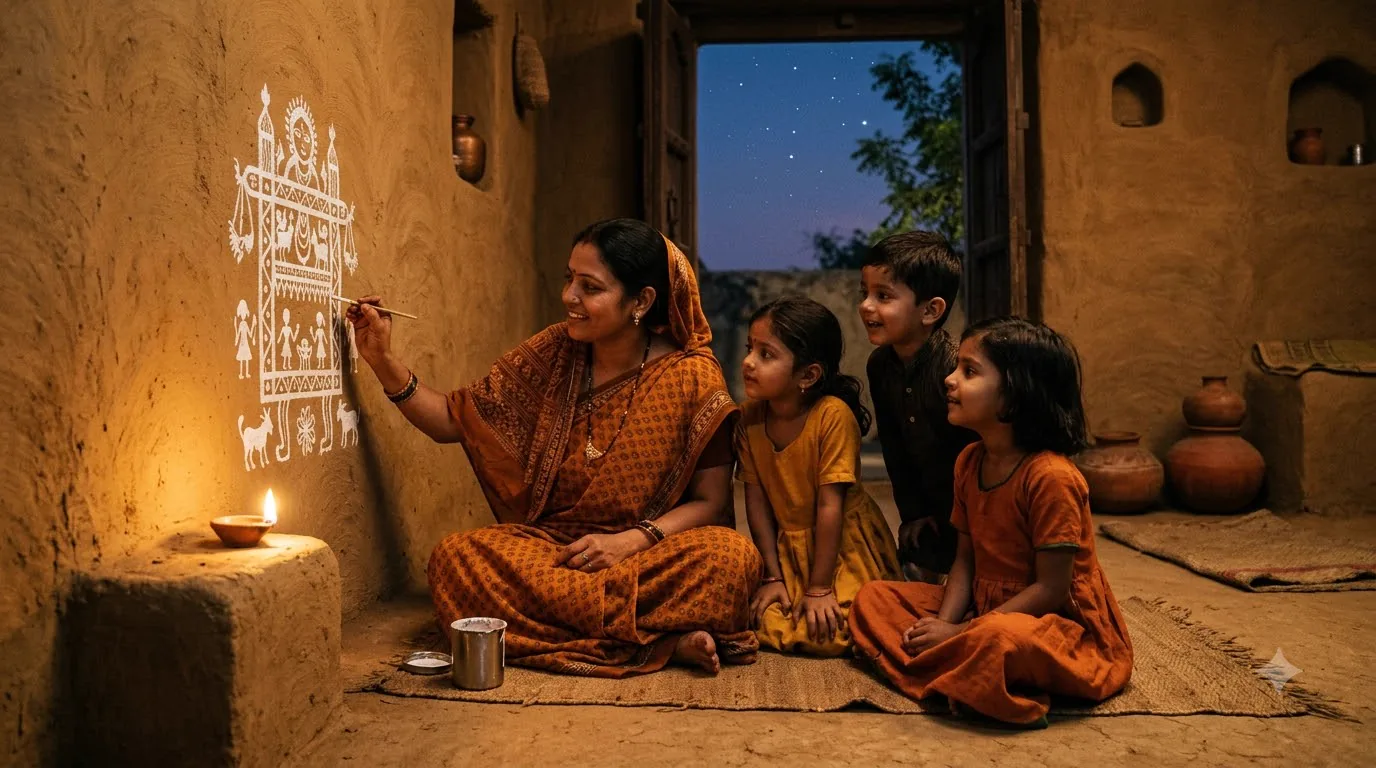
Preparing the place: In the afternoon, clean the place of worship. By tradition a figure of Ahoi Mata with the porcupine and her young is drawn on the wall with geru and rice paste; many homes now set a printed picture on a low seat (chowki) covered with a clean cloth.
The karwa: Place a karwa or lota of water before the picture, tie kalava round its neck and put a few grains of wheat on the lid. Families that keep a silver syau mala place it before the picture.
Hearing the katha: In the evening, sit with the women of the family or neighbourhood, holding a few grains of wheat, and hear the katha.
The puja: Offer roli, akshat and flowers to Ahoi Mata, light the lamp and incense, and offer the water chestnuts, radish, fruit and the halwa-puri or puas.
Arghya to the stars: When the stars come out, offer the water from the karwa as arghya to them, with a prayer for your children. In some families the arghya is given to the moon when it rises.
Bayana and ending the fast: By custom the bayana is given to the mother-in-law or an elder woman of the house and her blessing is taken. The fast is then ended with water and prasad.
Sampurna Katha
बहुत समय पहले एक नगर में एक साहूकार रहता था। उसके सात बेटे थे और घर सुखी था। कार्तिक का महीना था और दीपावली आने वाली थी। घर की लिपाई-पुताई के लिए साहूकार की पत्नी खुरपी लेकर मिट्टी लाने खदान में गई।
Long ago a merchant lived in a town with his wife and their seven sons, and the house was a happy one. It was the month of Kartik and Diwali was near. To plaster and paint the house, the merchant's wife took a small spade and went to the pit to dig clay.
एक साहूकार के सात बेटे थे। दीपावली से पहले घर लीपने के लिए उसकी पत्नी मिट्टी खोदने गई।
जहाँ वह मिट्टी खोद रही थी, वहीं पास में एक स्याहु (साही) की मांद थी, जिसमें उसके बच्चे थे। खोदते समय अनजाने में खुरपी साही के एक बच्चे को लग गई और वह मर गया। यह देखकर साहूकार की पत्नी को बहुत दुख हुआ, पर अब कुछ हो नहीं सकता था। वह पछताती हुई घर लौट आई।
Close to where she dug was the burrow of a syahu, usually taken to be a porcupine, with her young. Without meaning to, she struck one of the young with her spade, and it died. She was filled with sorrow, but nothing could be done now, and she went home full of regret.
मिट्टी खोदते समय अनजाने में उसकी खुरपी से साही का एक बच्चा मर गया। वह दुखी होकर घर लौट आई।
कुछ समय बाद उसके बड़े बेटे की मृत्यु हो गई। फिर एक-एक करके, एक वर्ष के भीतर, उसके सातों बेटे चल बसे। घर सूना हो गया और वह दिन-रात रोती रहती।
Some time later her eldest son died. Then, one after another, within a year, all seven of her sons were gone. The house was empty, and she wept day and night.
एक वर्ष के भीतर उसके सातों बेटों की मृत्यु हो गई।
एक दिन उसने रोते हुए पड़ोस की बड़ी-बूढ़ी स्त्रियों से कहा, 'मैंने जान-बूझकर कभी कोई पाप नहीं किया। हाँ, एक बार मिट्टी खोदते समय अनजाने में मेरे हाथ से साही का एक बच्चा मर गया था।' स्त्रियों ने उसे धीरज बंधाया और कहा, 'तुम कार्तिक कृष्ण अष्टमी को अहोई माता का व्रत रखो, साही और उसके बच्चों का चित्र बनाकर उनकी पूजा करो और क्षमा मांगो।'
One day, in tears, she told the old women of the neighbourhood: 'I have never knowingly done wrong. But once, while digging clay, a porcupine's young one died by my hand without my meaning it.' The women comforted her: 'Keep the fast of Ahoi Mata on Kartik Krishna Ashtami, draw the porcupine and her young, worship them and ask forgiveness.'
उसने बड़ी-बूढ़ी स्त्रियों के सामने अपनी भूल मानी। उन्होंने उसे कार्तिक कृष्ण अष्टमी को अहोई माता का व्रत रखने और क्षमा मांगने को कहा।
कार्तिक कृष्ण अष्टमी आई तो साहूकार की पत्नी ने दिनभर उपवास रखा। शाम को उसने दीवार पर अहोई माता और साही तथा उसके बच्चों का चित्र बनाया, जल से भरा करवा रखा, पूजा की और अपनी भूल के लिए क्षमा मांगी। तारे निकलने पर उसने उन्हें अर्घ्य दिया। वह हर वर्ष इसी तरह यह व्रत रखने लगी।
When Kartik Krishna Ashtami came, the merchant's wife fasted all day. In the evening she drew Ahoi Mata, the porcupine and her young on the wall, set a karwa of water before them, did the puja and asked forgiveness for her fault. When the stars came out she offered arghya to them. She kept the fast in this way every year.
उसने कार्तिक कृष्ण अष्टमी को उपवास रखा, अहोई माता और साही का चित्र बनाकर पूजा की, क्षमा मांगी और तारों को अर्घ्य दिया।
उसके सच्चे पछतावे और श्रद्धा से अहोई माता प्रसन्न हुईं। कथा कहती है कि माता की कृपा से उसे अपने सातों बेटे फिर मिल गए और घर में फिर खुशियां लौट आईं। मान्यता है कि तभी से माताएं अपनी संतान की मंगल कामना से हर वर्ष कार्तिक कृष्ण अष्टमी को अहोई माता का व्रत रखती हैं।
Ahoi Mata was pleased with her true repentance and faith. The story says that by the Mother's grace her seven sons were given back to her, and joy returned to the house. It is believed that mothers have kept the fast of Ahoi Mata on Kartik Krishna Ashtami ever since, with a prayer for their children.
कथा के अनुसार अहोई माता की कृपा से उसे सातों बेटे फिर मिल गए। तभी से माताएं संतान के लिए यह व्रत रखती हैं।
Aarti
More Aartis